Recovery after plastic surgery: tips, aftercare and scar healing
In this article you will find all of Dr Hunsinger’s advice — backed up with videos — to help limit the recovery period after your plastic surgery procedure. Dr Hunsinger is a surgeon at the Rive Droite Paris Étoile plastic surgery practice (CERDPE).
In addition to these general guidelines, you can also watch the video specific to the procedure you have undergone by clicking the relevant link (opens in a new page):
- Recovery after body-contouring surgery (abdominoplasty, thigh lift, arm lift, bodylift)
- Recovery after body-contouring surgery (liposuction, lipofilling, Brazilian butt lift)
- Recovery after breast surgery (breast augmentation, breast reduction, breast ptosis)
- Recovery after nose surgery (rhinoplasty, septoplasty)
- Recovery after facial surgery (eyelid surgery, jawline surgery, neck surgery, etc.)
Contents
Basic care, monitoring and managing pain and swelling
Recovery effects are entirely common after a procedure that is, all in all, fairly significant. The important thing is to know how to tell what is normal from what is less so, so you can react in time.
Normal reactions following a plastic surgery procedure
Certain bodily reactions appear naturally and relatively quickly following the trauma of the operation. This is the case in particular with:
- moderate pain and tightness: these are part of the usual healing and tissue-regeneration process;
- swelling (edema) and bruising, which almost always appear, mainly on the treated areas. In both cases, blood and lymphatic fluids can move down towards the lower body under the pull of gravity;
- minor bloody discharge: slightly blood-tinged oozing may be observed, especially in the first few days. It does not last long, but you can dry the wound with sterile compresses and, if necessary, redress the area concerned.
Abnormal reactions that should alert you
Other symptoms, by contrast, may be a warning sign and call for a prompt diagnosis from your surgeon or even a doctor:
- intense, persistent pain (or pain that suddenly worsens): if the prescribed painkillers fail to relieve this uncontrollable pain, including at night (night pain), contact your surgeon;
- significant swelling of the scar (and, more generally, of the operated area): if it feels hard and asymmetrical and/or the scar shows significant bleeding, this may indicate a vascular problem or even a hemorrhage that the surgeon must treat very quickly;
- signs of infection: if the operated area shows a suspicious yellowish, purulent and foul-smelling discharge, you have a fever (at least 38°C) or you experience chills, this may be a sign of infection. Again, contact your surgeon promptly;
- cardio-respiratory emergencies: in the event of fainting, difficulty breathing (dyspnea), respiratory distress or sharp chest pain, contact the emergency services immediately — the fire brigade (18) or the SAMU emergency service (15). Do not ignore these serious warning signs, which can prove dramatic.
Healing and improving scars
The care given to the scar is a decisive factor in the recovery that follows a plastic or reconstructive surgery procedure. Good scar healing requires following a daily protocol throughout the first year, and especially in the first weeks after the operation.
The daily protocol for optimal scar healing
The care and hygiene protocol includes, in particular:
- a daily shower without a dressing, using lukewarm water and a mild soap, paying particular attention to the scar area, which must be washed thoroughly but gently;
- drying: after the shower, the scar must be dried meticulously by gently dabbing a sterile compress on the wound, without rubbing either the scar or its edges;
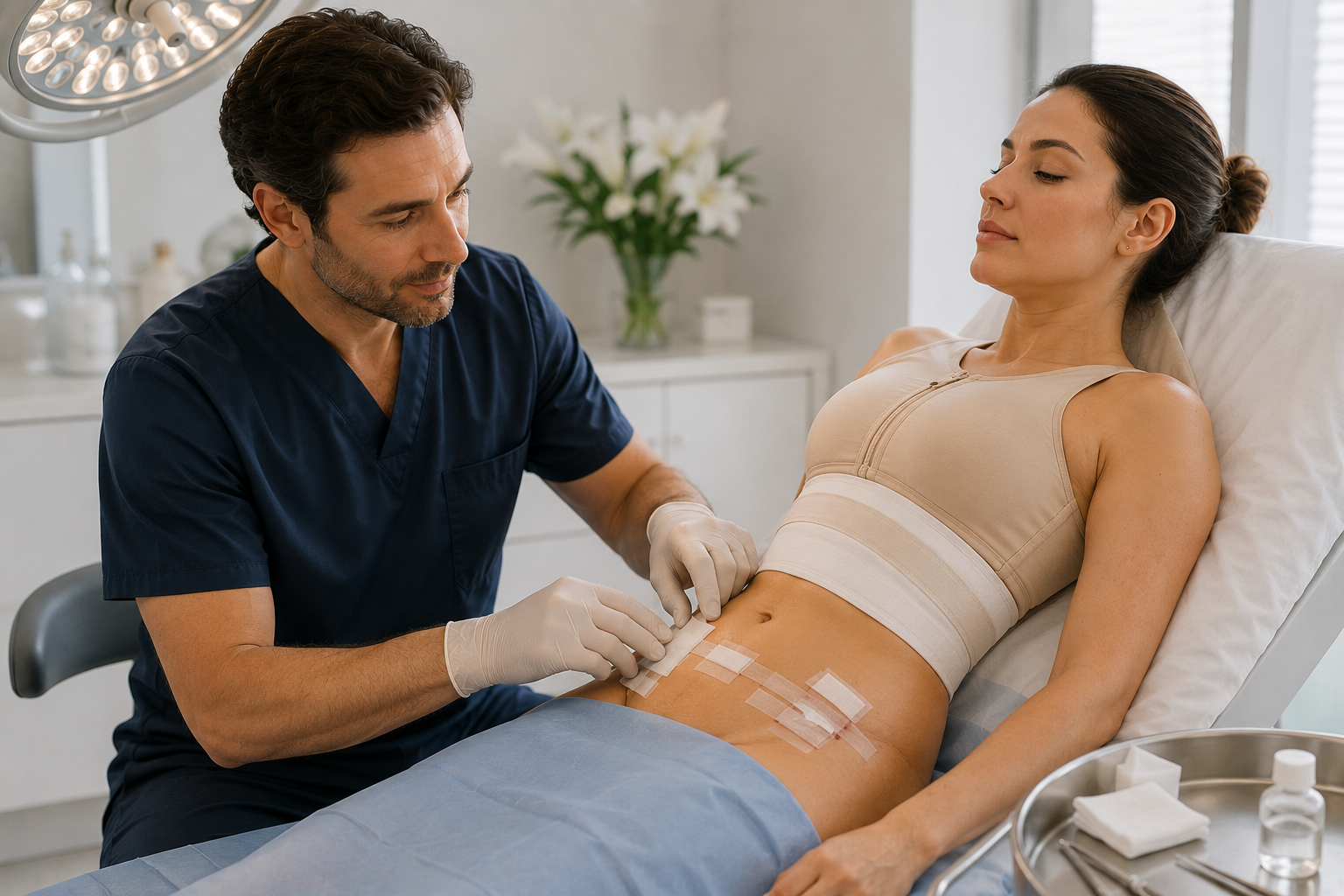
- Steri-Strips to keep in place: Steri-Strips are adhesive suture strips placed by the surgeon after certain operations (usually for superficial wounds). They must be kept on for about ten days, including in the shower. If they come off before the 10 days are up, there is no need to replace them;
- disinfecting the wound: in the days following the operation (or after the strips have come off), the wound should be disinfected daily by applying an antiseptic spray for about 8 to 10 days;
- moisturizing the scar: once the epidermal healing is fully complete (or the strips have come off) and with your surgeon’s agreement, a moisturizing cream should be applied regularly to the wound for 4 to 6 weeks.
How the scar evolves
The appearance of the scar will naturally change over time. Often red and thick in the days following the procedure, it will gradually turn pink as the inflammation fades little by little, until it approaches the natural colour and appearance of the skin and blends in completely after several months or years. Great care must nonetheless be maintained for at least 12 to 18 months, with:
- the systematic application of a very high-protection sunscreen (SPF 50+) or wearing covering clothing whenever the area is exposed to the sun or, more generally, to ultraviolet rays. This precaution is very important to avoid the depigmentation that can permanently darken the scar;
- massaging the scar twice a day with an oil or gel that is suitable and prescribed by the surgeon (only after the wound has sealed firmly). Massage helps to even out the tissue and prevent the scars from becoming hypertrophic or lumpy (keloid scars).
At the Rive Droite Paris Étoile practice, located near the Arc de Triomphe, our specialist surgeons (Dr Hunsinger, Dr Henri Derhy and Dr Privé) support you throughout the recovery process. Before and after the procedure, they will give you a list of tips and recommendations to follow to optimise scar healing, so as to achieve natural, harmonious results in the treated area.
Managing drains
Certain fairly significant plastic surgery procedures require drains to be placed (usually Redon drains) for at least about two weeks after the operation. Their purpose is to drain off blood fluids and the serum used during the procedure, thereby preventing the appearance of subcutaneous hematomas. This is the case in particular for abdominoplasty or certain breast surgery procedures (breast reduction, for example). These drains must be monitored regularly so that the residue is properly evacuated:
The monitoring protocol for good drainage
Daily monitoring should be planned for the fluids and residue to drain optimally:
- record the volume of liquid in the graduated bottle at a fixed time and write down the figure every 24 hours;
- observe the colour and appearance of the liquid in the tube (the tubing) once or twice a day: note your observations every day and report them to the surgeon, who will be able to draw conclusions about how recovery is progressing and anticipate any potential anomalies.
Spotting warning signs during drainage
From your daily observation of the drains, you should be able to spot anomalies or, conversely, to identify a normal course of recovery:
- the bottle filling up quickly (within a few hours) together with dark-red or bright-red liquid in the tube may be warning signs of a possible hemorrhage. In that case, contact your surgeon or the clinic where you were operated on without delay;
- a low volume of liquid in the bottle and a lightening of the colour in the tube (turning pink or even yellow), by contrast, indicate a favourable course. The drains can then potentially be considered for removal, generally after 15 days.
Removing the drains
The drains can be removed according to a strict protocol:
- removal criteria must be met before the drains can be taken out: the volume of liquid in the bottle must decrease gradually day by day and the liquid in the tube must be a clear colour (pale pink or light yellow). Removal is only possible once the amount of liquid is below 30 ml over 24 hours;
- removal must be carried out by a state-registered nurse who is qualified to judge whether or not removal is appropriate. It can be done at home during a check-up visit or at a medical practice. Remember to book the appointment ahead of time and never, under any circumstances, remove the drains yourself.
Key takeaways
Do not hesitate to contact the specialist surgeons of the CERDPE clinic in the 17th arrondissement of Paris. They will listen to your questions about post-operative follow-up and provide premium support throughout your recovery, in order to achieve discreet results and a natural, French-style appearance of the treated area.
Book an appointment
If you are considering a procedure, book an appointment in just a few clicks: our surgeons will answer all your questions and guide you toward a tailored, personalised solution.
Book on Doctolib