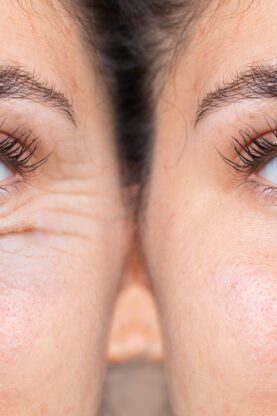
01What is a blepharoplasty?
Blepharoplasty comes in two main types of procedure, with distinct goals that can be combined:
- upper blepharoplasty, to correct drooping eyelids;
- lower blepharoplasty, which removes the bags under the eyes.
A few explanations on our TikTok channel:
@rivedroite_parisetoileBlepharoplasty: what is it? How does the procedure unfold? #blepharoplastie ♬ son original — RIVE DROITE PARIS ÉTOILE
Upper blepharoplasty
It treats the heavy, drooping eyelids that sag once they have lost their elasticity. The aim is to open up the eyes at the inner corner and to smooth the folds of the eyelid crease. After an incision hidden in the natural fold of the eyelid (upper palpebral sulcus), the surgeon removes the excess skin — and, if needed, muscle and fat — then redrapes the skin and closes it with a very discreet scar. The procedure lasts 30 minutes to 1 hour, under local anaesthesia, as a day case.
An expert nuance: excess eyelid skin (dermatochalasis) must be distinguished from a brow that has dropped — an accurate diagnosis avoids removing too much and keeps a natural look; a brow lift is sometimes more appropriate.
Lower blepharoplasty
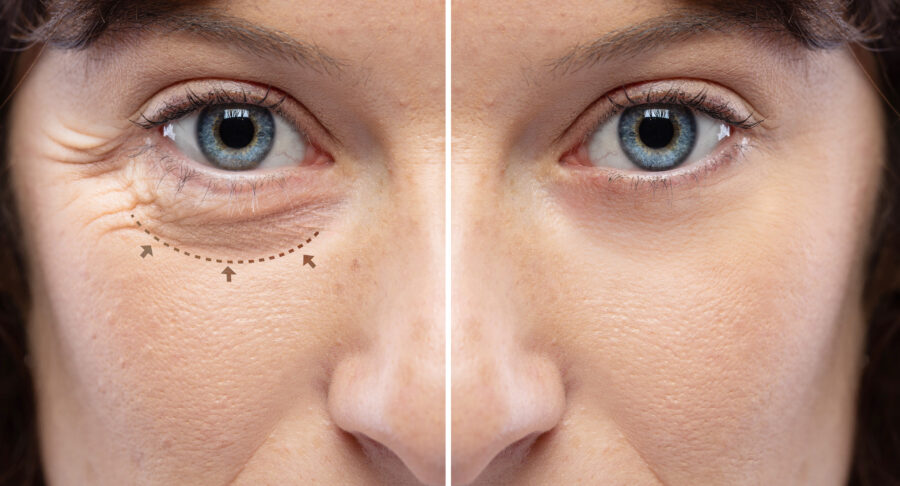
It treats the bags, the dark circles (including pigmented ones) and the folds around the eye. Over time, the fatty tissues shift — sometimes with water retention linked to poor blood supply — and form a fat herniation. Two approaches are possible:
- through an incision just below the lash line, following the natural fold out to the crow’s feet: the bags and the excess skin and muscle are removed from the outside. This approach also corrects fine lines, with an effect close to a cheek lift; re-tensioning the orbicularis muscle prevents a rounded-eye appearance or ectropion. Duration ≈ 1 hour, under general anaesthesia or sedation;
- through a transconjunctival approach, to remove a fat herniation without excess skin: the scar, hidden inside the inner mucosa, is completely invisible. Duration 30 to 45 minutes, most often under local anaesthesia.
Other techniques
Pinch blepharoplasty (pinching the roll of skin) treats thick or crepey lower eyelids: it removes the bags without lifting the skin or the orbicularis muscle, for a natural look and almost no downtime.
When the fatty volume has shrunk, fat can instead be re-injected through lipofilling to restore depth to the eyes: this is additive blepharoplasty. Surgery can also lift the tail of the brows (a « Fox Eyes » effect), and hyaluronic acid or botulinum toxin injections can complete the treatment of dark circles or a hollowed look.
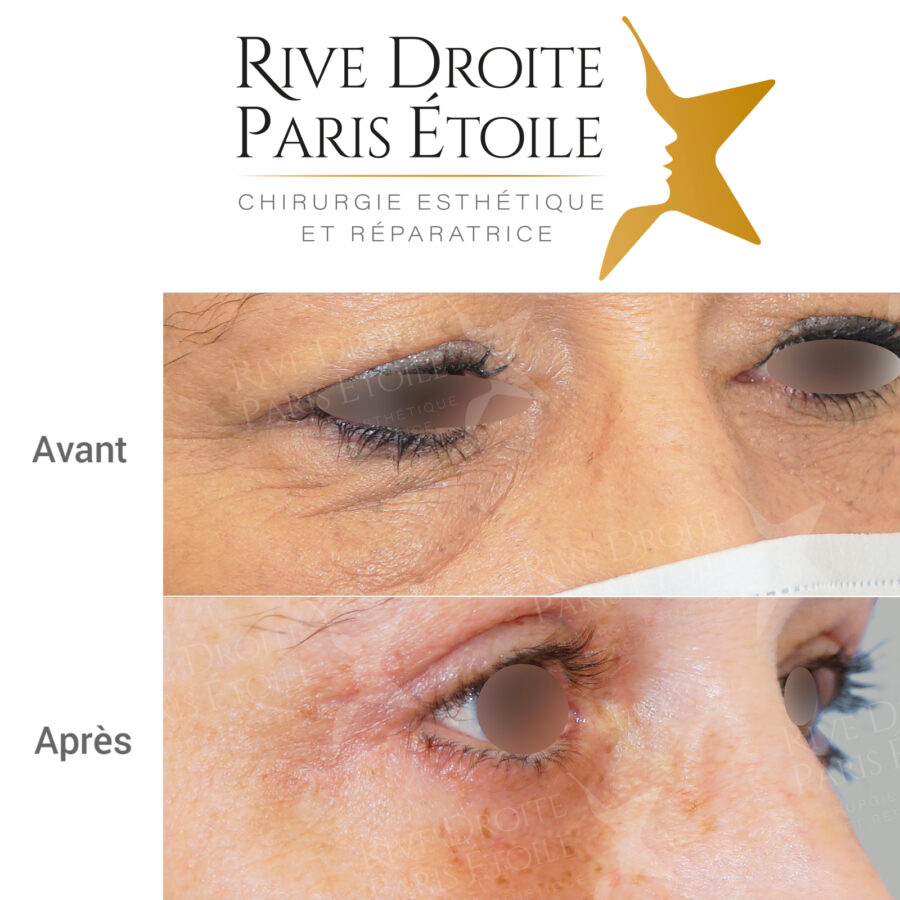
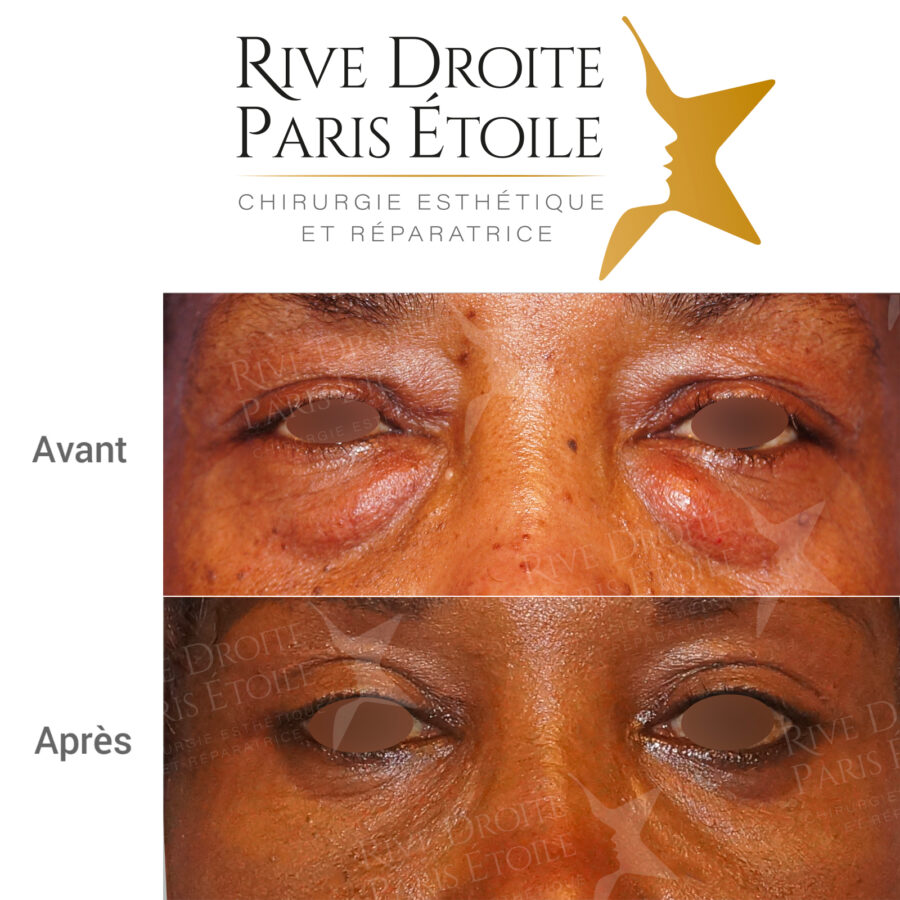
02Before / after results

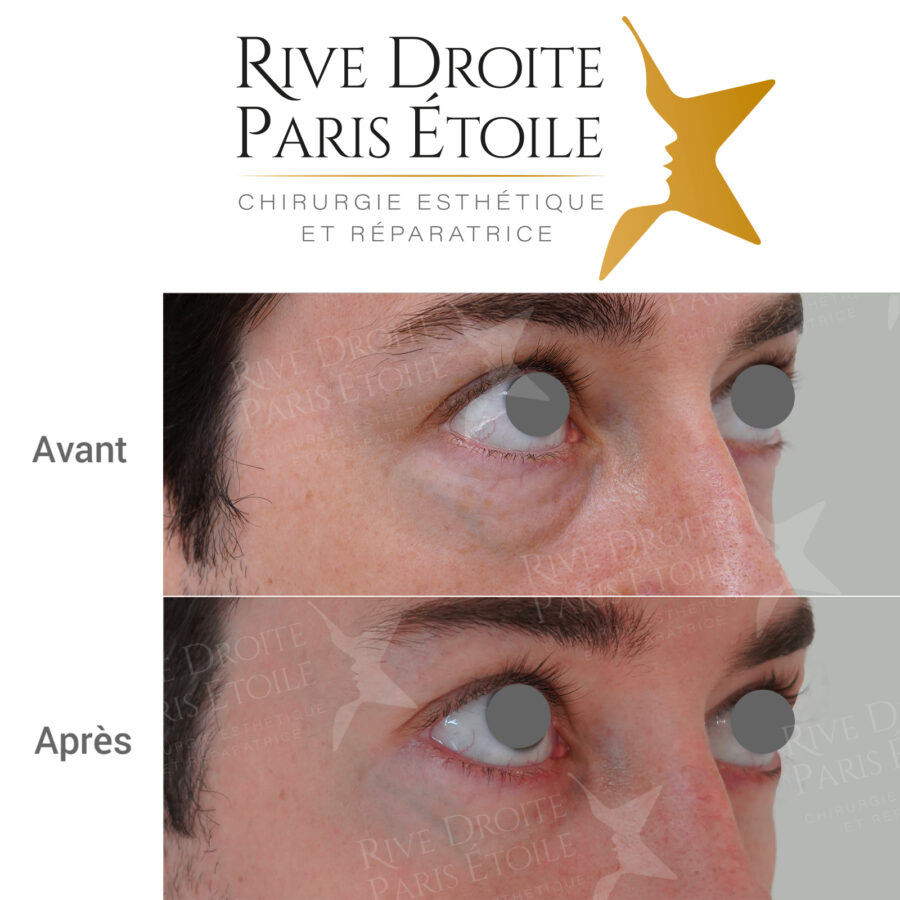
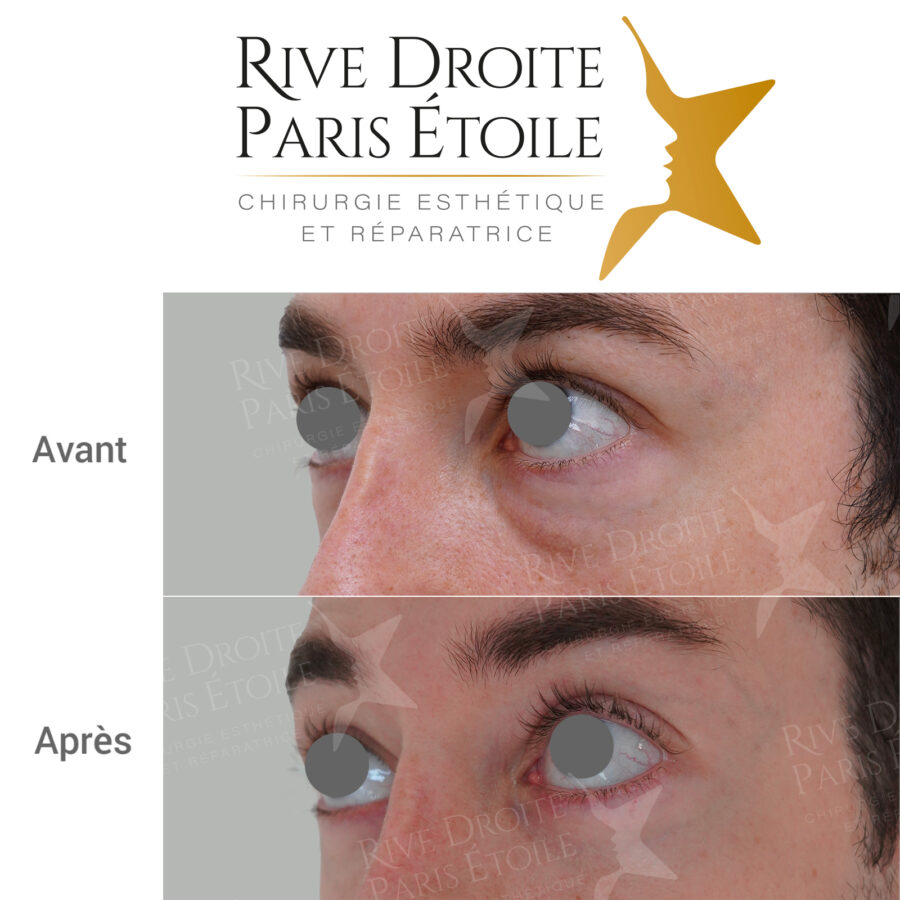
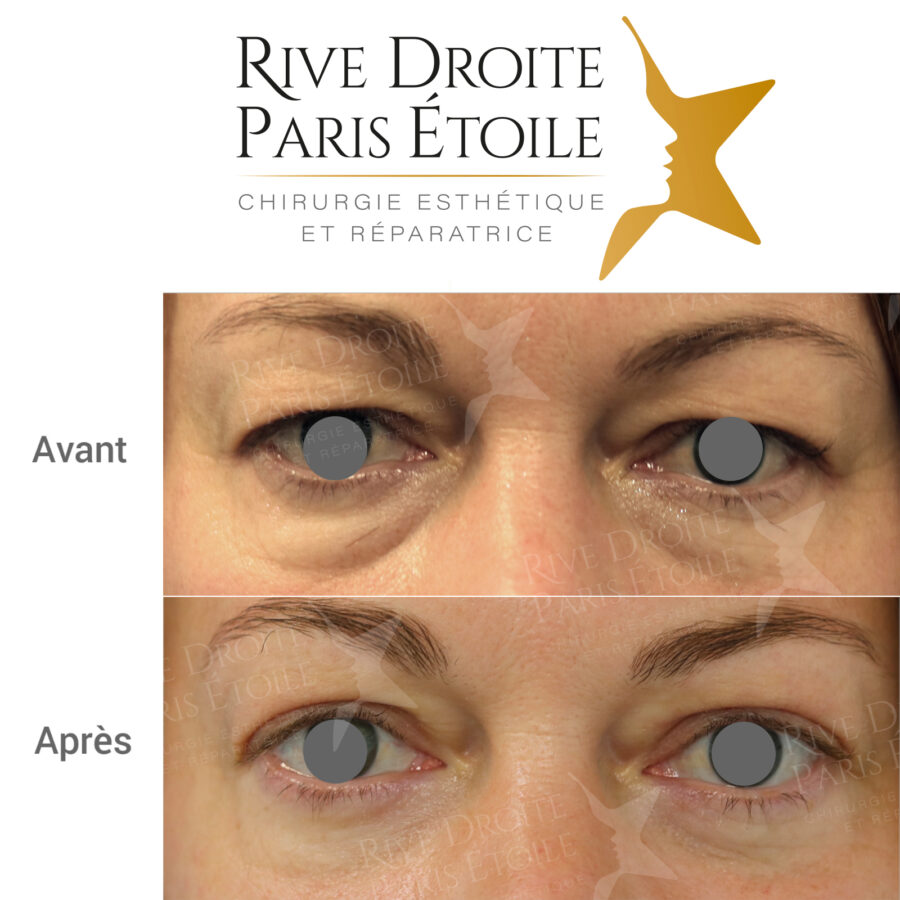
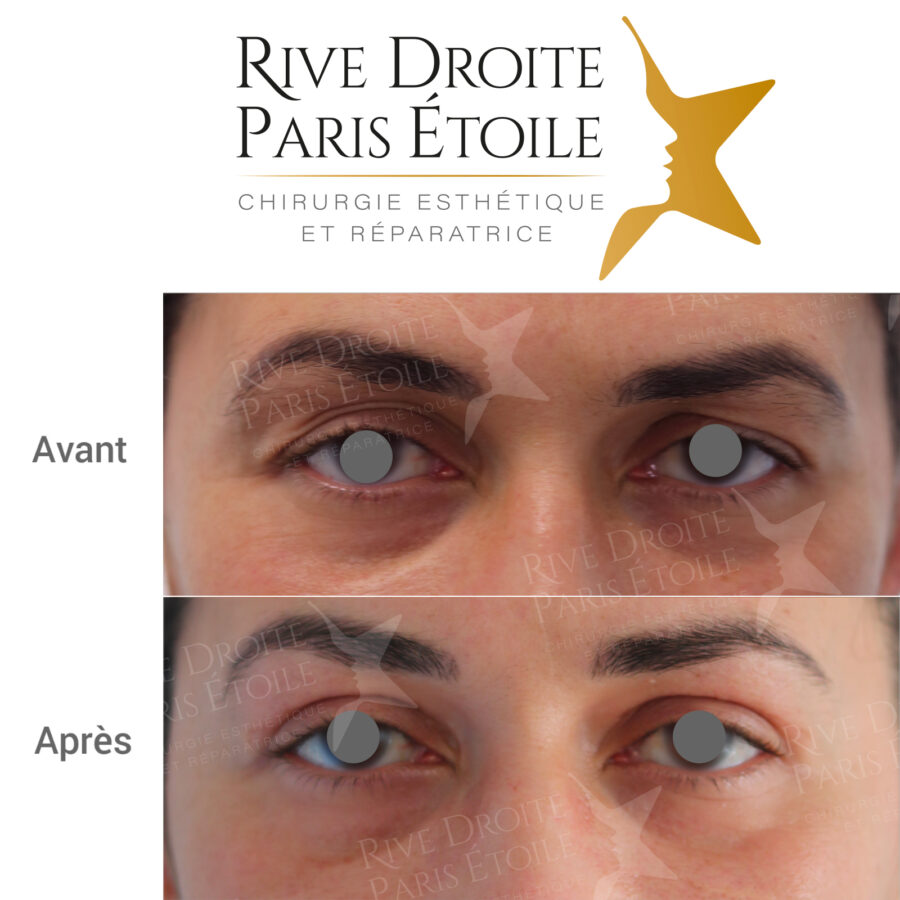
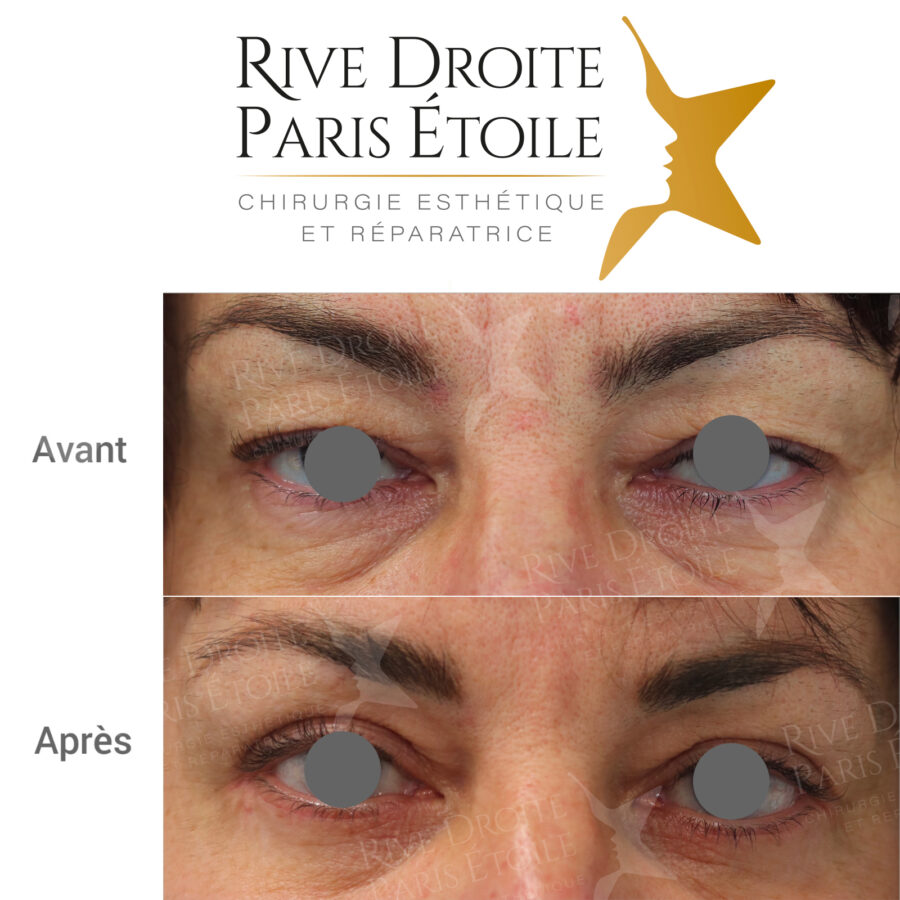
03How the procedure works
Before the procedure
- a first consultation sets the goals of the procedure;
- an ophthalmological assessment checks for any eye condition or contraindication;
- pre-operative instructions: stop smoking the month before, no aspirin or anticoagulants 10 days beforehand;
- a cooling-off period of at least 15 days is observed before the procedure;
- in the case of general anaesthesia, an appointment with the anaesthetist no later than 48 hours beforehand.
During the procedure
Whatever the technique, the surgeon follows a three-step protocol:
- small incisions in the natural fold of the eyelid or below the lashes;
- removal of the fat pockets (herniations) and the excess skin, treating any slackened muscles if necessary;
- the skin is redraped and the incisions closed with very fine sutures, removed a few days later.
The procedure is performed as a day case (home the same day) or with one night of observation, depending on the technique and the anaesthesia. The eyes look calmer and more rested as soon as the procedure ends.
After the procedure
Blepharoplasty causes little pain. In the first few days, you may feel tightness, watering and slight difficulty closing the eyes, which fade quickly; swelling and some bruising are common. Cold compresses limit the swelling, and a moisturising eye drop relieves eye dryness and sensitivity to light.
You can return to work after a few days (a week if your activity strains the eyes), and to sport after 2 to 3 weeks. The result is visible immediately and becomes permanent at around 3 months, once the swelling has gone down.
04Prices & fees in Paris
| Procedure | Aesthetic fees |
|---|---|
| Drooping eyelid – upper blepharoplasty | 2 500 – 3 500 € |
| Under-eye bags – four-eyelid blepharoplasty | 4 000 – 6 000 € |
Indicative “from” prices, surgeon fees included. The final quote is given at the consultation, after examination, depending on the area treated and the technique chosen. Part of the procedure may be covered by French national health insurance when the medical criteria are met.
05Your questions
How long do the results of a blepharoplasty last?+
The final result is appreciable 3 to 6 months after the operation. It lasts a good ten years or so for skin laxity, and is permanent for the under-eye bags.
How long does recovery take, day by day?+
The first 2 days: swelling and bruising, eased by cold compresses. Around the 3rd day, you can resume light activity. The sutures are removed around the 6th–7th day and work is resumed within the week. The bruises fade by around 10 to 15 days, sport resumes after 2 to 3 weeks, and the result stabilises at around 3 months.
What are the risks?+
They are very rare: in unusual cases, infection, an epidermal cyst or keratitis (involvement of the cornea). The procedure is generally very safe.
Are the scars visible?+
Already barely noticeable (hidden in a fold or below the lashes), they truly fade by around 6 months. Sun exposure should be avoided in the months that follow.
When can I return to work and sport?+
Time off work of at least 3 days is advised (more if your activity strains the eyes), with a return within the week. Intense sport resumes after 2 to 3 weeks.
Can a failed blepharoplasty be corrected?+
Yes, in many cases satisfactory corrections are possible. The best approach is to review it during a consultation with the surgeon, based on your specific case.
From what age can you have a blepharoplasty?+
There is neither a minimum nor a maximum age. Beyond the rejuvenating effect, it also serves to open up the eyes or correct dark circles, which can be done at any age.
Is general anaesthesia mandatory?+
No: upper blepharoplasty is often performed under local anaesthesia; lower blepharoplasty is more readily performed under general anaesthesia or sedation.
Is blepharoplasty reimbursed by the French health service?+
It can be when the excess skin of the upper eyelids obstructs the visual field (dermatochalasis / blepharochalasis), subject to prior agreement. In other cases, for purely cosmetic purposes, it is not reimbursed.
What is the price of a blepharoplasty in Paris?+
Expect from €2,500 for an upper blepharoplasty, and more for all four eyelids. The details are set out in the pricing and insurance coverage guide.