01What is facial fat transfer?
Facial fat transfer is an autologous fat graft: fat cells are harvested from an area where the patient has them in excess, then re-injected into the face to fill in or recreate volume. It is also called fat grafting, lipostructure, liposculpture or micro-fat transfer: these are synonyms. Because the fat comes from your own body (autologous graft), there is no rejection and no foreign body, and the feel stays perfectly soft and natural.
Beyond volume, the re-injected fat is rich in adipose stem cells: it also improves the quality and trophicity of the overlying skin — a « glow » effect that conventional dermal fillers do not provide. Refined since the work of American surgeon Sydney Coleman (« lipostructure »), the technique for harvesting, purifying and re-injecting the fat is now reliable and reproducible.
02Which areas and which indications?
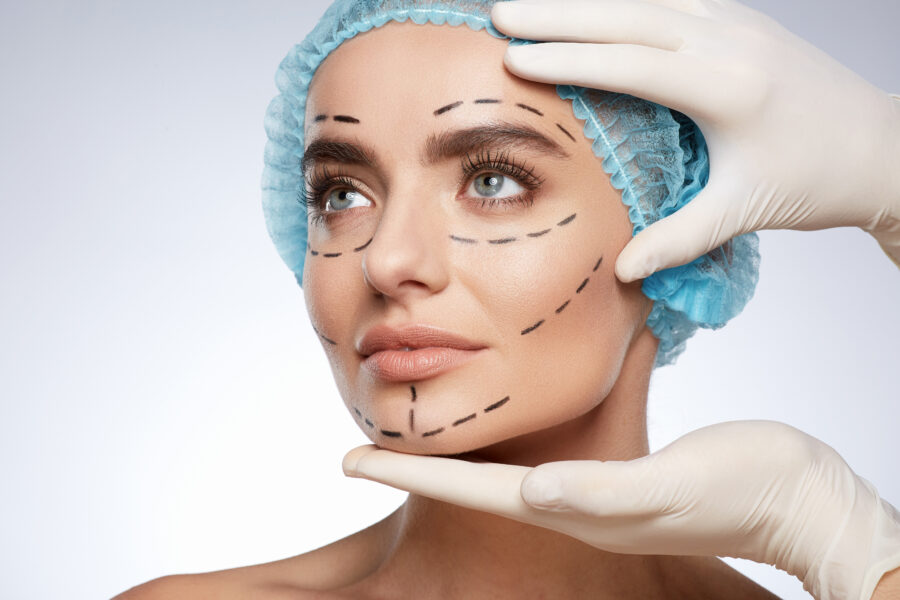
Facial fat transfer restores the volume that ageing causes to melt away and corrects certain congenital imperfections. It notably treats:
- sagging or flat cheekbones;
- hollow under-eye areas and the tear trough;
- hollow cheeks and sunken temples;
- the nasolabial folds and marionette lines;
- the facial contour and early jowls;
- the chin, forehead and mouth to be reshaped.
It is suitable for women as well as men, on its own or as a complement to a facelift or a blepharoplasty (the volume a facelift does not restore), sometimes instead of a second facelift. It also has a reconstructive role (facial atrophy, sequelae). Finally, it is the option of choice for anyone wanting permanent filling who wishes to stop repeated hyaluronic acid injections.
03The technique: harvesting, purification, re-injection
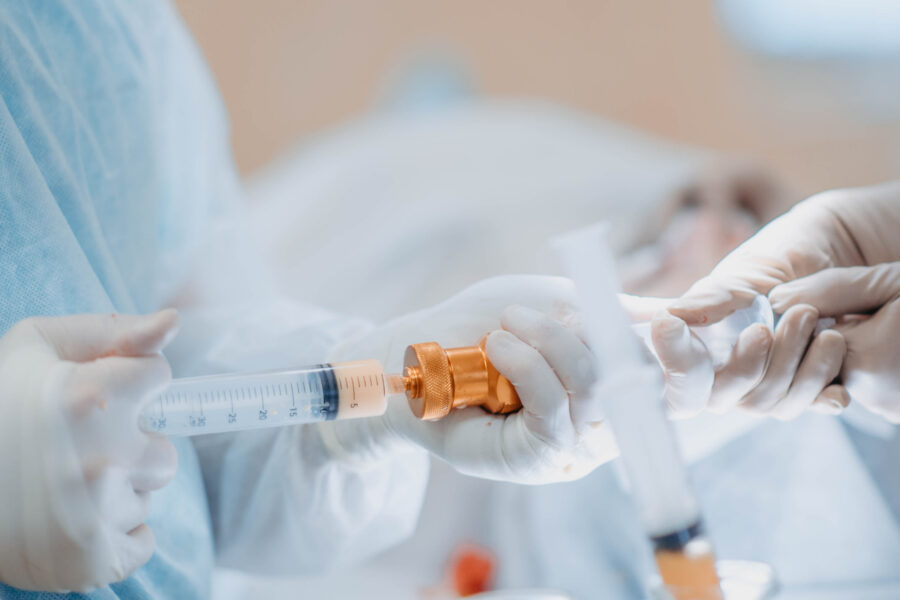
The procedure takes place in three stages. The fat is first gently harvested by micro-liposuction, most often from the inner knees, the abdomen or the thighs — which also slims down that area in the process. It is then purified (centrifugation or a wash bag such as Puregraft) to keep only the intact adipocytes. Finally, it is re-injected into the face using micro-cannulas, in small amounts spread across the different planes, for an even, natural result.
The harvesting and re-injection incisions measure less than one millimetre: they leave no visible scar.
04Longevity and permanent result
Part of the re-injected fat does not « take » and is reabsorbed by the body in the first few weeks. The take rate is between 60 and 80 %: the fat that has revascularised is then permanently integrated. The volume therefore decreases slightly at first, then stabilises around the 3rd–6th month: that result is permanent. This is the whole advantage of facial fat transfer over hyaluronic acid: once achieved, it no longer disappears.
The grafted fat then behaves like the rest of the body’s fatty tissue: it changes with weight. Large weight fluctuations are therefore avoided, and smoking cessation is observed, as it determines good take. If a large volume is sought, a second session may be offered to perfect the result.
05Facial fat transfer or hyaluronic acid: which to choose?
Both fill in volume, but in different ways:
- hyaluronic acid is non-surgical, immediate and reversible, but temporary (to be repeated every 12–18 months) and has no effect on skin quality;
- facial fat transfer is a minor surgical procedure (with a few days of recovery) but permanent, made of your own tissue, and it improves the appearance of the skin.
In practice, hyaluronic acid is suitable for testing or for small one-off volumes; facial fat transfer is the obvious choice as soon as you want to durably restore a face that has hollowed out, or to put an end to repeated injections.
06Risks, safety and a « botched fat transfer »
Performed by an experienced plastic surgeon, facial fat transfer is a reliable procedure with mild recovery (transient swelling and bruising). Serious complications are rare. What the phrase « botched fat transfer » most often refers to is uneven take or asymmetry, or else over-filling giving a « puffy » face — situations that are corrected by a touch-up or, in case of excess, by gentle liposuction. Hence the importance of a measured approach (the « natural French style ») and of an operator who specialises in fat re-injection. The genuine surgical risks (infection, haematoma) remain exceptional and are prevented by following the pre- and post-operative instructions.
07How the procedure works
Before the procedure
The plan is built over two consultations with the surgeon (plus an anaesthesia consultation if general anaesthesia is planned): assessment of the facial volumes, the donor areas and your expectations, with photographs and a quote. The usual instructions before facial surgery apply: stopping smoking at least 1 month beforehand (and 1 month afterwards, for better fat take), and stopping aspirin, anti-inflammatories and anticoagulants in the 15 days beforehand.
During the procedure
Facial fat transfer is most often carried out under local anaesthesia (sometimes with sedation, or under general anaesthesia if another procedure is combined), as a day case. It lasts from 30 minutes to 2 hours depending on the number of areas. The surgeon harvests the fat themselves by micro-liposuction, purifies it, then re-injects it into the face with a micro-cannula, in successive thin layers, constantly checking the symmetry and harmony of the contouring.
After the procedure
You go home the same day. Pain is mild and relieved with paracetamol; no nursing care is required and showering is allowed from the next day. Swelling and bruising appear on the face and the harvesting area and fade within 10 to 15 days — a delay to allow for before any event. Activities are resumed within 5 to 7 days (avoiding sport and heat for a few weeks). The result can be appreciated from the 1st month and becomes permanent around 3 to 6 months, with regular follow-up (1 week, 1, 3, 6 months then 1 year).
08Prices & fees in Paris
| Procedure | Aesthetic fees |
|---|---|
| Facial fat transfer | 3 500 – 5 500 € |
Indicative “from” prices, surgeon fees included. The final quote is given at the consultation, after examination, depending on the area treated and the technique chosen. Part of the procedure may be covered by French national health insurance when the medical criteria are met.
09Your questions
What is the price of facial fat transfer in Paris?+
At the practice, facial fat transfer is offered between €3,500 and €5,500 depending on the number of areas treated, the volume of fat to be harvested and any combined procedures. It is plastic surgery, so it is not covered by national health insurance; a precise quote is given after the clinical examination.
Is the result permanent? What is the « longevity » of facial fat transfer?+
Yes. Part of the fat (20 to 40 %) is reabsorbed in the first few weeks; the portion that has taken — that is 60 to 80 % — revascularises and becomes permanent. The volume stabilises around the 3rd–6th month and no longer disappears, unlike hyaluronic acid. The grafted fat then changes with weight.
Facial fat transfer or hyaluronic acid: what is the difference?+
Hyaluronic acid is non-surgical, immediate and reversible but temporary (12–18 months). Facial fat transfer is a minor surgical procedure but permanent, performed with your own fat, and it also improves skin quality. One lets you test or fill in one-off areas, the other durably restores volume.
Which areas of the face can be treated?+
The cheekbones, the under-eye areas and the tear trough, the hollow cheeks and temples, the nasolabial folds, the facial contour and early jowls, as well as the chin, forehead and mouth. It can be combined with a facelift or a blepharoplasty.
Is facial fat transfer painful?+
No, it is a low-pain procedure: simple painkillers (paracetamol) are enough. The discomfort comes mainly from the swelling and bruising of the first few days.
What is recovery like? How long does the swelling last?+
You go home the same day. The swelling and bruising on the face and the harvesting area fade within 10 to 15 days; returning to social and professional life generally takes 5 to 7 days. Sport and heat are avoided for a few weeks.
Can a facial fat transfer go wrong? What are the risks?+
Serious complications are rare. A disappointing result most often corresponds to uneven take, asymmetry or excess volume (a « puffy » face) — correctable with a touch-up or gentle liposuction. The best safeguard: a measured approach and a surgeon who specialises in fat re-injection.
How long does the procedure take?+
From 30 minutes to 2 hours depending on the number of areas to treat. It is performed as a day case, most often under local anaesthesia.
Does facial fat transfer leave scars?+
No. The harvesting and re-injection incisions measure less than one millimetre and leave no visible scar.
Is a second session sometimes needed?+
Sometimes, yes: when a large volume is sought or the take has been a little low, a second session makes it possible to perfect and reinforce the result. It is discussed once the result has stabilised.
Does the result hold up in case of weight loss?+
The grafted fat behaves like the rest of the body’s fatty tissue: it varies with weight. A stable weight is therefore preferable, and smoking cessation (1 month before and after) promotes good, lasting take.