01The different types of breast implants
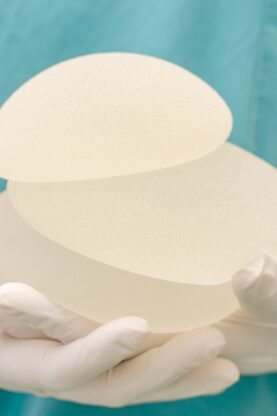
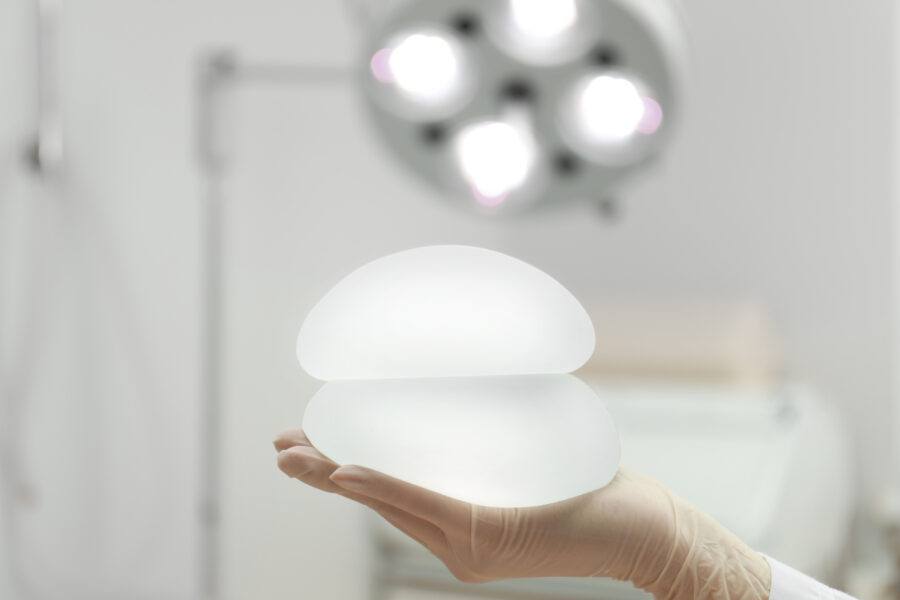
Breast augmentation with implants is, along with breast lipofilling, one of the breast augmentation techniques offered at the practice. Implants today come in two main shapes:
- i
Round implantsthe vast majority of placements. Made of cohesive silicone gel, they give a harmonious contour and all but rule out any risk of rotation. The ergonomic versions adapt to movement for a very natural look, particularly suited to « emptied breasts » after pregnancy or weight loss.
- ii
Anatomical implantsteardrop-shaped and very soft. They are barely used anymore since the ban on macro-textured surfaces (risk of rotation).
The correct positioning of the implant is decisive for a natural result: an implant placed too high looks artificial. To help you choose the right type of implant for your anatomy, the surgeon relies on the clinical examination and a 3D simulation.
02Before / after results


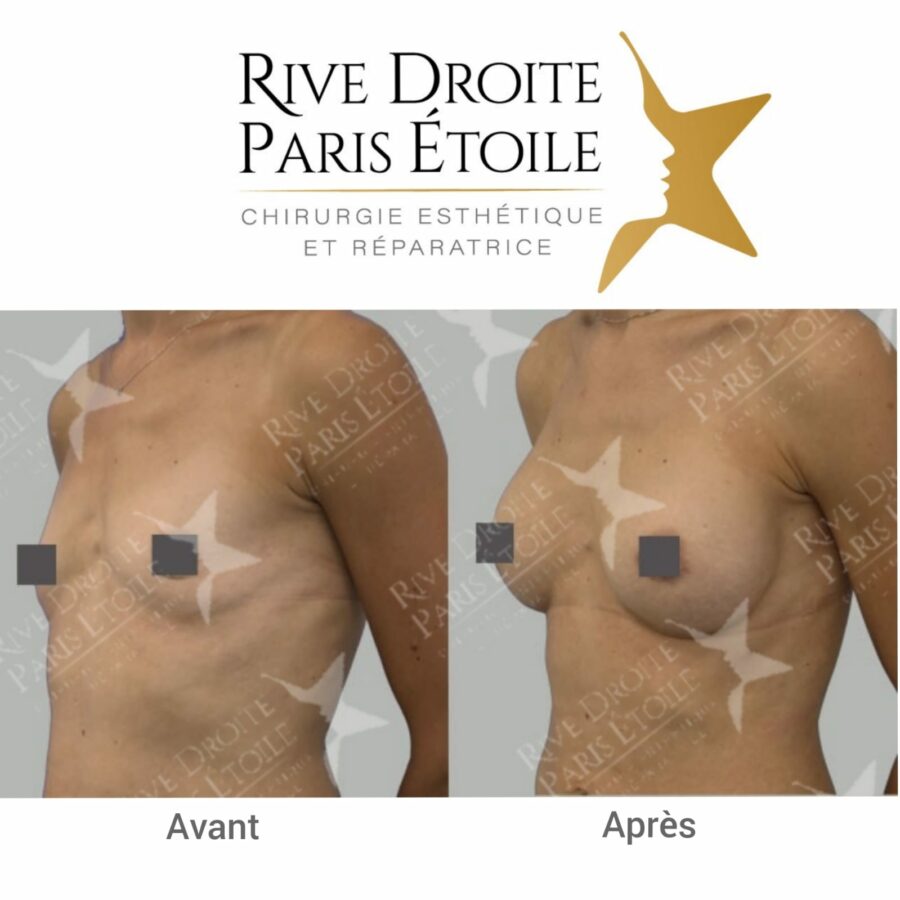
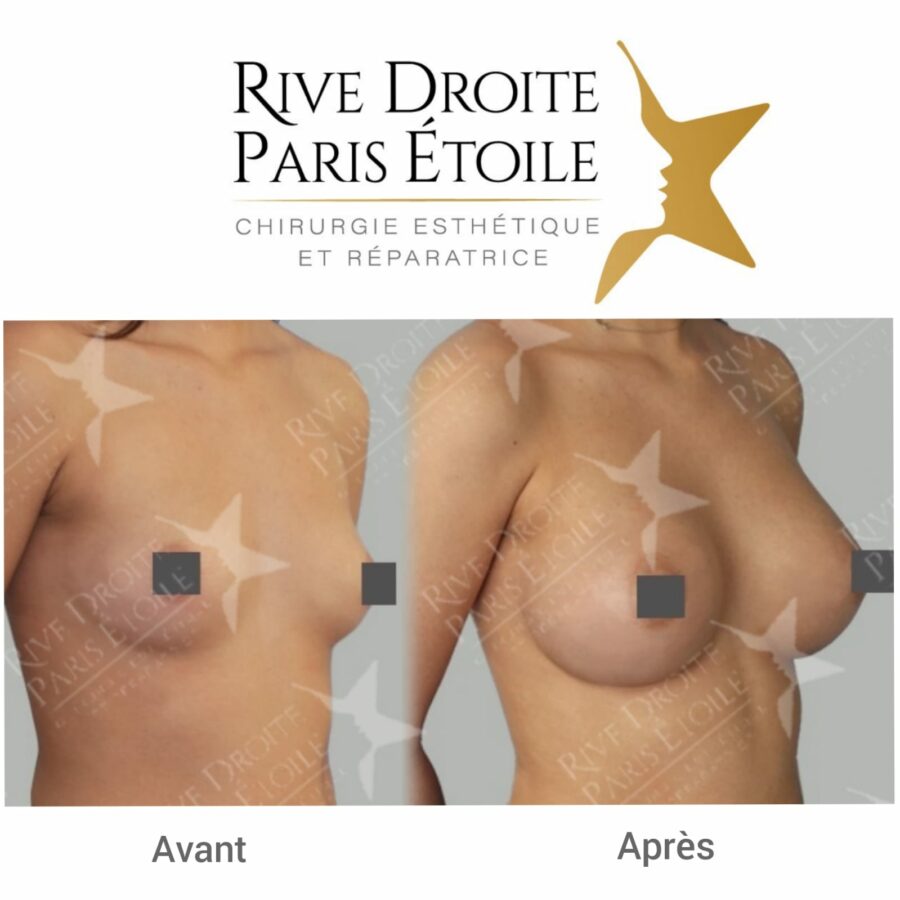


03How the procedure works
Before the procedure
A few pre-operative precautions are required: stopping smoking in the 2 months before the procedure (risk of skin necrosis), stopping anti-inflammatories, anticoagulants and aspirin 2 weeks before (risk of haemorrhage), and stopping oral contraception 1 month before. A pre-operative mammogram is requested after age 35 or if there is a breast cancer risk factor.
The placement is preceded by two consultations at the Rive Droite Paris Étoile clinic. The surgeon assesses your anatomy, proportions and skin quality, then determines the type of procedure, the location of the implants and the surgical approach. You choose the desired volume and shape, which you can preview through fittings and a 3D simulation.
During the procedure
The surgeon makes a short incision (4 to 5 mm) via one of three surgical approaches: inframammary (the fold under the breast), axillary (the armpit) or peri-areolar (around the areola) — the approach that leaves the most discreet scar for your case.
The surgeon then creates the pocket and chooses the implant positioning: submuscular (behind the muscle), subglandular (in front of the muscle) or dual plane (straddling the muscle) — the positioning most often used at the practice for a natural contour. A long-acting painkiller is infiltrated to limit pain, drains are placed, then the incision is closed and protected with a shaping dressing and a support bra.
After the procedure
Recovery is marked by some pain in the first few days (tissue tension), eased by painkillers, and discomfort when raising the arms while you get used to the new volume. Swelling, present in the first days, gives an impression of excessive volume and then subsides over about two weeks, revealing a near-final result.
- wearing a support bra for about 6 weeks, with daily cleansing;
- plan for about ten days of downtime (to schedule as time off);
- follow-up visits at 1 week then 1 month, followed by a check-up every 2 years.
If you are still hesitating between implants and your own fat, compare the two approaches on our breast augmentation page.
04Prices & fees in Paris
| Procedure | With insurance coverage | Aesthetic fees |
|---|---|---|
| Breast implants | 3 800 – 4 800 € | 5 400 – 7 000 € |
| Breast implants + lipofilling of the contours | 6 500 – 8 000 € | 8 200 – 10 000 € |
Indicative “from” prices, surgeon fees included. The final quote is given at the consultation, after examination, depending on the area treated and the technique chosen. Part of the procedure may be covered by French national health insurance when the medical criteria are met.
05Your questions
How much does breast augmentation with implants cost in Paris?+
Expect from 5,400 € for an augmentation with implants, and from 8,200 € with lipofilling of the contours (composite). For a reconstructive indication, partial insurance coverage is possible (from 3,800 €). Full details in the pricing and insurance coverage guide.
Round or anatomical implants: which should you choose?+
Round implants (ergonomic) now account for nearly all placements: a natural contour and no risk of rotation. Anatomical implants are barely used anymore. We explain this choice in our round or anatomical breast implants guide.
In front of or behind the muscle: where is the implant placed?+
There are three positions: subglandular (in front of the muscle), submuscular (behind) and the dual plane (straddling), the most used at the practice because it offers a natural contour and good support of the upper pole. The choice depends on your anatomy and skin quality.
How long does a breast implant last?+
An implant is not a lifelong device: its lifespan is about 10 years on average. Some patients keep them longer, provided there is regular monitoring (usually an ultrasound every 2 years). A replacement may therefore be considered over the course of a lifetime.
What is a capsule (capsular contracture)?+
The body naturally forms a thin membrane (capsule) around any implant. In rare cases, this capsule contracts and hardens the breast: this is capsular contracture, which can be uncomfortable and may require revision surgery. Choosing modern implants, careful surgical technique and following post-operative instructions markedly reduce the risk.
What scar results from augmentation with implants?+
The scar depends on the surgical approach: inframammary (in the fold), axillary (the armpit, with no scar on the breast) or peri-areolar (around the areola). All are short and chosen to stay as discreet as possible; they fade over time.