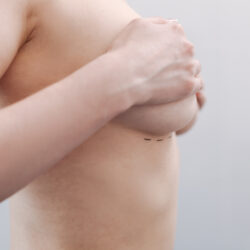
01Breast surgery procedures in Paris
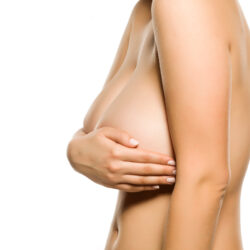
Breast surgery, or mammary surgery, brings together two main areas: plastic surgery, which changes the appearance of the bust according to the patient’s wishes, and reconstructive surgery, which corrects a malformation or rebuilds the breast after illness. Depending on whether you wish to enlarge, reduce, lift or reconstruct, several techniques are available.
Increasing breast volume
Breast augmentation is the most requested procedure. Volume can be added with breast implants, a long-lasting and predictable solution, or with breast lipofilling — breast augmentation without implants, using your own fat, for a measured and very natural increase in volume. The choice depends on your body shape, the volume you want and the amount of fat available.
Reducing and relieving a breast that is too heavy
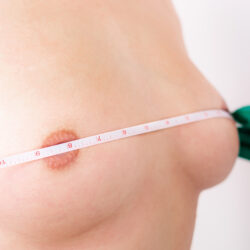
Breast reduction decreases breast volume and lifts the breasts, relieving the back, neck and shoulder pain caused by breast hypertrophy. Beyond the aesthetic aspect, it offers a real functional benefit.
Correcting sagging breasts (ptosis)
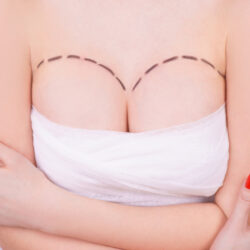
When the skin has stretched after pregnancy, breastfeeding or weight loss, a breast lift (mastopexy) repositions the areola and restores a firm shape to the breast, with or without an implant if there is also a lack of volume.
Correcting a breast malformation
The correction of tuberous breasts treats this common congenital malformation, while breast asymmetry is corrected by adjusting the volume and shape of each breast to restore balance.
Rebuilding the breast after cancer
Breast reconstruction after cancer restores shape and volume to the bust after a mastectomy, using an implant or the patient’s own tissue. It can be immediate or delayed and is part of the breast cancer care pathway.
In men: gynecomastia
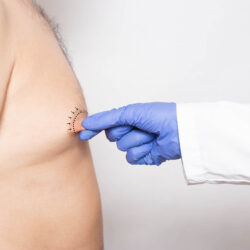
Gynecomastia surgery corrects excessive development of the mammary gland in men, through liposuction and/or removal of the gland, for a more masculine chest.
02Who is breast surgery for?
These procedures are for women — and for men in the case of gynecomastia — who are bothered by the volume, shape or symmetry of their bust, in good general health and at a stable weight. An ongoing pregnancy or a planned pregnancy in the near future, as well as breastfeeding, may lead to postponing certain procedures. Quitting smoking at least one month before surgery is required in order to optimise healing. The consultation makes it possible to check that the request is realistic and that the planned technique matches your body shape.
03The process: consultation, work-up and anaesthesia
The process begins with a consultation with Dr Vincent Hunsinger, in Paris 17th: listening to your project, clinical examination, choice of technique and a written estimate, followed by the legally required fifteen-day reflection period. A pre-operative work-up is carried out, most often including breast imaging (mammogram and/or ultrasound) and an anaesthesia consultation. The procedure takes place under general anaesthesia, as a day case or with one night’s hospital stay depending on the procedure, lasting from one to three hours.
04Recovery, scars and results
Wearing a compression bra is usual for several weeks. One to two weeks off work is generally enough, with a more gradual return to sport. The scars depend on the technique (around the areola, in the inframammary fold, sometimes vertical); they are placed to remain discreet and fade over the months. The final result can be assessed once everything has settled, over three to six months.
05Price and insurance coverage for breast surgery in Paris
The cost depends on the procedure and the technique; it is detailed in a personalised estimate provided during the consultation, fees included. Purely cosmetic procedures (augmentation, aesthetic lift) remain the patient’s responsibility. However, certain procedures qualify for insurance coverage from the French national health insurance under conditions: breast reduction is reimbursed when at least 300 g are removed per breast, and reconstruction after cancer is covered at 100% under the long-term-illness scheme. An important point about implants: breast implants are not lifelong devices — regular monitoring is recommended and a replacement may become necessary over the years.
06Your questions
Breast augmentation: with or without implants?+
There are two options. Implants provide long-lasting, controlled volume; lipofilling enlarges the breast with your own fat, for a more modest gain but without any foreign body. The choice is made during the consultation, depending on the volume you want and your body shape.
Is breast reduction reimbursed?+
Yes, under one condition: breast reduction is covered by the French national health insurance when at least 300 g are removed per breast. Reconstruction after cancer is covered at 100%. Purely cosmetic augmentations are not reimbursed.
Can you breastfeed with breast implants?+
In the vast majority of cases, yes: implants are placed behind the gland or the muscle and do not remove the ability to breastfeed. Some reduction or lift techniques may, however, reduce it; this point is discussed during the consultation if a pregnancy is planned.
Do breast implants need to be replaced regularly?+
An implant is not a lifelong device. It is not replaced on a fixed schedule, but regular monitoring is recommended and a replacement may become necessary over the years in case of wear or change. A periodic imaging check is advised.
Does breast surgery leave visible scars?+
Any incision leaves a scar, but it is placed in naturally hidden areas (around the areola, in the inframammary fold). With suitable aftercare, it fades markedly within a few months. Lipofilling, for example, leaves only tiny injection points.
What is the price of breast surgery in Paris?+
It varies depending on the procedure (augmentation, reduction, lift, reconstruction) and the technique chosen. A detailed estimate, fees included, is provided during the consultation at the Rive Droite Paris Étoile practice, after an examination.
How much time off should you plan after the operation?+
Generally allow one to two weeks off work. The compression bra is worn for several weeks and the return to sport is gradual. The result settles over three to six months.