How to reduce swelling (edema) after liposuction
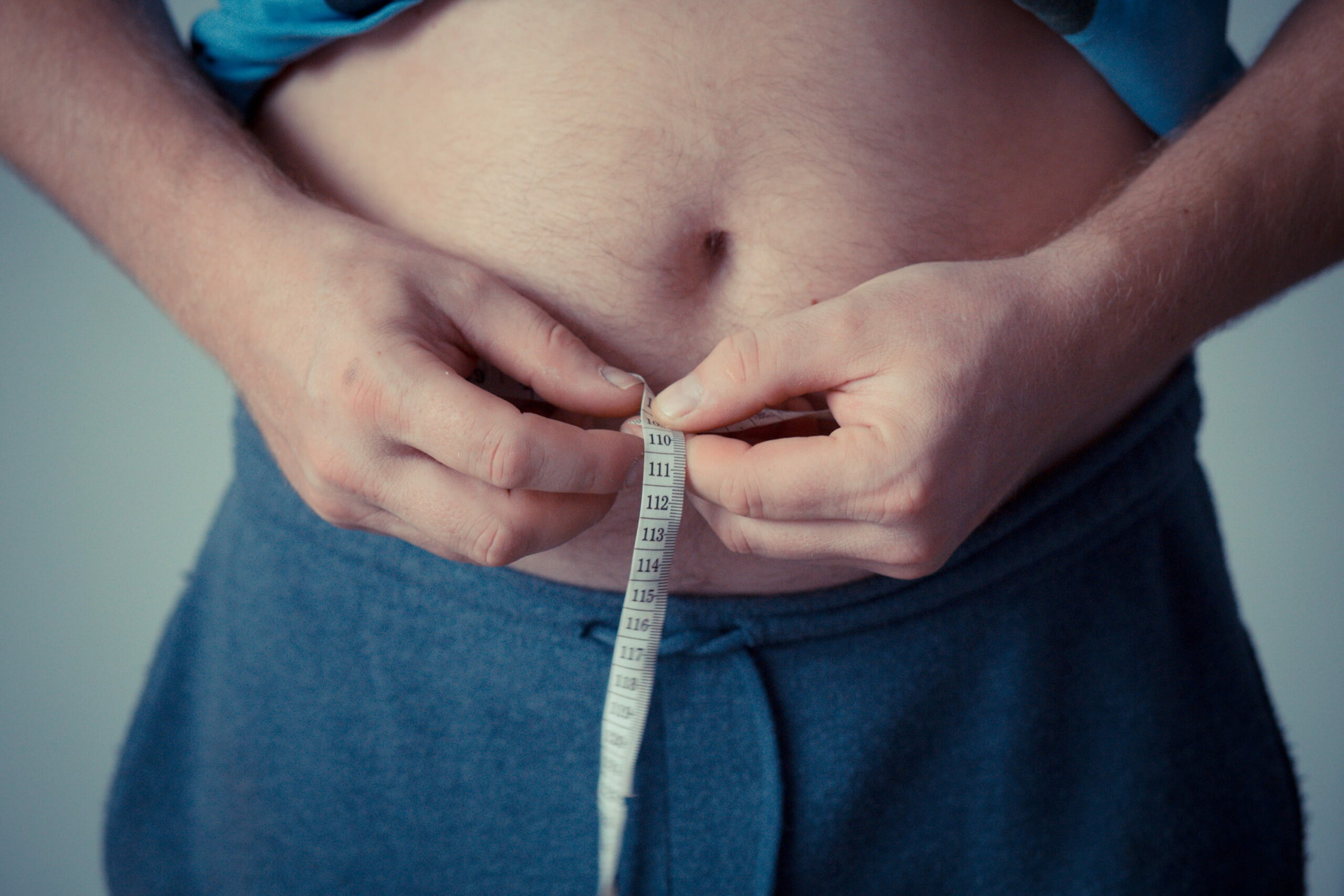
Inactivity, age, poor eating habits… both women and men often have to deal with excess fat in various parts of the body, particularly over time. Accumulating around the hips, belly, thighs or buttocks, these excessive and unwanted fat cells tend to distort the lines of the body.
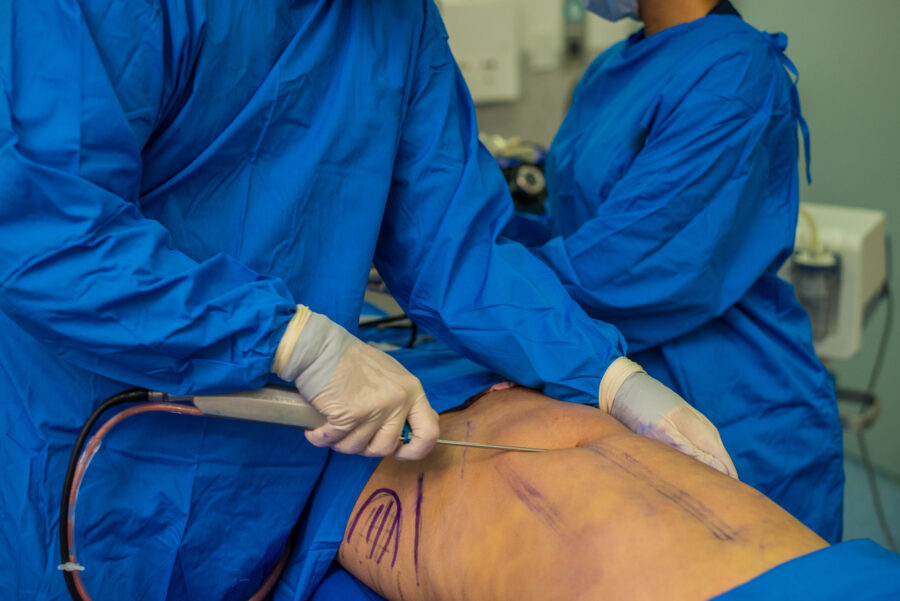
To remove these pockets of localised fat, liposuction, also called lipoaspiration, is a suitable solution. This plastic surgery procedure makes it possible to reshape the body’s contours. The technique is not, however, without post-operative consequences: after the procedure, it is common to see some swelling appear. Fortunately, there are effective techniques to reduce swelling after liposuction, which we detail below.
Contents
Reducing swelling with post-operative aftercare
Liposuction, like any plastic surgery procedure designed to target and remove excess fat, generally leaves no visible scar, thanks in particular to the use of fine, round-tipped cannulas. However, before seeing the final result, with the body’s contours sculpted, redefined and perfectly reshaped, the patient is in the vast majority of cases faced with the appearance of a fluid build-up in the tissues: this is swelling, or edema.
To minimise these side effects, the priority is to follow appropriate aftercare from the very first moments after the procedure. Post-operative aftercare plays an extremely important role in achieving the best possible result and shortening how long the treated area stays swollen. This aftercare notably involves a series of massages and physiotherapy techniques that speed up the resorption of bruising and the reduction of swelling. In particular, roll-and-pinch massage helps reduce the risk of rippling and irregularities, further optimising the procedure’s final result.
Reducing swelling with lymphatic drainage
After the plastic surgery procedure used to remove excess fat, the muscles are often under tension. Added to the pain the body may feel after the procedure is the swelling itself. To reduce both this pain and the swelling at the same time, surgeons very often prescribe massage sessions or post-liposuction lymphatic drainage.
This technique is strongly recommended from the third day after liposuction, depending on the intensity of the pain. If the pain is still very significant, it is best to wait a little before starting these sessions, which aim to relax the treated area and drain lymphatic fluid through the vessels. Speeding up the elimination of waste through this technique helps accelerate the healing process. The massage works by stimulating the immune system and activating lymphatic flow.
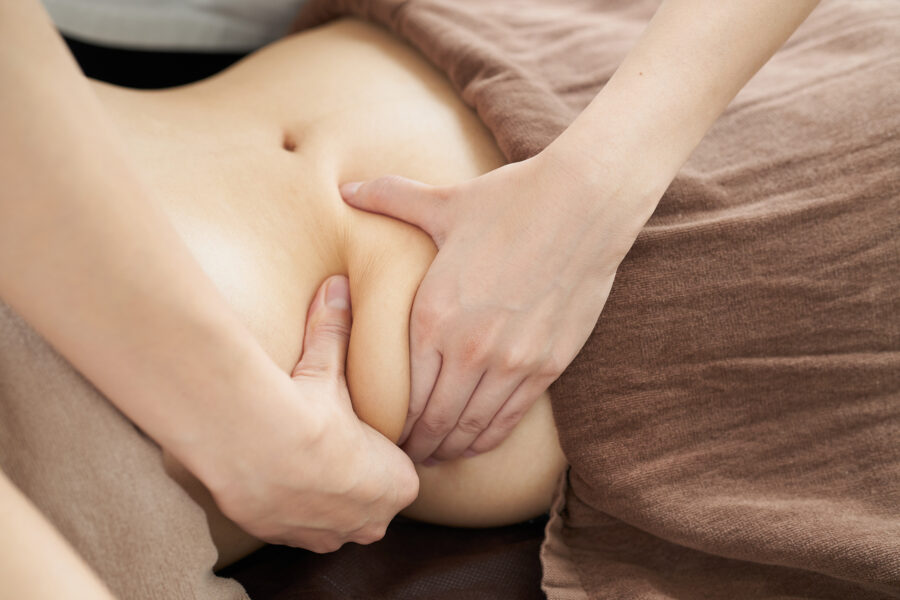
This process easily and quickly helps eliminate fluids and waste from the body. The massage thus relaxes all the tired muscles, and regular passes over the swollen area then make it possible to bring the swelling down quickly. The risk of rippling and irregularities is also reduced with this technique.
The ideal course of lymphatic drainage is generally 4 to 10 sessions, at a rate of around two sessions per week during the first few weeks, depending on the number of areas treated with liposuction and the amount of fatty tissue removed. Each session tends to make recovery more comfortable for the patient, who can feel the accumulated deposits gradually being eliminated after the procedure. After each session, the tissues regenerate and the skin becomes smoother and naturally tighter.
Wearing a compression garment
Wearing a compression garment is absolutely necessary after liposuction. It is indeed very important in order to compress the tissues, reduce post-operative swelling as quickly as possible and consolidate the procedure’s results. We cover this in detail in our article dedicated to liposuction recovery and the benefits of a compression garment.
Reduced swelling and an improved final result
While wearing this type of garment (girdle, shorts or panty depending on the treated area) can feel restrictive, it helps apply pressure to the body to speed up the elimination of toxins and reduce swelling. It is generally worn for three to six weeks depending on the extent of the procedure and the surgeon’s recommendations. These garments can, however, be worn very discreetly, since they are invisible under clothing, just like ordinary underwear.
In addition to reducing the risk of side effects such as swelling, wearing a compression garment helps perfect the result obtained. It can be worn as soon as the procedure is over and must be kept on even at night or in the shower during the first two days after the procedure. The garment can then be removed for one hour a day to wash and carry out aftercare.
Choosing the right compression garment
The compression garment may need to be worn for longer when the tissues still require compression beyond a month. In that case, it should generally be worn for two additional weeks. In any event, it is best to have your surgeon assess your progress during a check-up, when they can advise you on whether or not to keep wearing the garment for an optimal recovery.
To reduce the discomfort of wearing a compression garment, be sure to choose a model suited to your size and body shape. It must in no way restrict your movements or your blood circulation. You can favour elasticated models or lightweight ones such as the panty, the shorts (for a thigh lift), the girdle (notably for an abdominoplasty and belly swelling), the bodysuit or the belt depending on the area to be treated.
Endermologie, the innovative post-operative treatment to reduce swelling
Thanks to advances in technology, there is now a very effective system to bring post-operative swelling down quickly. This is the endermologie treatment, which uses a high-precision technological device: the Cellu-M6 or LPG. This device was specially designed on the principle of automated roll-and-pinch massage. This latest-generation equipment has already proven itself and is a valuable aid in stimulating the skin’s cellular activity. As well as being effective in fighting cellulite, this treatment also delivers visible, natural and fast results in eliminating post-operative swelling.
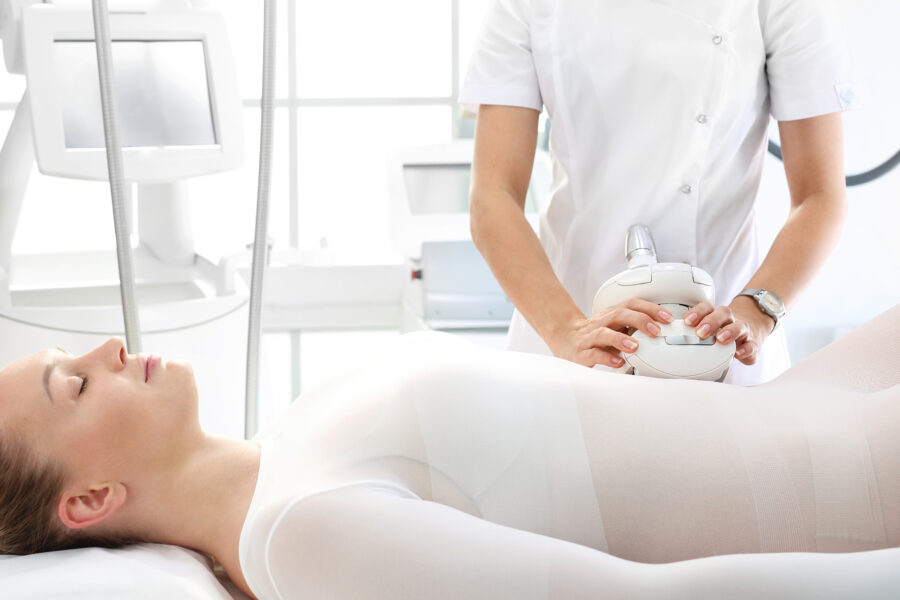
Using this device significantly limits the side effects of the procedure in the first few days and then makes it possible to refine the lines of the contour visibly, with a very minimally invasive application. The treatment lasts from 10 days to two months.
Taking anti-inflammatories
To bring post-operative swelling down, surgeons often prescribe anti-inflammatories. This treatment is also very effective at reducing the pain that can occur in the first few days, due to the repeated contraction of the muscles (aches). The dose and duration of treatment vary from one patient to another depending on their profile, the amount of fat cells removed or their tolerance to pain. Painkillers are also often combined with an anti-inflammatory agent that helps bring the swelling down.
If a painkiller does not have a sufficient effect on the swelling, anti-inflammatory medication taken in addition is an alternative. Taking anti-inflammatories must, however, always be done on prescription from the surgeon or treating physician.
If swelling peaks after 48 hours, it is also recommended to apply an ice pack (cryotherapy) every fifteen minutes in the first hours after the procedure, for the first two days. The cold indeed helps reduce the diameter of the vessels and decrease the production of pain-inducing substances that sustain the pain. Cold, combined with light compression, thus reduces swelling, especially in the first two days when the swelling can be particularly dramatic.
Reducing swelling with LED photobiomodulation
LED photobiomodulation (Light Emitting Diode), also called LED therapy, is also a fairly effective technique to quickly bring down swelling after liposuction. It is a technology that involves exposing the skin to a cold light. This light acts in the deep layers of the epidermis and provides various restorative effects for skin prone to swelling after liposuction.
Through LED therapy, the skin is thus rehydrated, toned and deeply repaired. This technique, which can treat very large areas, is used both before and after the procedure to reduce swelling and pain. Combined with other post-operative aftercare methods, LED photobiomodulation can prove effective, particularly as a complement to traditional methods.
How long does swelling last after liposuction?
This is the first question patients ask: how long does it take for the swelling to go down? Post-operative swelling follows a fairly predictable course. The swelling generally peaks between day 3 and day 10 after the procedure, then resorbs gradually. Most of the swelling disappears during the first month, but residual, more subtle swelling can persist for several weeks to a few months depending on the number of areas treated and the volume of fat removed. This is why the final result of a liposuction is assessed on average between the 3rd and 6th month, once the swelling has fully resorbed and the skin has perfectly redraped.
This duration varies from one patient to another. Areas where the skin is thinner or the tissues more mobile — the pubic area, after a mons pubis liposuction, the ankles, the inner thighs or the belly after an abdominal liposuction — can stay swollen a little longer. Strictly following post-operative aftercare (compression, drainage, cold) remains the most effective way to shorten this duration and recover your reshaped body contour more quickly.
Anti-swelling medication after surgery: what does the surgeon prescribe?
There is no « miracle » medication that would make swelling disappear in a few hours: resorption remains above all a natural process, supported by aftercare. Several treatments can nonetheless be prescribed to speed up resorption and ease the discomfort. All of them require a medical prescription: self-medication must be avoided after surgery.
Among the medications most commonly used to limit post-operative inflammation and swelling are proteolytic enzymes such as bromelain (Extranase is its best-known form), a pineapple extract whose anti-swelling and anti-inflammatory action is documented in surgery. The surgeon may also prescribe conventional anti-inflammatories and painkillers, as mentioned above. On the complementary side, some patients use homeopathy (Arnica montana, Apis mellifica) or venotonics that promote lymphatic return; these options, without replacing essential aftercare, are generally well tolerated. Whatever treatment is considered, it is your surgeon who determines the right drug, dose and duration for your profile and the type of procedure.
Persistent swelling, hard areas: when should you worry?
In the vast majority of cases, swelling after liposuction is perfectly normal and eventually disappears. During the first few weeks, it is common to feel firmer or hardened areas under the skin: these « hard areas » most often correspond to organised swelling and the early stages of tissue fibrosis. They usually soften on their own over the weeks, and lymphatic drainage as well as roll-and-pinch massage help them resorb.
Certain signs should, however, prompt you to contact your surgeon promptly: swelling that worsens instead of decreasing after the first week, increasing pain, localised redness or warmth, fever, or a marked asymmetry between two treated areas. Swelling that persists significantly beyond several months also warrants an opinion. These situations remain rare, but regular post-operative follow-up remains the best guarantee of a smooth recovery and a result that lives up to your expectations.
Frequently asked questions
How long does swelling last after liposuction?+
Swelling peaks between day 3 and day 10, then resorbs gradually. Most of the swelling disappears during the first month; more subtle residual swelling can persist for several weeks to a few months. The final result is assessed on average between the 3rd and 6th month, depending on the number of areas treated and the volume of fat removed.
Which medication should I take for post-operative swelling?+
No medication makes swelling disappear instantly. The surgeon may, however, prescribe anti-inflammatories, painkillers and sometimes a proteolytic enzyme such as bromelain (Extranase) to speed up resorption. Some patients additionally use homeopathy (Arnica montana, Apis mellifica). All these treatments require a medical prescription: self-medication must be avoided after surgery.
How can I speed up swelling resorption after liposuction?+
The most effective levers are wearing the compression garment diligently, manual lymphatic drainage (4 to 10 sessions), applying cold in the first few days, endermologie (LPG) and good hydration. These treatments work in synergy: it is their combination, from the very first days, that shortens the duration of swelling the most.
When should lymphatic drainage start after liposuction?+
Lymphatic drainage is generally recommended from the third day after the procedure, depending on the intensity of the pain, at a rate of about two sessions per week during the first few weeks. If the pain remains sharp, it is best to wait a little and follow your surgeons instructions.
Are hard areas after liposuction normal?+
Yes. During the first few weeks, it is common to feel firmer or hardened areas under the skin: they correspond to organised swelling and the early stages of fibrosis. They most often soften on their own over the weeks, and both lymphatic drainage and roll-and-pinch massage help them resorb.
When should you worry about swelling after liposuction?+
You should contact your surgeon promptly if the swelling worsens instead of decreasing after the first week, in the event of increasing pain, localised redness or warmth, fever, or a marked asymmetry between two treated areas. Swelling that persists significantly beyond several months also warrants an opinion. These situations remain rare, but regular follow-up is the best guarantee.
Book an appointment
If you are considering a procedure, book an appointment in just a few clicks: our surgeons will answer all your questions and guide you toward a tailored, personalised solution.
Book on Doctolib