How long does swelling last after a facelift?
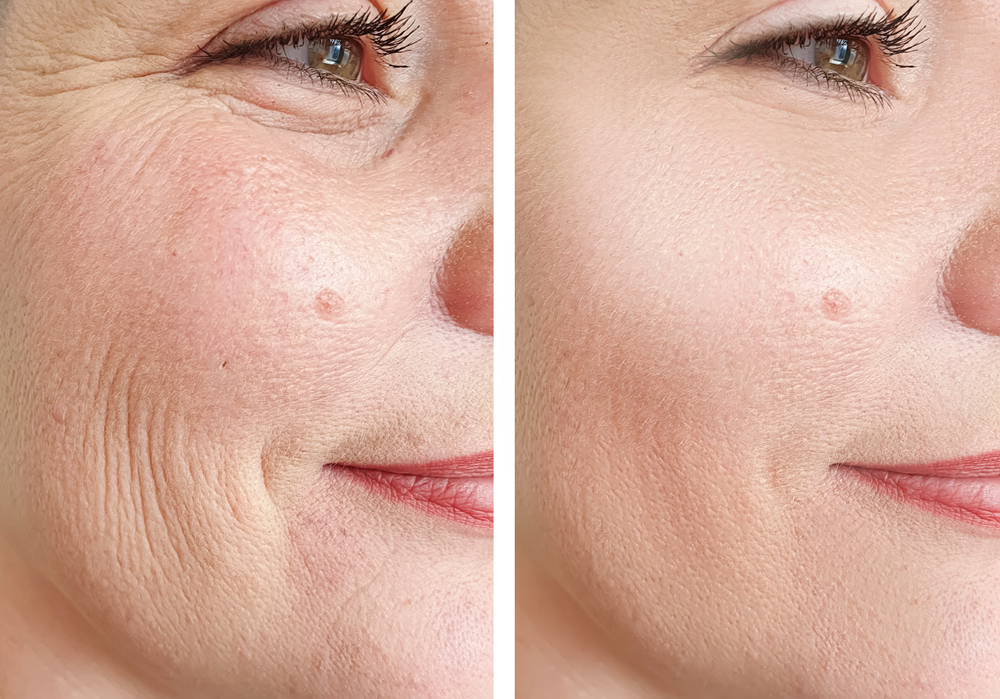
A facelift, or face and neck lift, is a very commonly performed plastic surgery procedure. While wrinkles and fine lines are a normal part of skin ageing, it is now possible to address them and soften their effects by re-tightening the skin. Performed in particular on the forehead, temples, cheeks and cheekbones, the aim is either to rejuvenate the face as a whole or to treat one specific area. Although this procedure is very well mastered today, it nonetheless causes post-operative swelling. How long does swelling last after a facelift? How can it be reduced and the recovery period optimised? Here are some practical tips to limit swelling after a facelift.
Contents
Facelift: an overview
To get an idea of how long the skin takes to recover after the operation, it is worth first reviewing how the procedure unfolds. In order to re-tighten the tissues, the surgeon uses various techniques of their own.
As a general rule, however, the procedure involves several stages. The surgeon first makes the incision around the ear and within the hairline, which helps conceal the scar. This is followed by lifting the tissues to remove the excess skin (tissue excision), then the treatment of the muscles with the re-tightening of the skin muscles. Finally, the surgeon places fine sutures.
A facelift can last 2 to 4 hours and is performed under general anaesthesia, although in some cases it may be carried out under local anaesthesia. A blepharoplasty, or eyelid surgery, is often performed at the same time to rejuvenate the eyes.

After a facelift, the period during which you will want to stay out of social settings generally lasts around 15 days. The change happens gradually, and the final results only become truly visible from 6 months onwards. As for the scars, this time it takes around 12 months before their appearance gradually fades. Follow-up consultations and check-ups should be attended during this period to ensure proper healing and the patient’s recovery.
How swelling occurs after a face and neck lift
Swelling is one of the first side effects of a facelift and may take some time to subside. The operation in fact dilates the lymphatic vessels, and the damaged tissues can then retain more fluid.
The patient may therefore notice redness and significant warmth in certain areas due to the increased blood flow. This swelling only goes down once the vessels reconnect to one another to restore smooth circulation. It is at that point that they begin to work normally again and allow effective lymphatic drainage. The face can then gradually return to its normal state.
Swelling can be a sign of healing or of inflammation. If in doubt, it is advisable to seek advice from your general practitioner or the specialist surgeon. As soon as you feel any abnormal pain, as though a mass is weighing on you, do not hesitate to consult your surgeon immediately, in particular to avoid a soft-tissue infection.
It is worth knowing that swelling is not at its greatest on the day of the operation: it builds up gradually and generally peaks around the 3rd or 4th day, as reported by the American Society of Plastic Surgeons, before easing off over the following weeks. Seeing your face more swollen two or three days after the procedure than when you came round from theatre is therefore an expected progression, not a sign that things are getting worse.
Swelling: a normal post-operative reaction after a facelift
It is entirely normal to have facial swelling after a facelift. It may even prove asymmetrical in some cases. While swelling usually subsides within about ten days, it can sometimes last for weeks, or even months, in patients with very reactive skin. It all depends on how your body works. The way swelling goes down will therefore differ from one person to another, which makes it difficult to give a generic recovery timeframe.
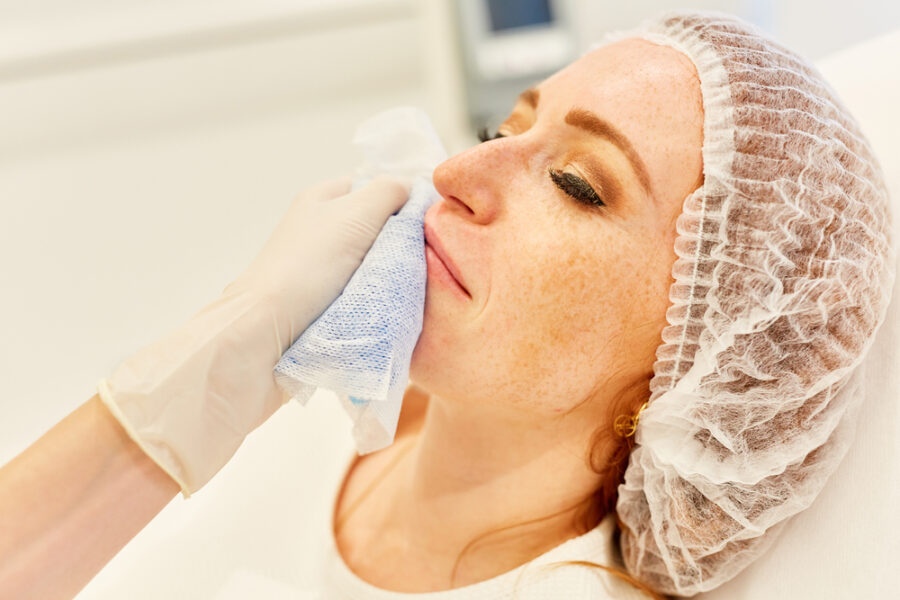
Generally speaking, most swelling will go down by up to 60% during the first few weeks following surgery. You will then see around 80% of the swelling subside 3 months after the operation. You will wait 6 months before 90% of the swelling disappears. The remaining 10% can take a whole year, or even longer for some people.
Persistent swelling after a facelift: is it cause for concern?
Noticing persistent swelling after a facelift, several weeks after the procedure, often comes as a surprise. Yet it is common: slight residual swelling, sometimes asymmetrical, may remain for one to two months, particularly around the neck and jaw, where the lymph takes longer to recover. As long as it is steadily decreasing and remains painless, there is nothing abnormal about it. On the other hand, swelling that suddenly increases again, becomes red, hot and painful, or is accompanied by a fever should prompt you to consult your surgeon promptly: it may then be a haematoma or an infection that needs treating. When in doubt, it is always better to seek medical advice than to wait too long.
How long healing takes after a facelift
On seeing the scars, some patients may be tempted to conceal them by various means, which is not always advisable. During the months following the procedure, they are indeed visible. To let the skin breathe and heal at its own pace, you should allow at least 7 days. It is therefore recommended to respect this delay before applying corrective products such as foundation, make-up or concealer. So, before wearing make-up, wait for your plastic surgeon’s advice. To go further on this stage, you can read our article on the results and healing after a facelift.
A few tips to reduce swelling after a facelift
Even though each patient is treated differently, there are a few precautions you can take to reduce facial swelling after the procedure. Some specialists will advise, among other things, wearing a compression garment, or Press Lift (a compression band placed around the face and chin), in the days following the operation in order to limit swelling, stabilise the re-tightened tissues and improve blood circulation.
How long should the Press Lift be worn?
The length of time you wear the Press Lift is always set by your surgeon, but the most common pattern is to wear it day and night for 5 to 7 days, then only at night for a further two to three weeks. This compression band supports the face during the phase when swelling is most marked and helps the tissues settle back into place harmoniously. It is important to respect the duration indicated at your follow-up: not less, at the risk of allowing the swelling to set in, and not more without medical advice.
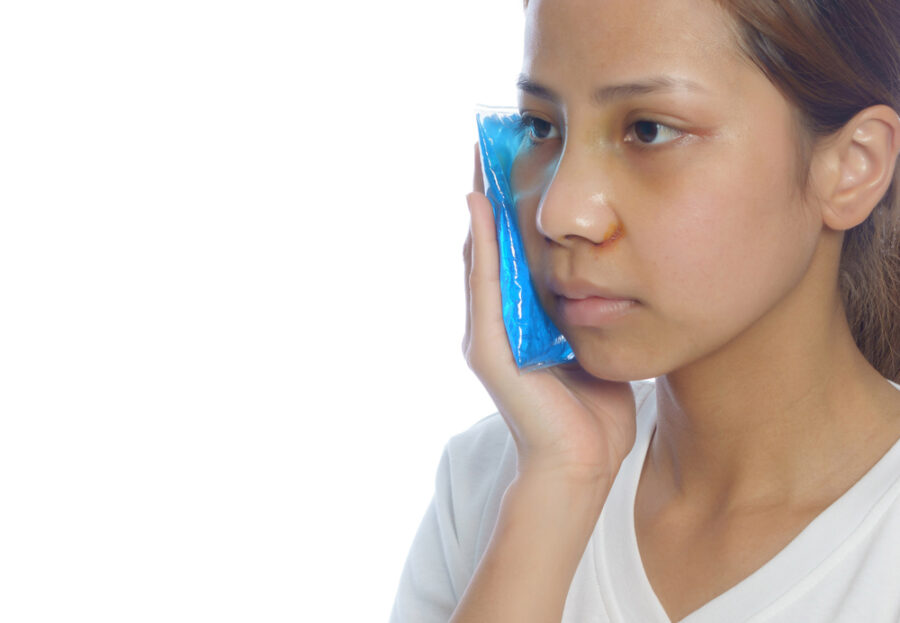
Using ice packs in the first few days helps reduce swelling and relieve discomfort.
You can also follow a low-salt diet, even before surgery, in order to prepare the body for the work of healing and recovery in the best possible conditions. This will in fact help greatly reduce water retention. It is also advisable to sleep with your head elevated during the first two weeks after the operation to allow the cells to drain.
Once a week, you can also perform a gentle lymphatic massage (firm but gentle pressure). Applying a cool compress around the treated areas is also recommended during the first few days following the operation. Finally, remember to walk regularly to avoid the risk of phlebitis, without making overly abrupt movements that could, on the contrary, worsen the swelling.
To reduce bruising, often associated with swelling, some surgeons allow arnica taken orally or applied locally, as well as avoiding alcohol and tobacco, which slow down healing. A passing sensation of tight or board-like skin is also normal: it corresponds to the swelling and the new skin tension, and it eases as the tissues soften — a well-performed facelift does not leave a frozen look or any lasting board-like effect.
Facial massage after a facelift: when to start?
Facial massage after a facelift should not be improvised in the very first days, when the tissues are still fragile. Gentle massage intended to soften the treated areas and help the swelling subside is generally started from 3 to 4 weeks onwards, once the inflammatory phase has passed, and always under the supervision of the surgeon or a physiotherapist. Manipulating too early or too firmly could, on the contrary, restart the swelling or weaken the sutures. Scar massage, for its part, is only undertaken after complete healing.
Lymphatic drainage: an effective way to reduce swelling
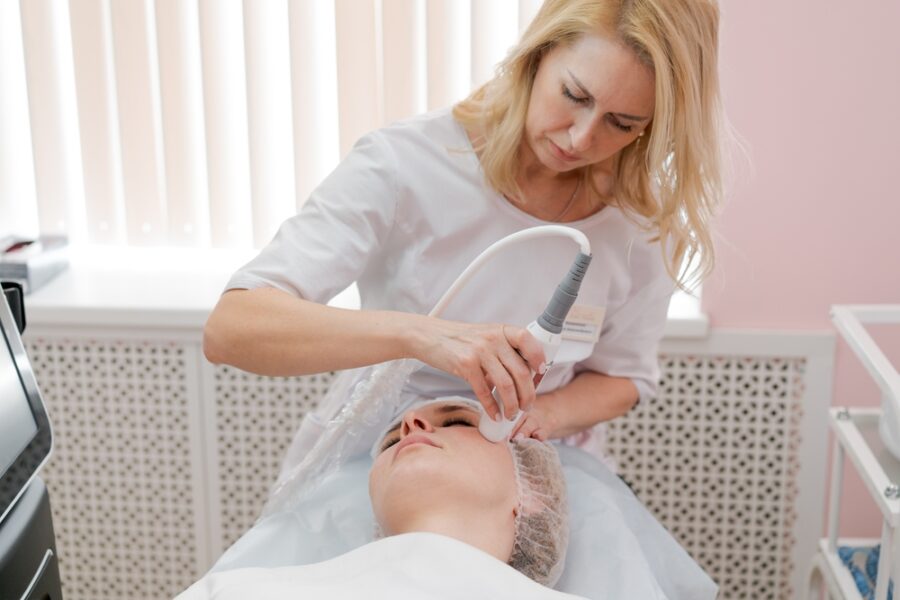
If you want to bring swelling down quickly after a facelift, lymphatic drainage is particularly recommended. Performed by physiotherapists in a clinic, its essential benefit is to improve blood circulation and speed up the flow of lymph, thereby mechanically reducing swelling. It also boosts the body’s immune defences. This is, in fact, a reflex found in other recovery contexts, such as when looking to reduce swelling after liposuction.
Lymphatic drainage thus allows a faster recovery, with a fairly clear improvement in the days following the session and the ability to speed up the resorption of swelling and bruising.
Lymphatic drainage: how long before you see results?
In most cases, the results of lymphatic drainage are noticeable immediately, from the very first sessions. It visibly improves the aesthetic appearance very quickly and also helps reduce the pain and burning sensations caused by the swelling.
Session frequency and which specialist to engage
To make the most of the benefits of this technique, you should follow around 4 to 8 sessions in total. Two sessions a week is the recommended schedule. You can use the services of an expert in post-surgical aesthetic physiotherapy. While these professionals can sometimes be hard to track down, you can go through your surgeon directly, who will generally have specialised contacts in their address book.
Frequently asked questions
How long does it take for swelling to go down after a facelift?+
The most visible swelling subsides within about ten days, and most of the swelling disappears over the first three to four weeks. Roughly speaking, around 60% of the swelling goes down during the first few weeks, close to 80% at three months and 90% at six months; the remaining 10% can take up to a year. The final result can therefore be assessed between 6 and 12 months.
When is swelling at its worst?+
Contrary to popular belief, swelling is not at its greatest on the day of the procedure: it builds up gradually and generally peaks around the 3rd or 4th day, before decreasing. Seeing your face more swollen two or three days after the operation is therefore an expected progression.
How long should the Press Lift be worn after a facelift?+
The duration is set by your surgeon. The most common pattern is to wear the Press Lift (compression band) day and night for 5 to 7 days, then only at night for a further two to three weeks. This support limits swelling and helps the re-tightened tissues settle back into place.
When can facial massage be started after a facelift?+
Gentle facial massage intended to soften the tissues and help the swelling subside is generally started from 3 to 4 weeks onwards, once the inflammatory phase has passed, and always under the supervision of the surgeon or a physiotherapist. Scar massage is only undertaken after complete healing.
Is swelling still present several weeks after the facelift abnormal?+
Slight residual swelling, sometimes asymmetrical, may persist for one to two months, particularly around the neck and jaw. As long as it is steadily decreasing and remains painless, there is nothing to worry about. On the other hand, swelling that suddenly increases again, becomes red, hot and painful or is accompanied by a fever should prompt you to consult your surgeon promptly.
How can swelling and bruising be reduced more quickly after a facelift?+
Several measures help the swelling go down faster: sleeping with your head elevated for the first two weeks, applying cold (cool compresses, never ice directly on the skin) in the first few days, following a low-salt diet, walking regularly and avoiding alcohol and tobacco. Lymphatic drainage performed by a physiotherapist further speeds up the resorption of swelling and bruising. Arnica is sometimes suggested to reduce bruising.
Book an appointment
If you are considering a procedure, book an appointment in just a few clicks: our surgeons will answer all your questions and guide you toward a tailored, personalised solution.
Book on Doctolib