WAL liposuction: the best surgical solution for lipedema
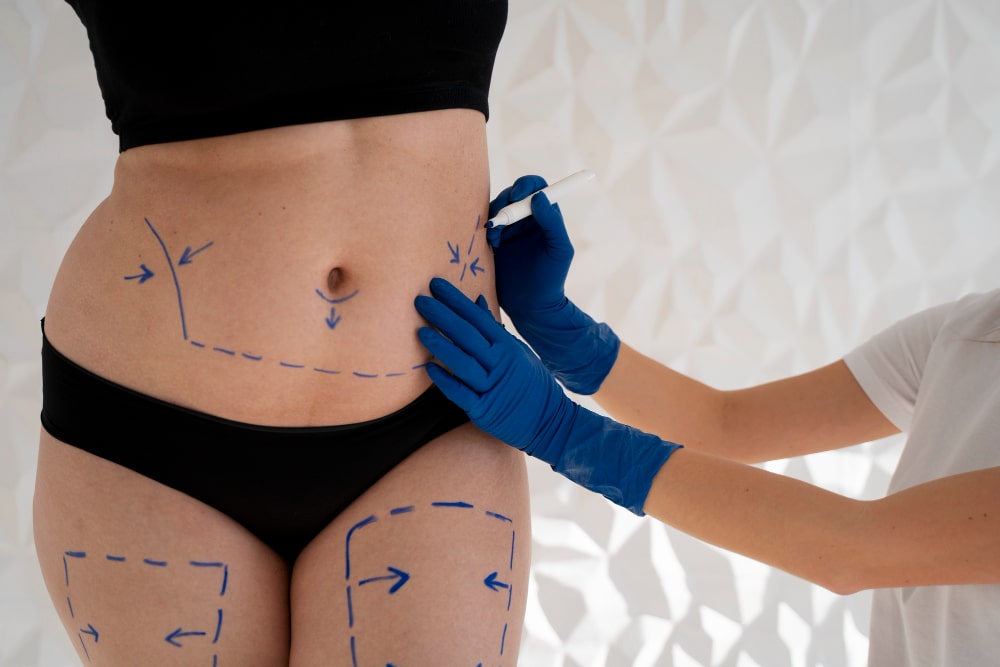
While traditional liposuction is the most widely performed plastic surgery procedure in the world, a recent variation of it has emerged to offer an effective solution for people living with lipedema, a chronic condition that causes localised fat build-up. WAL liposuction (with an anaesthetic water jet) removes these fat deposits gently and precisely to refine the body contour and restore mobility in the limbs.
Contents
What is WAL liposuction?
WAL liposuction (for « water-assisted liposuction ») is a gentle liposuction technique that uses a continuous pulsed water jet while the fat cells (adipocytes) are being aspirated. The pulse of this water jet, mixed with an anaesthetic saline solution, allows a simultaneous aspiration that is far less invasive and traumatic than conventional liposuction. The adipocytes are indeed detached more easily from the surrounding tissues (nerves, blood vessels, lymphatic tissue, etc.). WAL liposuction is particularly well suited to treating lipedema.
The causes of lipedema
Lipedema is a chronic disease characterised by an abnormal, localised build-up of subcutaneous fatty tissue. These heterogeneous fat deposits can appear in various parts of the body, such as the abdomen, the arms, the legs or the calves. The condition affects almost exclusively women, around 10% of whom are thought to have it. Often mistaken for simple excess weight or obesity, lipedema remains frequently underdiagnosed, which delays its management. The causes of lipedema can be varied, namely:
- hormonal factors: the female sex hormones (oestrogens) are thought to be responsible for the development of these localised fat deposits. Lipedema also most often appears or worsens during the hormonal changes (oestrogen fluctuations) a woman experiences throughout her life (puberty, pregnancy, taking contraceptives, menopause);
- genetic factors: lipedema is also thought to be very often hereditary, with a family history of women showing the same genetic features coding for oestrogen receptors (polygenic susceptibility);
- other, less documented causes: although they do not appear to trigger the disease, various other causes can contribute to the worsening of lipedema. This is the case, for example, with chronic stress, metabolic imbalances or inflammatory reactions.
The symptoms of lipedema
Lipedema is characterised by several physical manifestations, including in particular:
- poorly distributed, disproportionate fat deposits that appear symmetrically and bilaterally, mainly in the lower limbs (thighs, buttocks, calves, hips);
- « column-like » legs with a build-up of fat that stops abruptly at the ankles (the « cuff effect » or « bracelet effect »). The same process can sometimes be seen in the arms, where the adipocytes stop at the wrist;
- blood circulation disorders (vascular permeability that lets fluid pass between the tissues and can lead to bruising and haematomas);
- a sensation of heavy, hypersensitive and sometimes painful legs;
- skin with the appearance of cellulite, orange-peel skin and a fibrous texture;
- an inability to make the fat deposits disappear despite regular exercise and a balanced diet.
The different stages of lipedema
Lipedema is a progressive disease that can develop through several stages:
- stage 1: the skin still looks smooth, but the subcutaneous tissue has thickened, revealing small fatty nodules that can be felt to the touch. A feeling of tension and heaviness is perceptible;
- stage 2: the limbs begin to widen and the skin becomes lumpy and uneven (orange-peel appearance). The fatty nodules become more numerous and the tension on the limbs and lymphatic vessels increases;
- stage 3: large fatty masses settle in lastingly and extensively (the « column-like legs » appearance is now very pronounced), even starting to affect mobility. The skin becomes hard and loses its elasticity;
- stage 4: in addition to the previously described symptoms, which intensify, swelling appears, corresponding to a problem with lymph drainage (lymphatic insufficiency). This is referred to as lipo-lymphedema, which can cause secondary infections.
The advantages of WAL liposuction over conventional liposuction
WAL liposuction offers several major advantages over traditional liposuction (tumescent liposuction):
- a gentler, less invasive procedure thanks to the anaesthetic pulsed water jet used during aspiration, which reduces pain and swelling (less edema and bruising);
- preservation of the tissues and the lymphatic system, which limits trauma;
- simpler detachment of the adipocytes, less mechanical and more precise thanks to the pulsed water jet, which makes it easier to isolate the fat deposits from the other tissues (nerves, vessels);
- the ability to extract a larger amount of fat;
- harvested fat that is better preserved and less damaged. It can then be reinjected more easily as part of a fat transfer (breast lipofilling or buttock lipofilling, for example);
- faster recovery and a shorter social downtime (less bruising, less bleeding and less marked swelling);
- better-quality scar healing with less risk of fibrosis.
Precautions before WAL liposuction surgery
Before considering a WAL liposuction procedure, the patient must attend preparatory consultations with the specialist surgeon in order to confirm the lipedema diagnosis by ruling out all other possible causes.
Once this diagnosis has been established, the surgeon assesses whether the patient is a good candidate for WAL liposuction. Various examinations may then be carried out, such as a Doppler ultrasound or a lymphoscintigraphy to assess the venous network (to rule out the presence of thrombosis) as well as the state of the lymphatic system. A blood test is also required.
When no contraindication to the procedure has been identified, the surgeon then defines, together with the patient, a treatment plan that takes into account the patient’s expectations and state of health (areas to target, stage of the lipedema, symptoms, other conditions, etc.). An appointment with the anaesthetist is also scheduled at least 48 hours before the procedure.
Beyond stopping smoking and anticoagulant medication in the preceding weeks, WAL liposuction also involves putting in place post-operative measures, some of which will also need to be in place before the procedure:
- wearing a compression garment for several weeks before and after the procedure to decongest the tissues and limit swelling;
- doing regular physical activity, especially toning sports (swimming, for example);
- a balanced, anti-inflammatory diet;
- regular manual lymphatic drainage (MLD).
How does lipedema surgery work in Paris?
Lipedema surgery is performed on an empty stomach and under local or general anaesthesia, depending on the patient’s choice. WAL liposuction can be carried out as an outpatient procedure, but an overnight hospital stay may be necessary. The length of the operation varies according to the extent of the lipedema and the areas to be treated. It can range from 1 to 3 hours (2 hours on average).
WAL liposuction begins with incisions of 3 to 4 millimetres in order to insert fine cannulas into the areas to be treated, preferably within the natural folds of the skin. The cannulas, connected to a machine using Body-Jet technology, deliver an anaesthetic water jet and aspirate the fat simultaneously. The water jet allows the gentle detachment of the adipocytes, which are immediately aspirated while limiting discomfort to the surrounding tissues. Slow, precise movements are made in time with the water jets to avoid any trauma and, where appropriate, to preserve the quality of the fat with a view to a fat transfer.
Once the aspiration of the fat deposits is complete, the surgeon proceeds to suture the incisions using absorbable threads. In some cases, it may be necessary to redrape the skin (a lift) when the skin laxity of the treated area has become too significant. When lipedema mainly affects the lower limbs, the procedure overlaps with the management of leg liposuction to reshape the thighs and calves.
Recovery after lipedema surgery
Once the sutures are in place, dry compresses and dressings are applied over the incisions. A compression garment is put on straight away to optimise skin retraction and limit swelling. The patient is then transferred to the recovery room and then to her room. An overnight hospital stay may be necessary depending on the volume of fat removed.
In the first few days, pain and aches may be felt in the treated areas. They can be relieved by taking painkillers. Bruising may also appear. Significant fatigue is also common, particularly due to anaemia. A preventive iron-based treatment may then be considered.
The patient must rest substantially in the first few days, even though she must also make the effort to walk in order to avoid thromboembolic disorders. The compression garments are to be worn for 3 to 6 weeks in order to consolidate the results of the procedure and set the tissues. Managing swelling and edema after liposuction relies largely on this compression and on the gradual resumption of lymphatic drainage. The patient can return to her activities completely normally between 1 and 2 weeks after the operation, depending on the extent of the procedure. She will need to wait at least 3 to 4 weeks before gradually and gently resuming sporting activity.
WAL liposuction in Paris: prices and results
The results of WAL liposuction are not immediate, mainly because of the swelling, which can take several weeks to subside completely (3 to 4 weeks on average). The body contour appears genuinely refined after 4 to 6 weeks. The results are final around 6 months after the procedure, once the skin has fully retracted. The patient can thus regain self-confidence with a more even body contour and sometimes improved mobility. Several procedures may be necessary depending on the case, particularly if several extensive areas need to be treated.
Unlike simple weight loss, liposuction removes the excess adipocytes from the treated areas: these cells do not regenerate, which explains the lasting nature of the reshaping. Long-term follow-up data support this. A landmark study published in 2016 (Baumgartner et al., Phlebology) showed that the improvement in spontaneous pain, pressure sensitivity, swelling, bruising and mobility observed after surgery was maintained, and even increased, beyond four years after the procedure. A more recent meta-analysis (Amato et al., 2024) confirms that liposuction significantly reduces lipedema-related complaints, in particular pain and swelling. Liposuction does not, however, « cure » lipedema, which is a chronic disease: it treats the fat deposits and provides lasting relief from the symptoms, provided that the maintenance measures (compression, physical activity, lymphatic drainage) are continued.
WAL liposuction in Paris: prices and insurance coverage
The price of WAL liposuction in Paris ranges from €4,500 to €8,500. This range depends on the number of areas to be treated, the volume of fat to be removed, the stage of the lipedema and any need for several sessions. The quote is provided at the end of the consultation, after the clinical examination and the definition of the treatment plan.
Because lipedema is a medical condition and not simply an aesthetic request, partial insurance coverage from the French national health insurance may, in some cases, be requested when the functional impact is documented (pain, difficulty walking, lipo-lymphedema) and strict criteria are met. This coverage is never automatic: it requires a substantiated medical file and the prior agreement of the health insurance fund. The surgeon and the practice’s office will guide you on the steps to take and the supporting documents to gather. For a project mainly targeting the legs, it is helpful to compare this surgical approach with the non-surgical gentle liposuction alternatives, which do not, however, fall under the treatment of lipedema as such.
Frequently asked questions
How do you know if you have lipedema?+
Lipedema is recognised by a symmetrical, bilateral build-up of fat, especially on the thighs, hips and calves, that stops sharply at the ankles (the « bracelet effect ») and spares the feet. The area is often painful, sensitive to pressure and prone to bruising, and it does not shrink with exercise or diets. Only a clinical examination carried out by an experienced doctor or surgeon, sometimes supplemented by an ultrasound, can confirm the diagnosis and rule out simple excess weight or lymphedema.
Which doctor should you see for lipedema?+
Diagnosis and follow-up may involve a vascular physician or an angiologist, a general practitioner and, when surgery is being considered, a plastic surgeon experienced in treating lipedema with liposuction. At the Rive Droite Paris Étoile practice, Dr Vincent Hunsinger, a surgeon specialising in liposuction, assesses whether the procedure is indicated, confirms the diagnosis and defines a treatment plan suited to the stage and the areas concerned.
Can liposuction permanently get rid of lipedema?+
Liposuction removes the excess adipocytes from the treated areas, and these fat cells do not regenerate: the reshaping is therefore lasting. Long-term follow-up studies show an improvement in pain, swelling and mobility that is maintained several years after the procedure. Lipedema nevertheless remains a chronic disease: surgery treats its fat deposits and provides lasting relief from the symptoms, but does not « cure » it. Maintenance measures (compression, physical activity, lymphatic drainage) are still recommended.
Is liposuction for lipedema covered by the French national health insurance?+
Because lipedema is a medical condition and not simply an aesthetic request, partial insurance coverage can, in some cases, be requested from the French health insurance fund when the functional impact is documented (disabling pain, difficulty walking, lipo-lymphedema) and strict criteria are met. It is never automatic and requires a substantiated medical file as well as prior approval. The practice office will guide you on the steps to take and the supporting documents to put together.
Can you lose weight with lipedema?+
Lipedema fat resists diets and exercise: weight loss acts mainly on « ordinary » fat and has little effect on the deposits linked to lipedema, which can accentuate the disproportion between the upper and lower body. Maintaining a balanced lifestyle remains useful for general health and limits worsening, but only specific management, including WAL liposuction, can reduce these localised fat deposits.
What are the risks of lipedema surgery?+
Like any surgical procedure, WAL liposuction carries risks, generally limited: bruising, swelling, transient pain, fatigue linked to possible anaemia and, more rarely, skin irregularities, infection or thromboembolic disorders. The gentler WAL technique reduces trauma to the tissues and the lymphatic circulation. A complete pre-operative work-up, compliance with the contraindications (stopping smoking and anticoagulants) and wearing a compression garment help to minimise these risks.
How much does WAL liposuction to treat lipedema cost in Paris?+
The price of WAL liposuction in Paris is generally between €4,500 and €8,500, depending on the number of areas, the volume of fat to be removed, the stage of the lipedema and the number of sessions that may be needed. A personalised quote is provided at the end of the consultation, after the clinical examination and the definition of the treatment plan. Partial coverage by the French national health insurance may, under certain conditions, reduce the cost.
Book an appointment
If you are considering a procedure, book an appointment in just a few clicks: our surgeons will answer all your questions and guide you toward a tailored, personalised solution.
Book on Doctolib