01Protruding ears: the causes
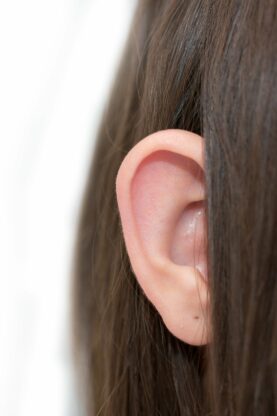
Protruding ears stem from an abnormality of the cartilage of the outer ear, most often genetic in origin (sometimes post-traumatic). Otoplasty addresses four defects, isolated or combined, on one ear (unilateral otoplasty) or both (bilateral):
- Underdeveloped antihelical fold: the antihelix (the « Y » of cartilage beneath the helix, at the top of the ear) is not folded — the ear is smooth, lacks definition and looks « flat ».
- Conchal hypertrophy: the hollow part of the ear is overdeveloped and pushes the ear forward.
- Helical valgus (or concha valga): the angle between the ear and the skull is too wide — the ear clearly sticks out and « faces » forward.
- Earlobe valgus: the lobe itself protrudes.
02Otoplasty: at what age? (children and adults)
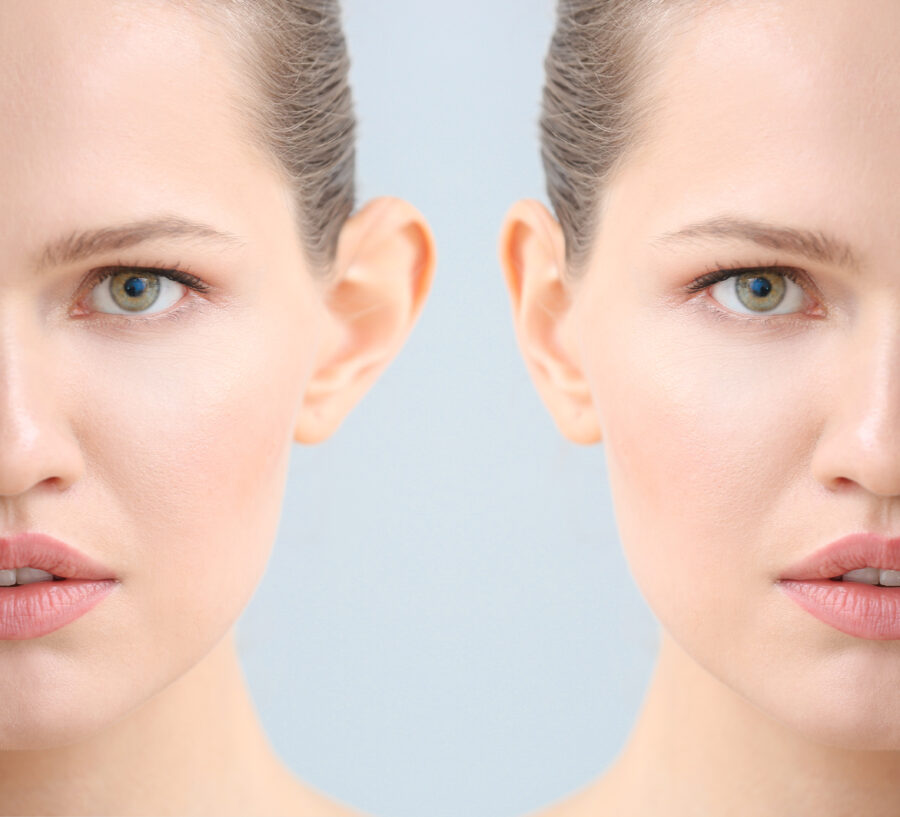
The ear reaches around 85 to 90% of its adult size by 6-7 years of age: otoplasty can therefore be performed from age 7, with a stable result — it is one of the few cosmetic procedures open to children, often at their own request in the face of teasing. In adolescence (13-16 years), it remains possible, but scars tend to thicken more readily (hypertrophic scars); in adults, it can be performed at any age. In infants, a non-surgical neonatal moulding, fitted in the very first weeks of life, can sometimes correct the shape without surgery.
03Scar, results and insurance coverage
The incision is hidden in the fold behind the ear (retroauricular groove): the scar is almost invisible. The ears look pinned back as early as the following day, but the final result is seen at around 3 months, once the swelling has subsided and the contours have softened; it is long-lasting, with recurrences being rare. Slight asymmetries may remain — the two ears are never perfectly identical, even naturally.
Because protruding ears can cause significant social and psychological distress, insurance coverage through the French national health system is possible: almost automatic in children, in adults it requires a file documenting the impact (photographs, a letter from the physician). In Paris, expect from €3,500 without coverage; the details are set out in the pricing schedule and insurance coverage.
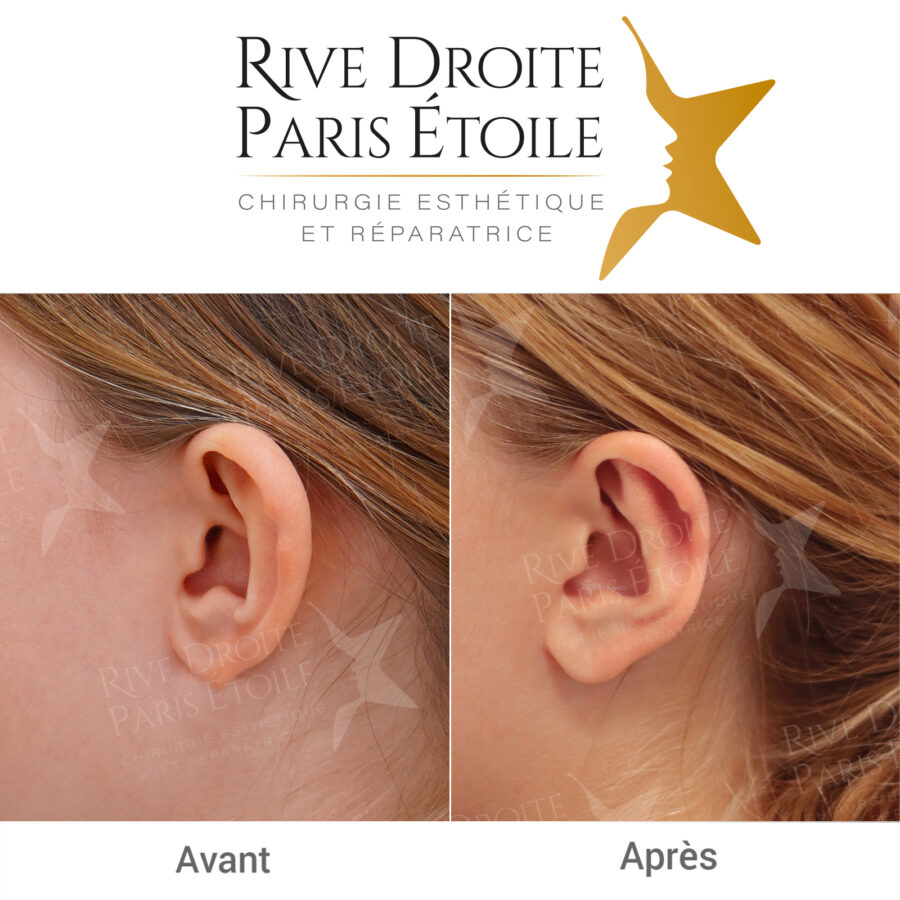
04Before / after results
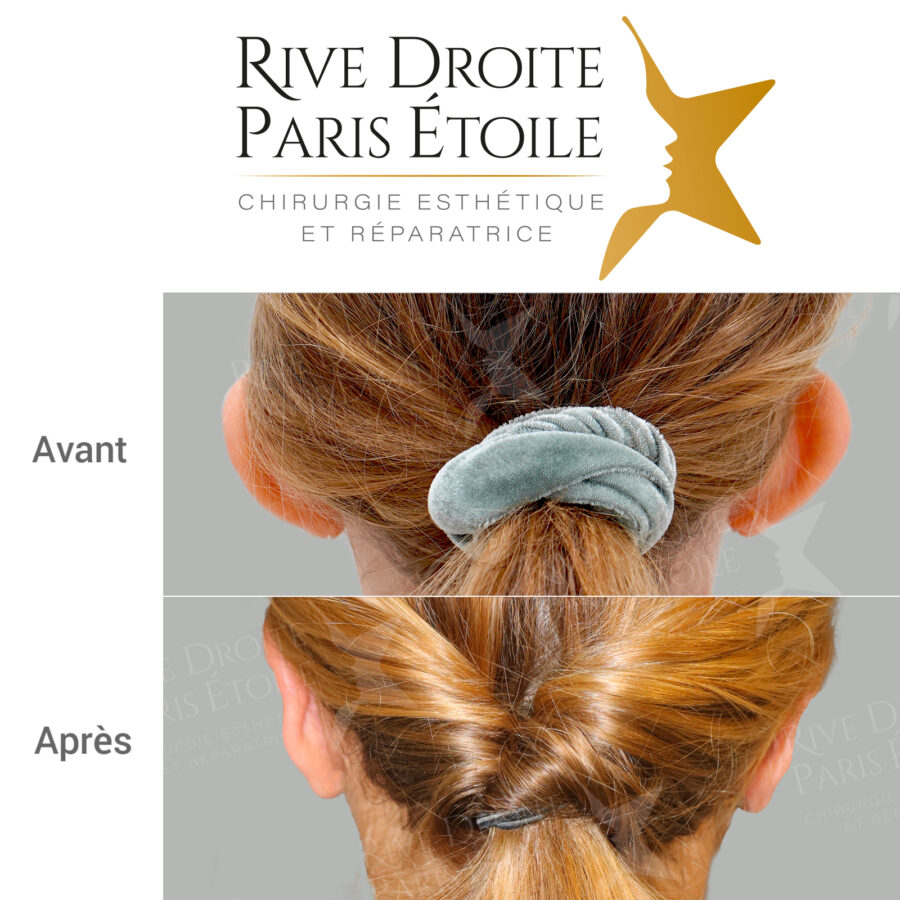
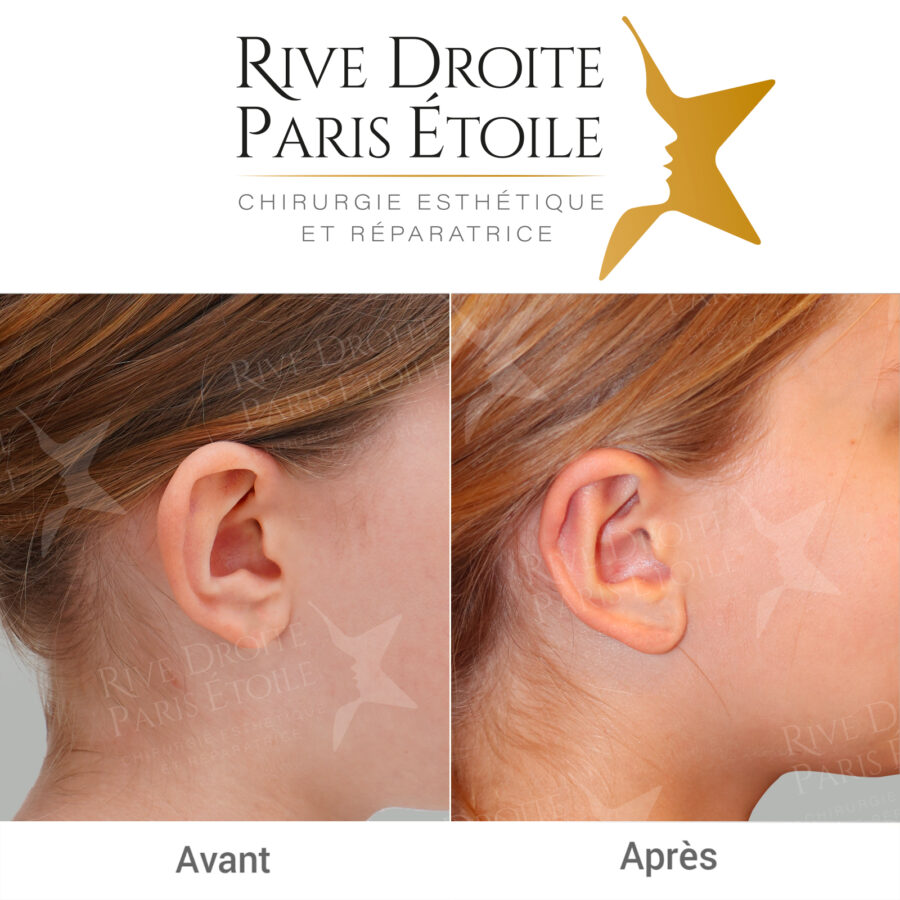
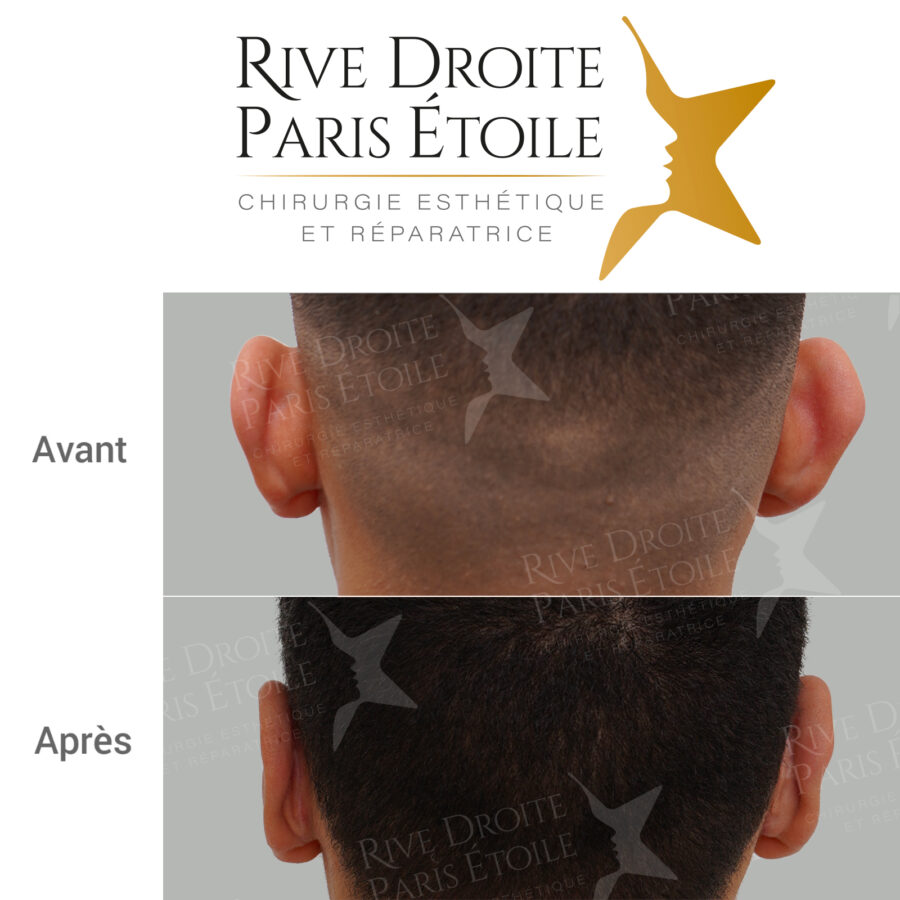
05How the procedure works
Before the procedure
Otoplasty requires two consultations with the surgeon: the first establishes the diagnosis (size, position, deformities) and explains the procedure and recovery, with a quote provided; the second answers any questions and schedules the procedure. A legal 15-day cooling-off period is observed, and written authorisation from both parents is essential for a minor. Before the procedure:
- choice of anaesthesia (local, local with sedation, or general — recommended in young children) and an appointment with the anaesthetist;
- stop smoking 1 month before and after, no aspirin for 10 days beforehand;
- hair washed the day before (cut short for boys) and a 6-hour fast before the procedure.
During the procedure
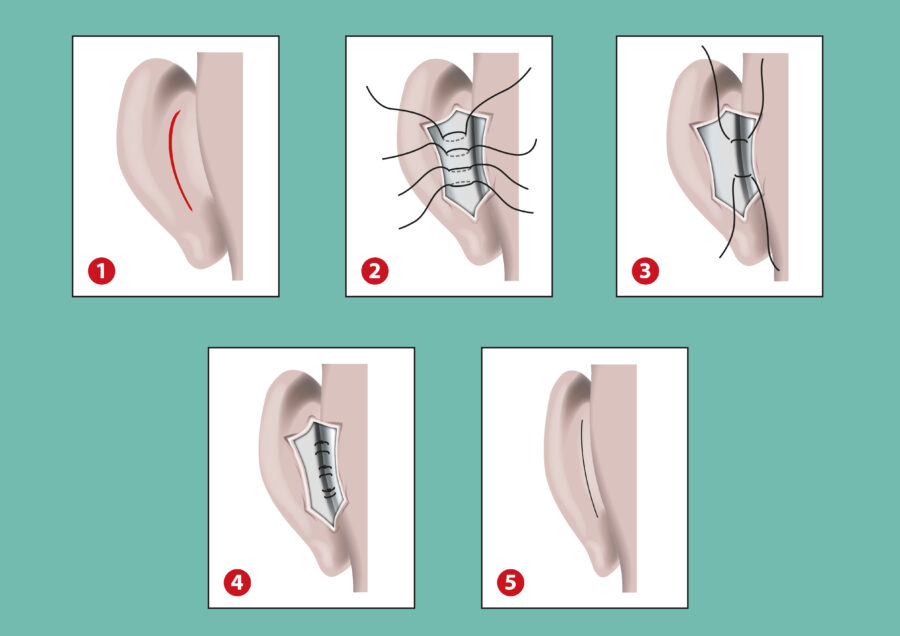
Otoplasty is performed as a day case (discharge the same day) and lasts 45 minutes to 1 hr 30. Through an incision hidden behind the ear, the surgeon lifts the skin to expose the cartilage and reshape it:
- weakening and reshaping of the cartilage with a small rasp or through chondrotomies (Stenström technique), removing excess concha to prevent recurrence;
- deep sutures to fold the antihelix and tuck in the concha (Mustardé and Furnas techniques), applied in a measured way to avoid an « over-pinned » appearance.
Symmetry is checked from the front, the side and the back; the incision is closed with an absorbable running suture and a helmet dressing (Velpeau bandages) holds the ears in position.
After the procedure
Recovery is straightforward: moderate pain relieved by painkillers, with swelling and bruising for 2 to 3 weeks. The helmet dressing is replaced after 2 to 3 days by a lighter dressing, then a compression headband (like a tennis headband) is worn for at least 3 weeks — day and night in children, at night in adults — to protect the ears and prevent a suture from coming loose.
Around one week off is usual; swimming pools and sea bathing are off-limits for 6 weeks, and sport is avoided for 1 to 2 months (longer for contact sports). Complications are rare but possible: haematoma, cartilage infection (chondritis), temporary altered sensation or hypertrophic scarring. The ears, less sensitive for about a month, should be protected from the cold.
06Prices & fees in Paris
| Procedure | With insurance coverage | Aesthetic fees |
|---|---|---|
| Otoplasty (protruding ear correction) | 2 500 – 3 500 € | 3 500 – 4 500 € |
Indicative “from” prices, surgeon fees included. The final quote is given at the consultation, after examination, depending on the area treated and the technique chosen. Part of the procedure may be covered by French national health insurance when the medical criteria are met.
07Your questions
From what age can otoplasty be performed?+
From age 7: by then the ear has reached most of its adult size and the result is stable. It is often the child themselves who requests it in the face of teasing. In adults, the procedure can be performed at any age.
Is otoplasty covered by the French national health system?+
Yes, it is possible on the grounds of social and psychological distress: coverage is almost automatic in children, and in adults requires a file documenting the impact. See the pricing schedule and insurance coverage.
What is the price of otoplasty in Paris?+
Expect from €3,500 without insurance coverage; when the reimbursement criteria are met, the remaining cost is limited to fee supplements. Details in the pricing schedule.
Where is the scar from an otoplasty?+
In the natural fold behind the ear (retroauricular groove): it is therefore hidden and becomes almost invisible over time.
Is otoplasty painful?+
No: the pain is moderate and well relieved by simple painkillers. The discomfort comes mainly from the dressing and then the compression headband during the first few weeks.
How long does the headband need to be worn?+
At least 3 weeks: day and night in children, at night in adults. It protects the ears and reinforces the sutures during healing.
When can sport be resumed?+
After 1 to 2 months depending on the sport (longer for contact sports); swimming pools and sea bathing should be avoided for 6 weeks.
Is the result permanent?+
Yes, otoplasty is generally permanent; recurrences are rare. Slight asymmetries may remain, as with naturally shaped ears.
Is there a non-surgical otoplasty?+
In infants, a non-surgical moulding fitted in the first weeks of life can correct the shape. Beyond that age, only surgery reshapes the cartilage lastingly; certain mild cases may be suitable for a suture-only technique, without cartilage removal.
Can just one ear be operated on?+
Yes: in the case of asymmetry, a unilateral otoplasty is possible. The surgeon nonetheless aims for harmony between the two ears.