
How to reduce swelling after rhinoplasty
As with most plastic surgery procedures, a rhinoplasty often causes swelling to appear over the treated area in the first moments after the operation. This swelling prevents the patient from immediately seeing the final result of the nose surgery. The extent of the swelling and any bruising will depend on each patient and each procedure. What are the different ways to help reduce swelling of the nose? What precautions should you take after the procedure? How long does it really take for the nose to go down? Here are all our tips to optimise your recovery and reduce swelling after a rhinoplasty.
Contents
Rhinoplasty: a surgical procedure with many benefits
A rhinoplasty offers patients numerous benefits, whether physical, aesthetic or psychological.
To improve self-esteem
More and more people are turning to rhinoplasty to improve the appearance of their nose. This procedure allows patients to correct a feature they find troubling in their own perception, and so to gain self-confidence.
Rhinoplasty is also particularly common among the victims of car accidents, falls or assaults. Because of the facial deformity, the patient needs to recover their former appearance. The rhinoplasty procedure then becomes a first step in helping them start a new life and put traumatic memories behind them. The same is true after a trauma: correcting a crooked nose with plastic surgery restores harmony to the face.
To resolve breathing problems
Beyond the aesthetic aspect, some people suffer from a deviated nasal septum and may then experience significant breathing difficulties. In this kind of situation, rhinoplasty — possibly combined with surgical correction of the nasal septum through rhinoseptoplasty — is the most recommended solution. It also delivers convincing results from a functional point of view and allows the patient to regain a better quality of life. Despite its effectiveness, this operation nevertheless involves a recovery phase of variable length that it is important to understand fully before considering a procedure.
Reducing nose swelling: the reflexes to adopt immediately after the procedure
In the weeks and months following the rhinoplasty, the face should gradually show an overall improvement. By doing the right things during the post-operative period, you can limit bruising and swelling of the nose. First of all, it is advisable not to take any medication other than that prescribed by your treating physician or the surgeon who performed the procedure (usually oral corticosteroids), as doing otherwise can sometimes delay the healing period instead.
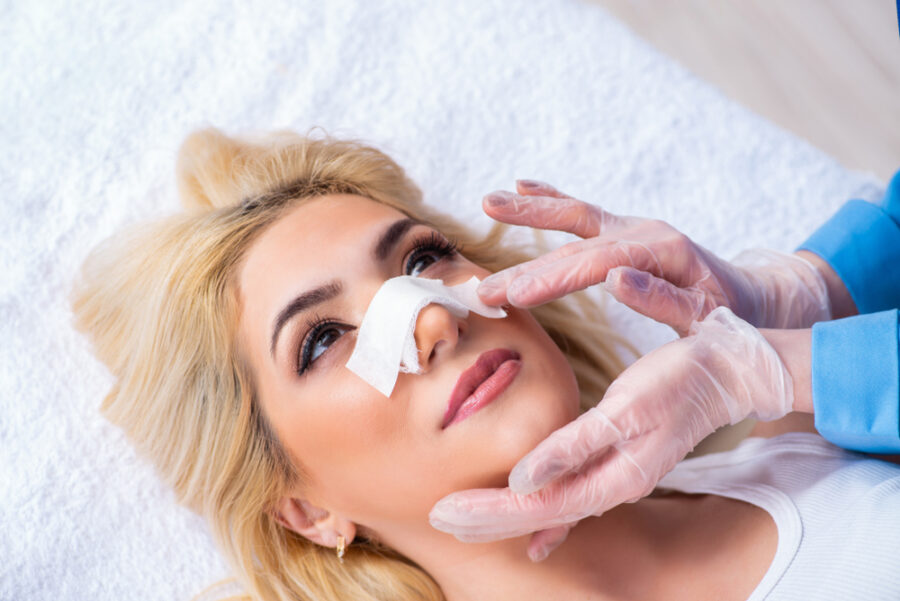
Occasionally applying cold compresses under the eyes is also fairly effective (though this should not be continuous). The cold causes a constriction of the blood vessels, which reduces the swelling. This works particularly well when done during the first 48 hours after the procedure. Beyond that point, applying cold compresses has more limited effects. In particular, it is advisable to place the cold compresses on the forehead and cheeks, where contact with the cold helps the swelling resolve. To avoid an uncomfortable sensation of pressure, however, these compresses should not be placed directly on the nose.
As a rule, nasal swelling appears within the 24 hours following surgery. By applying ice at the right moment, the nose should not increase much in volume, thereby shortening the healing period. You can also use gel ice packs, with the ice never coming into direct contact with the skin. In that case, remember to use a cloth to separate the two surfaces.
Practical tips to reduce the swelling
Here are a few other routine tips to follow in the days after the procedure in order to optimise your recovery and speed up your nose’s return to its normal size.
Adopt the right sleeping position
During the first two to three days after the operation, it is best to sleep with your head kept above your chest. By adopting this position, you can drain the stagnant fluids that have built up. This also prevents larger volumes of fluid from forming in the nose.
To help you keep the right position, you can use two or three pillows when settling into bed. You can also, if you have one, rest in a reclining chair during the first days after surgery. Lying flat may raise your blood pressure and increase the swelling.
In addition, for your day-to-day comfort, anticipate situations that could cause an increased blood flow to the upper parts of the body. So avoid as much as possible bending forward or lowering your head.
Walk
Walk a little, but do not overexert yourself. This helps get the blood circulating, which promotes lymphatic drainage. The swelling of the nose should then resolve more quickly — a principle that also applies when you reduce swelling after other procedures such as liposuction. Be sure, however, to moderate the intensity of your effort and avoid any activities that could cause new post-operative bleeding.
Eat foods high in protein and low in salt
Eating overly salty food promotes water retention and therefore increases the risk of nose swelling. By choosing a diet rich in protein, you will instead keep fluids within the vessels rather than in the tissues. It is also advisable to maintain a diet rich in vitamins and low in sugar. To limit the risk of complications, lastly avoid alcohol during the first days after the procedure.
Use « nasal taping » after the external splint is removed
During the first days of the post-operative period, it is advisable to apply adhesive-strip support to the nose (steri-strip). This should be placed over the operated area at bedtime and removed before getting up. The way to use it is explained by the medical professional when the nasal splint is removed. This method can help reduce the swelling considerably. To see a worthwhile result, however, this routine must be continued for two months.

How long does it take for the swelling to go down? The evolution of swelling month by month
The question comes up at every post-operative consultation: how long does it take for the nose to go down after a rhinoplasty? The swelling does not disappear all at once but resolves in stages, over several months. Knowing this timeline helps avoid worrying needlessly at the sight of a nose still swollen several weeks after the operation.
From the first week to the first month
The swelling is greatest during the first days, especially around the nose and under the eyes, often accompanied by bruising. The nasal splint protects the nose during this phase. The bulk of the swelling generally goes down over the first two to three weeks, as soon as the splint and dressing are removed. After a month, the nose already looks more natural day to day, even if it remains thick to the touch and noticeably less refined than the final result.
From 1 to 6 months: a nose that gradually refines
Between the second and sixth month, the inflammation continues to subside and the contours of the nose become more defined. By around the sixth month, most of the swelling has gone and you begin to truly appreciate the result of the surgery. This is also the point beyond which the nose is sufficiently stable to assess the procedure with peace of mind.
From 6 to 12 months: the tip of the nose, the last to go down
The tip of the nose is the area that goes down most slowly: this is often where slight swelling persists between the sixth and twelfth month, while the details settle — a topic we cover in detail in our article on refining the nasal tip in tip rhinoplasty. The final result of a rhinoplasty is therefore assessed between 6 and 12 months, and sometimes beyond for the most complex rhinoplasties. The bridge of the nose stabilises faster than the tip, where the resorption of soft tissue calls for more patience.
Why is my nose still swollen for longer?
How long the swelling takes to go down varies from one patient to another. The most decisive factor is skin thickness: thick skin — more common in men — retains the swelling for longer, particularly at the tip, whereas thin skin goes down faster but also reveals the details of the surgical work sooner. The type of procedure (reduction, structural or secondary rhinoplasty) and the extent of the reshaping also come into play: significant work on bone or cartilage produces more pronounced and longer-lasting swelling. Finally, smoking and poor venous or lymphatic circulation can lengthen the resorption phase — all the more reason to avoid smoking during recovery.

What pitfalls should you avoid after a rhinoplasty?
To prevent swelling of the nose, it is recommended during the first two post-operative months to avoid saunas and steam rooms. Massages should never be performed on your own initiative: a poorly executed nose massage risks displacing the cartilage while the swelling is still present. While drainage or a gentle massage can sometimes be helpful, it must always be carried out on medical advice and using the precise technique shown by your surgeon. Vigorous sports are also to be avoided for at least two months. To reduce the risk of complications, smoking should likewise be avoided during recovery, as it disrupts the healing process. Lastly, it is strongly advised not to expose yourself to the sun for two months.
Be patient
Seeing the results of a rhinoplasty takes patience. The extent of the swelling depends on the patient and on other factors such as skin thickness, the type of procedure or the materials used by the surgeon. The swelling will resolve completely after a few weeks or a few months depending on the case.
To see the final result, some patients will have to wait up to 6 months and, in the most extreme cases, sometimes even 12 months. Even though it is rather frustrating to see your nose swollen and not be able to appreciate the result straight away, it is important to stay patient for an optimal outcome. Always keep in touch with your surgeon, who can advise you if you have any questions, will help you understand how your situation is evolving and will make any necessary adjustments where appropriate.
When should you see a doctor for swelling after a rhinoplasty?
Swelling that lasts several weeks is normal and should not be a cause for concern. Some signs, however, warrant advice without waiting for the follow-up appointment: sudden, intense pain, a red and warm nose, a fever, asymmetry that appears suddenly or unusual discharge. These situations remain rare, but they should prompt you to contact the practice promptly. For all other questions about how the swelling is evolving, the post-operative consultations are the right setting to talk things over with your surgeon. When surgical rhinoplasty is not indicated, a non-surgical rhinoplasty by injection may also be an alternative, with no swelling or prolonged recovery.
Frequently asked questions
How long does it take for the nose to go down after a rhinoplasty?+
The bulk of the swelling subsides over the first two to three weeks, as soon as the splint is removed. After a month, the nose already looks more natural but remains thick; it continues to refine until the sixth month. The final result is generally assessed between 6 and 12 months, with the tip of the nose being the last area to go down completely.
Why does the tip of the nose stay swollen for several months?+
The tip is the area richest in soft tissue and the slowest to go down: slight swelling can persist there between the sixth and twelfth month. Thick skin — more common in men — retains the swelling there for longer, whereas thin skin goes down faster. This is normal and does not affect the final result.
Does cold really help reduce nose swelling?+
Yes, but above all in the first 48 hours: the cold causes the blood vessels to constrict, which limits the swelling. Apply the cold compresses to the forehead and cheeks, never directly on the nose or continuously, and always with a cloth between the ice and the skin. After that window, the effect of compresses becomes more limited.
How should you sleep after a rhinoplasty to limit swelling?+
During the first two to three days, sleep with your head raised above your chest, using two or three pillows or a reclining chair. This position helps drain fluids and prevents the swelling from worsening. Avoid bending forward or lowering your head, which increases blood flow to the face.
Can you massage your nose to make it go down faster?+
You should never massage your nose on your own initiative: while the swelling is present, a poorly performed massage can displace the cartilage. Drainage or a gentle massage is only considered on your surgeon’s advice, who will show you the exact technique. Outside of that, it is better to refrain.
When should you be concerned about swelling after a rhinoplasty?+
Swelling that lasts several weeks is normal. However, sudden, intense pain, a red and warm nose, a fever, asymmetry that appears suddenly or unusual discharge warrant contacting the practice promptly, without waiting for the follow-up appointment. These situations remain rare but should be taken seriously.
Book an appointment
If you are considering a procedure, book an appointment in just a few clicks: our surgeons will answer all your questions and guide you toward a tailored, personalised solution.
Book on Doctolib