01Explanations and overview
When is an abdominoplasty needed?
An abdominoplasty, also commonly referred to as a tummy tuck, is a plastic surgery procedure that restores a flat, harmonious stomach free of any imperfection. Like the bodylift, it addresses significant looseness of the skin or muscles in the abdominal area and removes excess fat, sometimes accompanied by stretch marks. It is also sometimes called a « dermolipectomy ».
It involves re-tightening the abdomen by removing the damaged skin in the area below the navel. This skin and muscle laxity can result from various situations:
- Successive pregnancies
- Significant weight loss
- Hormonal imbalance
- Lack of activity, a sedentary lifestyle
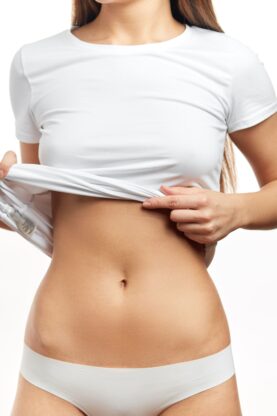
The indications for an abdominoplasty are therefore broad, and it makes it possible to regain a flat, firm stomach, free of excess fat, looseness or stretch marks.
How does the procedure work?
An abdominoplasty acts on several different components:
- The removal of excess fat in the stomach area through liposuction, a build-up that becomes noticeable from around the age of forty depending on each person’s body type.
- The removal of excess skin, combined with a re-tightening of the skin of the stomach through an abdominal lift.
- The tightening of the abdominal wall muscles when they are stretched or separated, for example in the presence of a diastasis (separation of the rectus abdominis muscles).
An abdominoplasty is indicated when the looseness is fairly pronounced (the presence of an abdominal apron covering all or part of the pubic area). When it is moderate, a simple liposuction is enough to re-tighten the skin. The skin laxity and the quality of the skin will guide the surgeon in choosing the procedure.
02Full abdominoplasty or mini-abdominoplasty?
Depending on how pronounced the looseness is, Dr Hunsinger adapts the technique for a natural result and the most discreet scar possible:
- i
The full abdominoplastyindicated in cases of pronounced looseness with an abdominal apron: it removes the excess skin from the pubis to the navel, re-tightens the wall and repositions the navel.
- ii
The mini-abdominoplastyreserved for moderate looseness limited to below the navel: the scar is shorter and the navel is not moved.
- iii
The circumferential abdominoplasty (bodylift)when the looseness goes all the way around the waist, often after significant weight loss — see the bodylift.
03Abdominoplasty and diastasis recti repair
Diastasis refers to the separation of the rectus abdominis muscles along the midline, very common after one or more pregnancies. It results in a stomach that stays rounded despite exercise and diet, and sometimes in a bulge on exertion. The diastasis recti repair performed during the abdominoplasty consists of bringing these muscles back together and tightening them with deep sutures, in order to restore a firm abdominal wall and cinch the waist.
Beyond the aesthetic aspect, this repair also has a functional benefit: by restoring the natural support of the wall, the diastasis recti repair improves the support of the trunk and posture and often helps to ease the lower-back pain associated with abdominal looseness. An abdominoplasty can therefore be performed with or without diastasis recti repair; Dr Hunsinger assesses the separation during the consultation in Paris.
04Before / after results
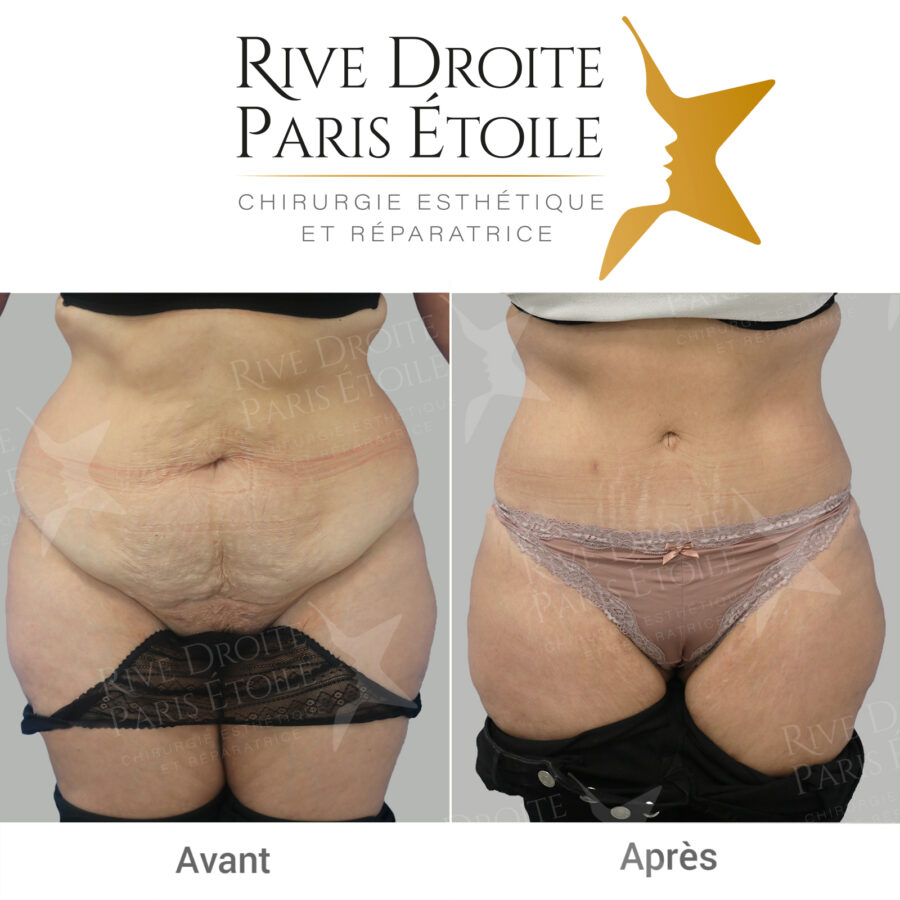
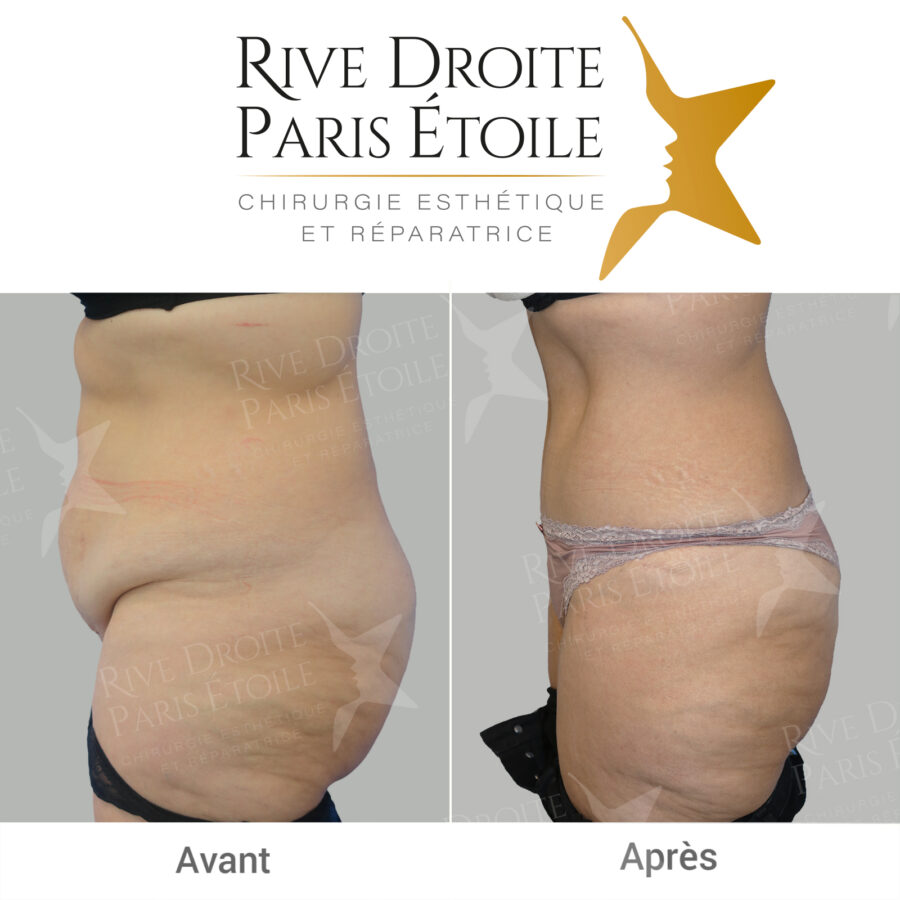
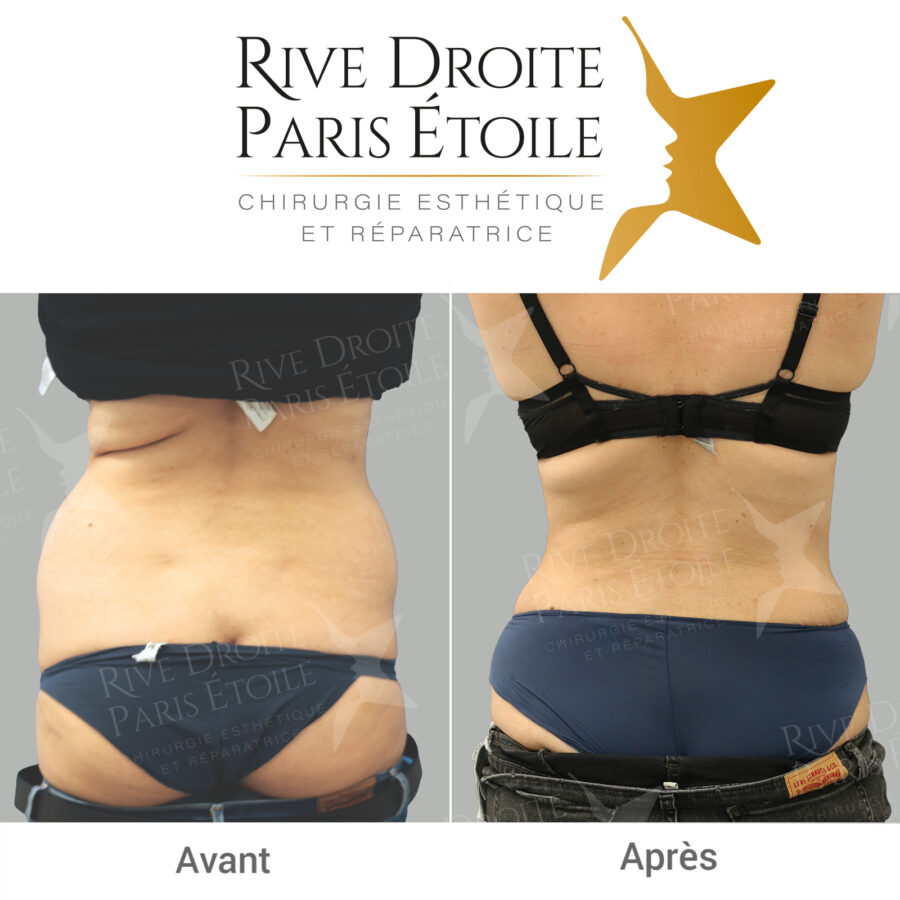
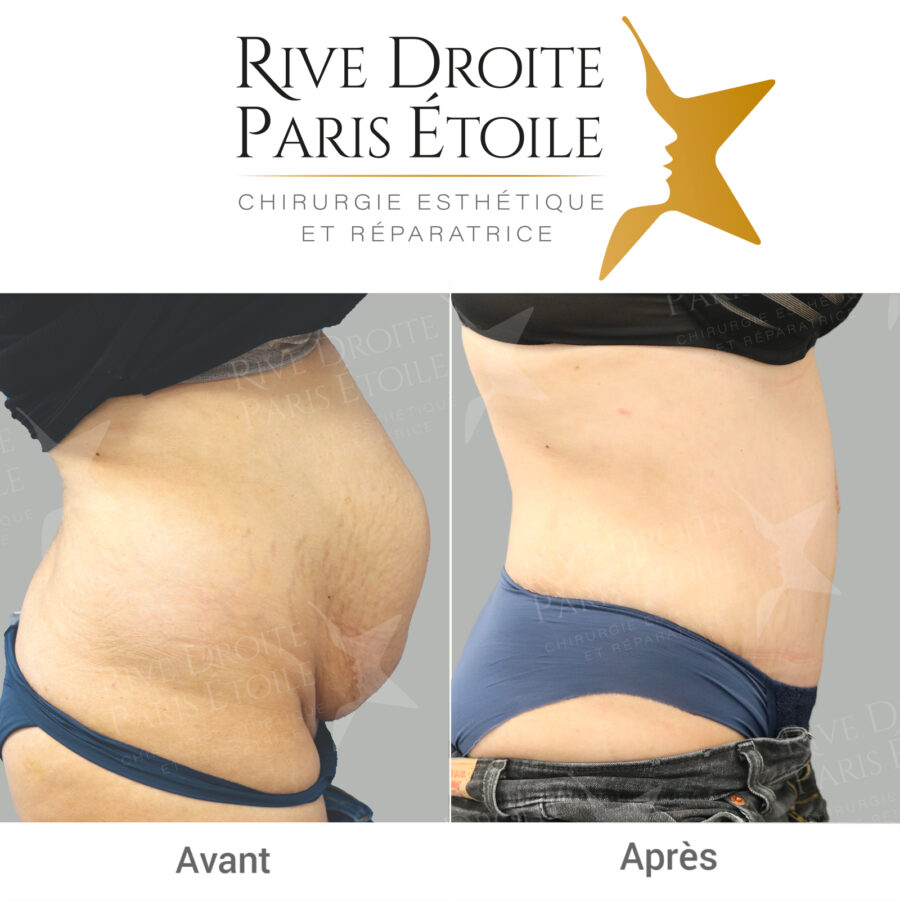
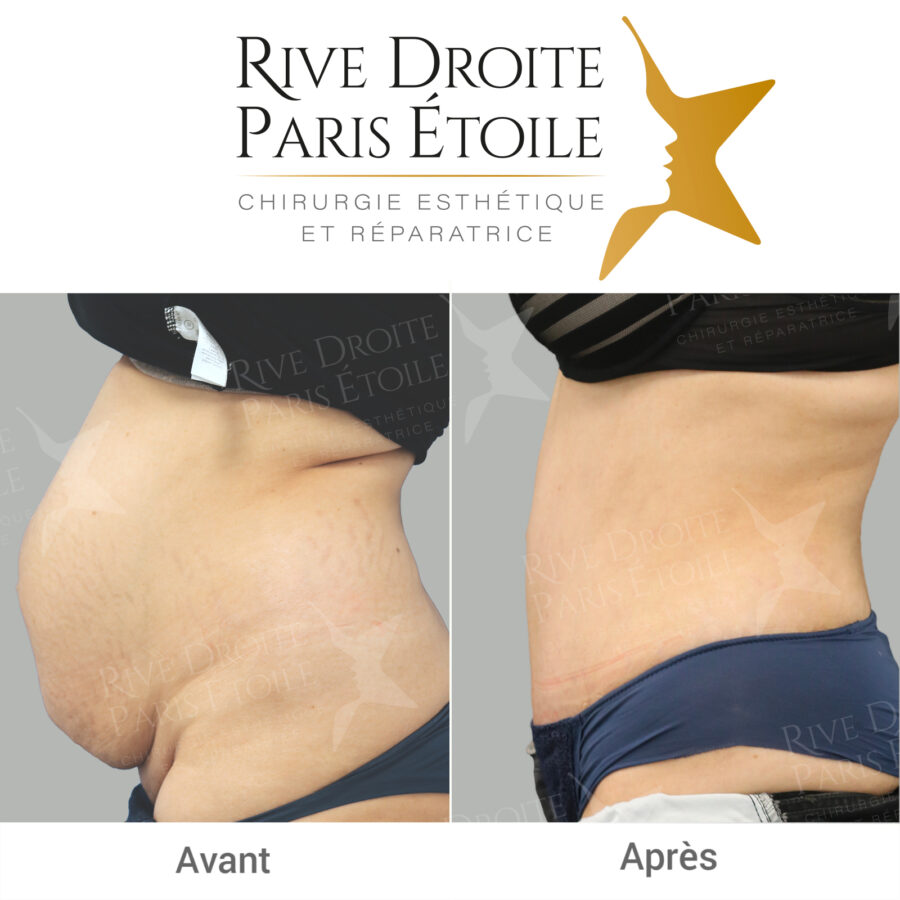
05How the procedure works
Before the procedure
An abdominoplasty in Paris first requires a consultation with the surgeon at the Rive Droite Paris Étoile plastic surgery clinic, during which a clinical examination assesses the quality of the skin and the volume of fat to be removed. The practitioner then decides whether an abdominoplasty is appropriate; otherwise, a simple liposuction may be enough (localised excess fat without skin laxity).
If the procedure is approved, an appointment is scheduled with the anaesthetist no later than 48 hours before the operation. As with any plastic surgery, smoking, aspirin and oral contraceptives must be stopped several weeks before the procedure.
During the procedure
An abdominoplasty is not performed as a day case and requires one to two nights of monitoring. The procedure takes place in four phases:
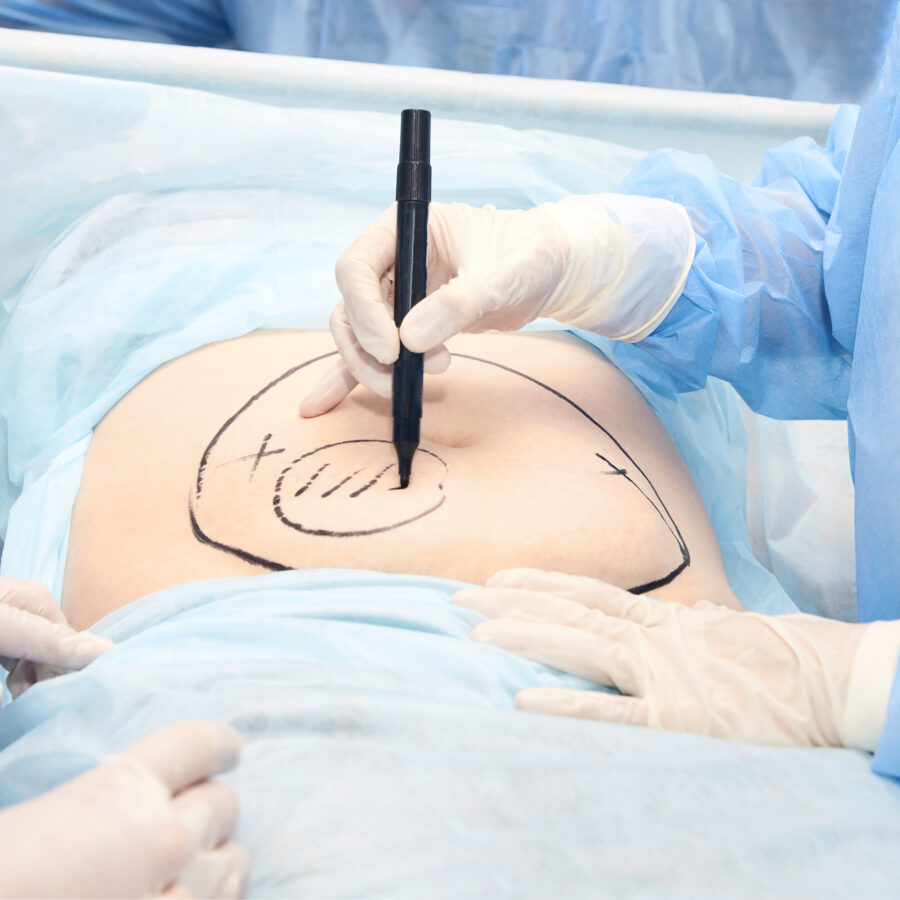
- Belly liposuction: after marking the incision areas, the surgeon removes the excess fat from the abdomen, flanks and hips to thin the wall.
- Lifting of the skin: the skin and fatty tissue are lifted from the upper part of the abdomen up to the chest, preparing the excess skin for re-tightening.
- Bringing the rectus muscles together: in the case of a diastasis, the surgeon reduces the distance between the muscles with deep sutures along the midline (diastasis recti repair), restoring firmness and tone to the abdominal wall.
- The dermolipectomy: the excess skin and fat from the lower part of the abdomen is removed, the incisions are closed with absorbable sutures, and aspiration drains and a shaping dressing are put in place. The scars are placed just above the pubis, horizontally, and around the navel.
After the procedure
Recovery after an abdominoplasty is minimal and not very painful:
- The dressing is changed regularly during the first 2 weeks.
- Wearing a compression abdominal garment is recommended for 1 month.
- Healing lasts from 6 months to 1 year (the scars are pink for the first 3 months).
- A 2-to-4-week period off work should be anticipated.
- Sport can be resumed gradually from 6 weeks.
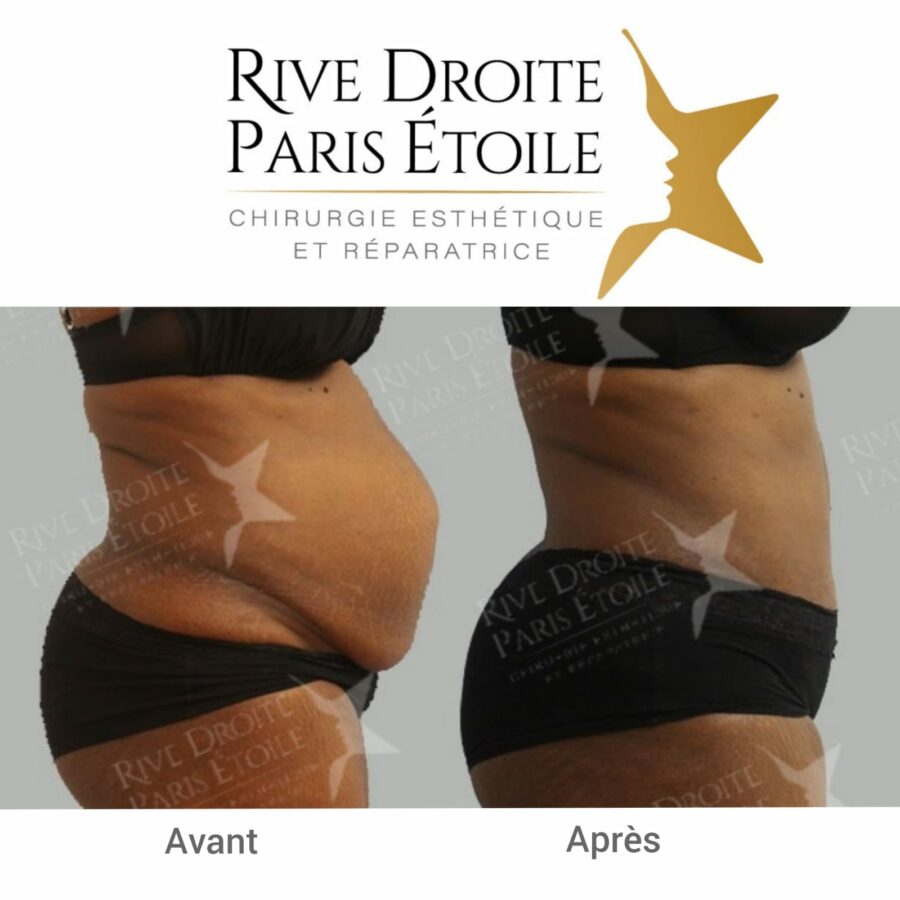
The results are immediately visible and become permanent after about 2 months, once the swelling has fully resolved. The stomach is flat and taut once again, the waist is redefined and the abdominal wall is better supported — a change in body shape that is often accompanied by a real psychological benefit.
06Prices & fees in Paris
| Procedure | With insurance coverage | Aesthetic fees |
|---|---|---|
| Abdominal lift – abdominoplasty | 3 800 – 5 000 € | 7 000 – 9 000 € |
| Mini abdominal lift | — | 5 000 – 6 000 € |
Indicative “from” prices, surgeon fees included. The final quote is given at the consultation, after examination, depending on the area treated and the technique chosen. Part of the procedure may be covered by French national health insurance when the medical criteria are met.
07Your questions
What are the contraindications?+
An abdominoplasty is subject to several relative contraindications: the procedure remains possible in most cases but calls for particular care in the presence of:
- a history of phlebitis (DVT) or pulmonary embolism;
- significant excess weight (obesity);
- a history of major intestinal surgery.
What is the difference with liposuction?+
Unlike liposuction, which only removes excess fat, an abdominoplasty also re-tightens the skin of the stomach and, if needed, the muscles, to achieve a perfectly flat stomach.
Does an abdominoplasty leave a visible scar?+
The scar generally extends from one hip to the other but stays hidden under underwear. Very visible at first, it fades markedly after a few months to become discreet. Laser sessions can help the healing process.
What are the possible complications of an abdominoplasty?+
Like any surgery, an abdominoplasty mainly involves two possible complications: haematoma and infection. These are very rare and easily treated. Pain or healing difficulties, generally temporary, may also occur.
Will I lose weight thanks to an abdominoplasty?+
An abdominoplasty re-tightens the muscles and tissues; it is not a weight-loss method. The liposuction performed alongside it does, however, make it possible to remove a certain amount of fat.
Is the result permanent?+
Yes, the result of an abdominoplasty is permanent and long-lasting. You should, however, avoid significant weight gain in order to keep all of its benefits.
Is an abdominoplasty covered by French national health insurance?+
Under certain conditions, an abdominoplasty can be partially reimbursed by French national health insurance. The criteria are strict and mainly concern:
- abdominal aprons covering the pubis (assessment by the insurer’s medical adviser);
- massive weight loss with a history of bariatric surgery;
- marked weakness of the muscular wall.