01Gynecomastia or adipomastia: causes and diagnosis
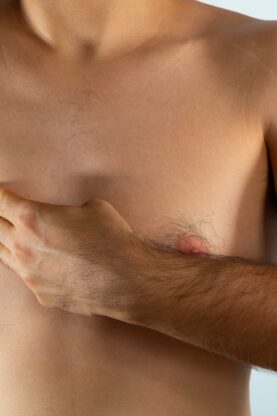
Gynecomastia results from a hormonal imbalance between oestrogens (which stimulate the mammary gland) and androgens (which inhibit it). A distinction is made between glandular gynecomastia (development of the gland) and adipomastia, due to a simple excess of fat — the two forms often being combined. Only an examination, sometimes completed by an ultrasound scan, can tell the difference: it determines the technique and the insurance coverage.
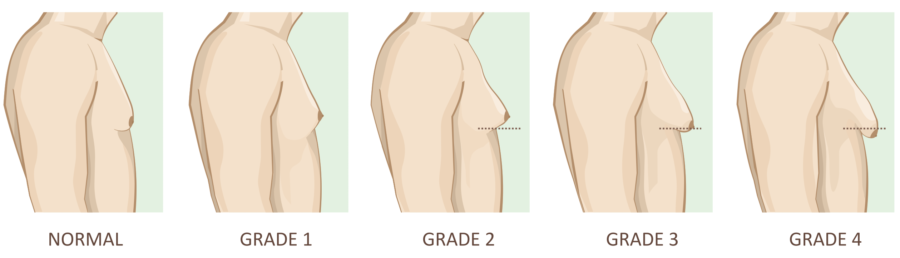
The causes are varied:
- physiological (the majority): hormonal variations during puberty or middle age — gynecomastia in adolescents often regresses spontaneously within one to two years;
- hormonal (thyroid, adrenal or pituitary disorders) or, more rarely, linked to an underlying condition that should be screened for;
- drug-related (certain antipsychotics, antibiotics, chemotherapy agents);
- toxic: alcohol, cannabis, and above all anabolic steroids in athletes.
When no cause is found, it is called idiopathic gynecomastia. An important point: an established gland does not disappear with sport or with weight loss (unlike fat) — surgery then remains the only lasting solution. For more on the causes, see this medical review.
02Correction techniques
The procedure is adapted to the type of excess tissue:
- Adipomastia (fat): liposuction through fine incisions, which removes the excess fat and reshapes the contour of the chest;
- Glandular gynecomastia: removal of the gland through a short periareolar incision (around the areola), the only scar of the procedure;
- Mixed forms: the two techniques are combined — this is the most common case;
- Excess skin (long-standing or large cases): skin removal completes the procedure if the skin does not retract well.
03Scars, results and insurance coverage
The scar, hidden around the edge of the areola, most often becomes almost invisible within a few months. The result — a flat, masculine chest — is permanent, provided weight remains stable and any triggering factor is stopped (anabolic steroids in particular).
Confirmed glandular gynecomastia may be covered by French national health insurance (subject to prior approval), the presence of gland being the criterion; pure adipomastia (fat only), on the other hand, falls under cosmetic surgery and is not reimbursed. The details are set out in the pricing and insurance coverage guide.
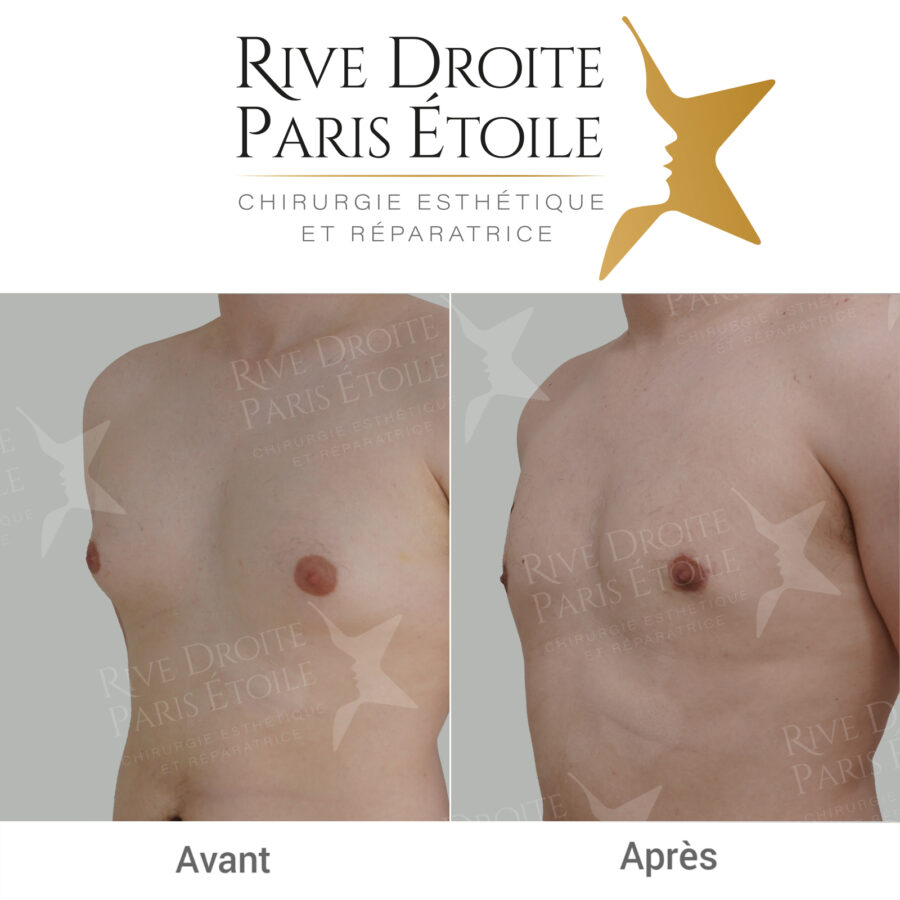
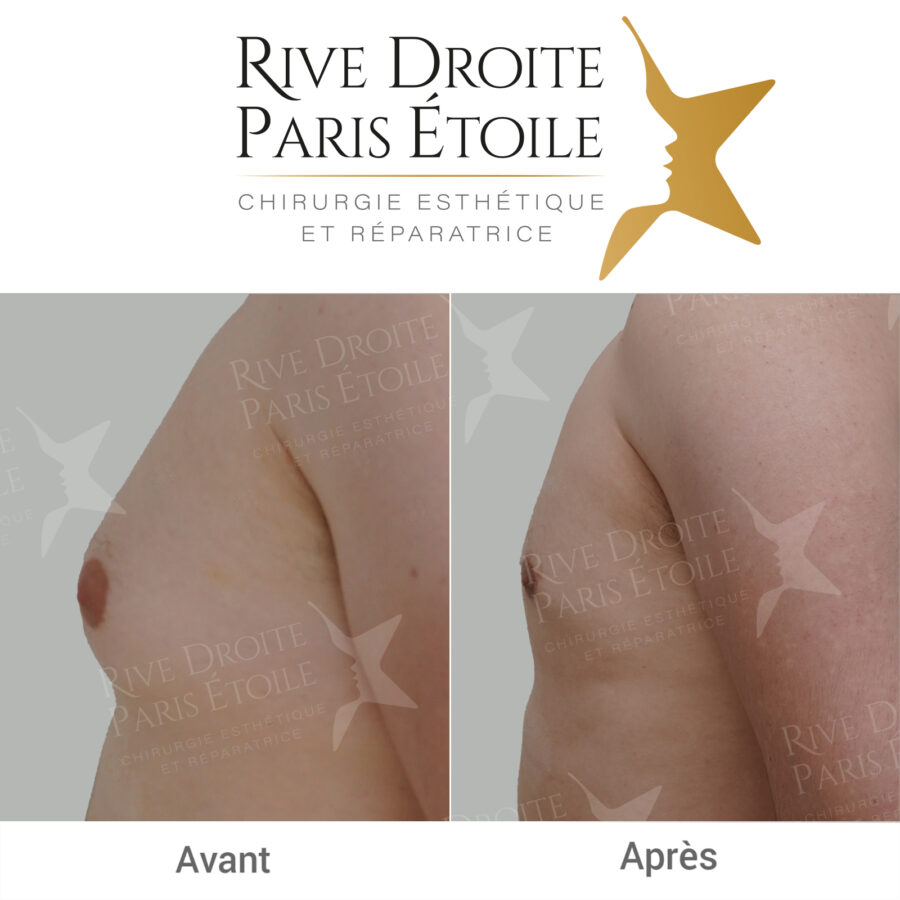
04Before / after results
05How the procedure works
Before the procedure
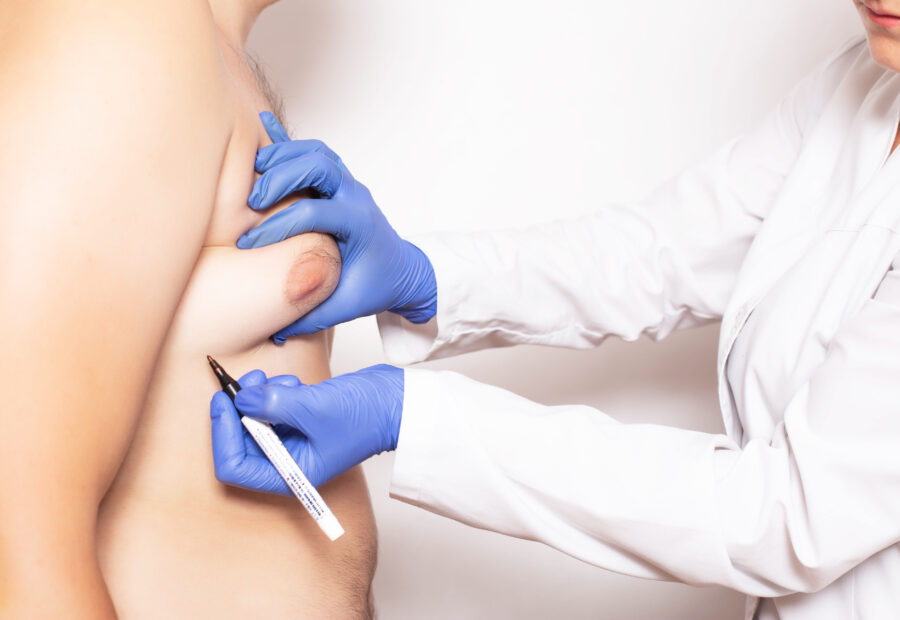
The procedure is decided after a consultation at the Rive Droite Paris Étoile practice: a clinical examination to distinguish gland from fat, a search for a cause (hormonal work-up, ultrasound scan if needed) and an explanation of the procedure. For adipomastia, a 15-day reflection period — mandatory for cosmetic surgery — is observed. Stopping smoking and anabolic steroids is recommended, and the appointment with the anaesthetist takes place no later than 48 h before the operation.
During the procedure
The operation lasts 1 to 2 hours and is performed as a day case (discharge the same day): under general anaesthesia for glandular gynecomastia, most often under deep local anaesthesia with sedation for adipomastia. The surgeon:
- removes the excess fat by liposuction through fine incisions;
- removes the mammary gland through a periareolar incision;
- removes any excess skin if necessary, then applies a dressing and a compression garment.
After the procedure
Recovery is straightforward, especially after adipomastia: moderate pain relieved by painkillers, with possible swelling and bruising after removal of the gland. A compression garment (bolero) is worn for a few weeks, with daily disinfection of the operated area.
Sport can be resumed after 3 to 4 weeks and around ten days off work is usual; sun exposure should be avoided (or only with total sunblock) over the following months. In the case of adipomastia, a balanced diet prolongs the result. The final result appears within a few weeks, once the swelling has subsided.
06Prices & fees in Paris
| Procedure | With insurance coverage | Aesthetic fees |
|---|---|---|
| Gynecomastia / adipomastia correction | 2 500 – 3 500 € | 4 500 – 6 000 € |
Indicative “from” prices, surgeon fees included. The final quote is given at the consultation, after examination, depending on the area treated and the technique chosen. Part of the procedure may be covered by French national health insurance when the medical criteria are met.
07Your questions
How do you know if you have gynecomastia?+
Only a medical examination can confirm it: during the consultation, the surgeon palpates the chest to distinguish the gland (firm, beneath the areola) from fat, with an ultrasound scan if needed. This diagnosis determines the technique and the insurance coverage.
What is the difference between gynecomastia and adipomastia?+
Adipomastia is due to an excess of fat, gynecomastia to the development of the mammary gland; the two are often combined. The distinction, made by the surgeon, changes the technique (liposuction or removal) and the reimbursement.
Can the chest disappear with sport or a diet?+
Partly for the fat (adipomastia), which weight loss and muscle building can reduce. But a true gland does not shrink with either sport or weight loss: only surgery removes it for good.
Can the procedure also reduce the nipple or areola?+
Yes: the procedure can refine and reposition the nipple or areola and tighten the skin for a natural result.
Is gynecomastia covered by French national health insurance?+
It may be when a mammary gland is present (subject to prior approval); this is the criterion used. Pure adipomastia (fat only) is considered cosmetic and is not covered.
How much does gynecomastia surgery cost in Paris?+
The cost depends on the procedure and the insurance coverage: generally expect between €2,500 and €6,000. The details are set out in the pricing and insurance coverage guide.
Can gynecomastia come back?+
No, not if the cause is treated: the removed gland does not grow back. A significant weight gain or the use of anabolic steroids may, however, cause excess fat to reappear.
Is the result permanent?+
Yes, the result is permanent; you simply need to avoid a large weight gain and the triggering factors.
Does gynecomastia leave scars?+
For adipomastia, only tiny, invisible liposuction scars. In the case of gland removal, a very discreet scar around the edge of the areola, which fades within a few months.