Everything you need to know about recovery after a bodylift
The bodylift is a plastic surgery procedure specifically intended for people who have followed a major diet and/or undergone bariatric surgery. The circumferential body lift (its other name) makes it possible to treat skin laxity resulting from weight fluctuations. More broadly, the bodylift aims to remove excess skin and fat across the entire lower third of the body, with truly spectacular results. It is, however, a particularly major procedure that involves relatively significant post-operative recovery. Discover everything you need to know about recovery after a bodylift.
Contents
The essentials about the bodylift
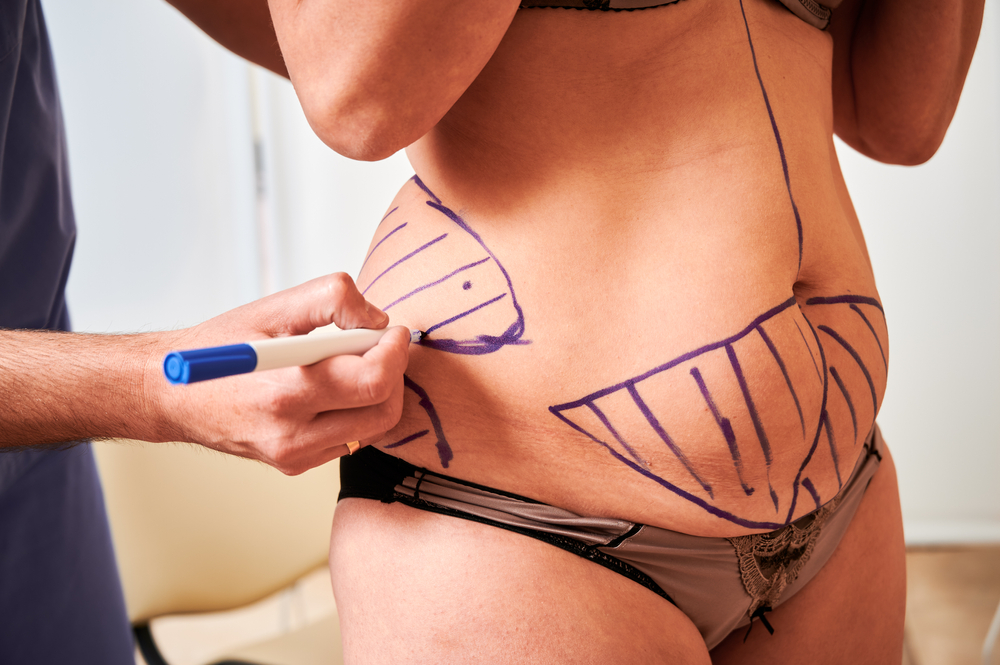
In various situations, turning to a bodylift is unavoidable. This surgical procedure is indeed essential after bariatric surgery (gastric band placement or gastrectomy) or following major weight loss. Thanks to this procedure, it is possible to get rid of the excess skin and fat — particularly unsightly — located around the abdominal belt (hips, lower abdomen, sagging buttocks, saddlebags). The bodylift then makes it possible to correct imperfections resulting from permanent skin laxity and to reharmonize the body contour.
This surgery is intended in particular for people prone to abnormal skin laxity at the abdominal belt in the form of an abdominal apron, where the excess skin comes to cover the pubis. It can be particularly necessary after belly liposuction that causes the skin to stretch because of the removal of fatty tissue. The bodylift is also often part of a broader approach to reconstructive surgery after significant weight loss, when the stretched skin no longer retracts on its own.
The expected results of a bodylift
The bodylift procedure reshapes the body dramatically across the entire width of the lower middle third of the body. It acts specifically on skin laxity through an excision of the tissues all the way around the lower trunk. This procedure makes it possible to reshape and re-tension the hips for marked refinement of the body contour. The patient’s buttocks are both lifted and re-contoured. The surgery also improves the arch of the back for a more slender posture and a more defined waist. At the abdomen, the belly is flatter and the skin is re-tensioned. The saddlebags are also flattened and tightened toward the waistband. Finally, a diastasis repair re-tensions the abdominal muscles.
What about the post-operative recovery of a bodylift?
Given the length and course of the procedure (3 to 4 hours) and the extent of the areas treated, the bodylift turns out to be a fairly major operation with significant post-operative recovery. Is the bodylift painful? At rest, the pain most often remains moderate and well controlled by taking the prescribed painkillers. Fairly intense aches, accompanied by great fatigue, are however frequently felt in the first few days, due to the re-tensioning all the way around the trunk. The surgeon generally plans a fairly long inpatient recovery period, lasting 3 to 7 days, in order to monitor the patient as closely and responsively as possible should the need arise. Because it acts on skin weakened by weight fluctuations, the bodylift carries a slightly higher risk of minor healing complications (lymph leakage, a stitch coming apart) than other body-contouring procedures such as abdominoplasty: the international literature reports a noticeably higher risk of minor complications in patients operated on after bariatric surgery. Harmless in the vast majority of cases, this point justifies close monitoring and scrupulous adherence to the guidelines described below.
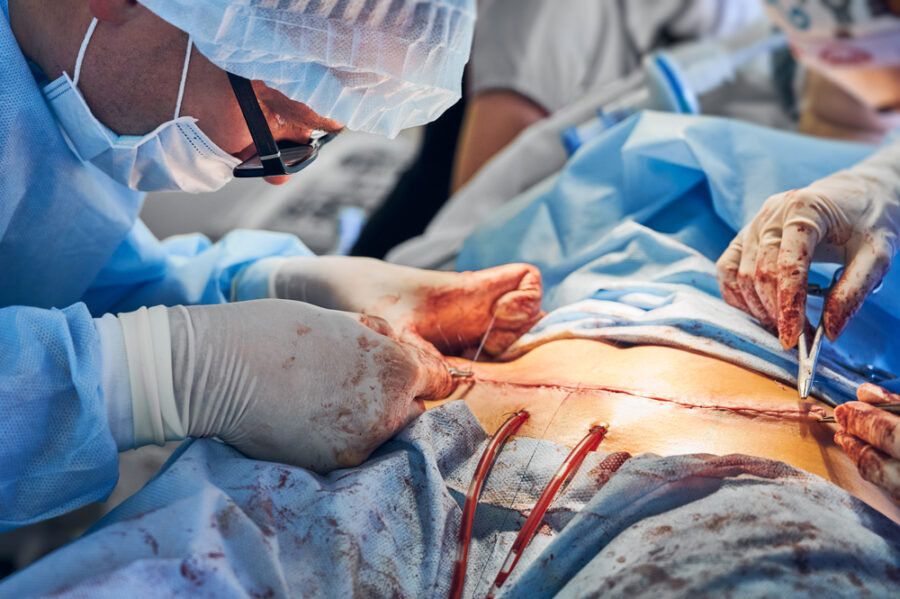
As for the result after the procedure, the abdominal area will be marked in the first few days by a relatively significant post-operative swelling that makes it impossible to make out the final result, even though the difference from before the procedure is nonetheless noticeable. This swelling subsides a few weeks after the operation, with final results that appear, depending on the patient, between 6 months and one year.
What to know about the recovery period
Far from trivial, the circumferential body lift procedure comes with more or less significant post-operative recovery that a gradual recovery process will generally help to minimize. This demanding recovery is, however, the price of a lasting result: studies published on the lower body lift show a sustained improvement in body image and quality of life in patients operated on after major weight loss. Here are the things to know to optimize your recovery period following a bodylift.
How recovery unfolds
During the first two weeks following the procedure, the patient will need to wear dressings and a compression garment. Their use may extend up to 4 weeks for optimal scar healing.
The key challenge in the days following the procedure actually lies mainly in maintaining a lying or semi-reclined position for a relatively long period (about 3 weeks) in order to consolidate scar healing across the entire width of the lower middle third. The seated position as well as any overly marked exertion must therefore be strictly avoided. Standing is, however, allowed provided it can be done without any sudden movement. To limit the risk of phlebitis (the formation of blood clots in the lower limbs), it is even advisable to walk from the day after the operation. The surgeon may prescribe anticoagulant treatments as a preventive measure for about ten days.
The patient will also need to use special dressings that allow them to wash daily without having to change the dressing every day. In the first few days, the surgeon will systematically check the dressing in order to maintain the compression. As the recovery process is particularly long, the patient should plan in advance for several weeks of social and professional time off. They will therefore not be able to return to work until the third or fourth week after the procedure. Returning to sport is strongly discouraged before 4 to 6 weeks, with a gentle return to movement and, above all, avoiding any heavy lifting in order to protect the abdominal wall as the scar heals. Driving should also be avoided as long as movements of the pelvis remain painful or restricted, which is most often during the first two to three weeks.
Possible complications
The bodylift exposes the patient to certain risks as well as various complications. First, the results may be asymmetrical with a difference of a few centimeters between the two sides of the pelvis and the abdominal belt. If so, the surgeon may then consider a procedure to correct the imperfection. Compared with the initial operation, this correction procedure will be much less major. It can be scheduled a few months later.
Moreover, to guard against all risks of complications, it is advisable to stop smoking 6 to 8 weeks before the procedure and not to expose the scar to the sun. Sea bathing, saunas and steam rooms should also be avoided in the first few weeks to prevent any risk of tearing or potential infection.
The scars
The bodylift involves the removal of a large amount of skin, which will then create a significant scar all the way around the lower trunk. The position of the scar will be determined according to the patient’s initial anatomy and the extent of the procedure to be performed. The incision scar gradually fades over 1 to 2 years. Red at first, it gradually takes on a pink color before fading and progressively returning to the color of the skin. The procedure may also leave a slight scar at the navel. As with recovery after an abdominoplasty, adhering to the compression garment and avoiding sun exposure during the red phase largely determine how fine the final scar line will be.
Making the right moves at the right time
A certain movement routine is recommended for an effective recovery process within the shortest possible time.
Choosing the right time to get up
It is advisable to get up the day after the procedure. For the very first days, it is best to have someone assist you to avoid the risk of falling. In the following days, a daily walk of a few minutes at a moderate pace is generally recommended: it restarts circulation, limits the risk of phlebitis and helps resolve post-operative swelling more quickly.
Adopting the right posture to lie down
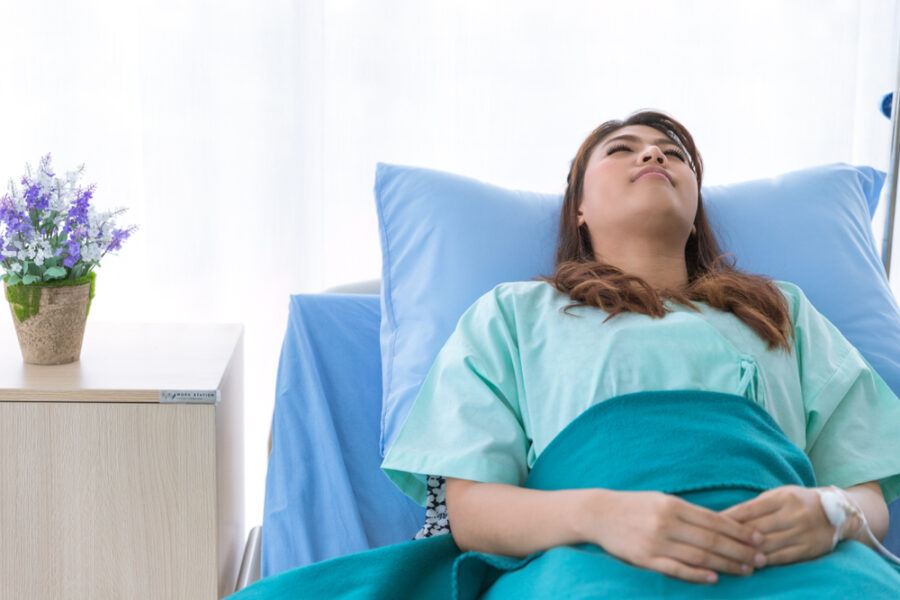
With the bodylift, the scar is circumferential. The mark is therefore located at both the abdomen and the back. Because of the position and extent of the incisions, it can be quite difficult to find a suitable position to lie down comfortably. The ideal is to adopt a position that relieves the tension both in front and behind. After the procedure, lying flat is really uncomfortable. It is therefore advisable to lie down with the pelvis flexed and to maintain an angle of about 30° without ever going all the way to a seated position.
Once back home, there is no need to sleep in a hospital bed. It is enough to place one or two pillows behind your back to achieve a good flexion of the pelvis. Placing a cushion under the knees will release the tension on the abdomen and will also help to increase the flexion of the pelvis.
Choosing the right sitting position
The sitting position tends to pull on the posterior scar. A distinction must be made between the « high sitting » and « low sitting » positions. The « low sitting » position applies to low seats (a pouf, certain sofas, etc.). This type of position causes a significant flexion of the pelvis, which then creates tension at the scar and must therefore be avoided for a certain period after the procedure.
The « high sitting » position, for its part, may be suitable for the rest of recovery. A bar stool, for example, can prove relatively comfortable since it offers moderate flexion of the pelvis and reduces tension at the posterior scar. In the absence of a bar chair, it is advisable to use cushions to raise the seat.
Frequently asked questions
How long does recovery take after a bodylift?+
Recovery from a bodylift is gradual. It begins with a hospital stay of 3 to 7 days, followed by rest at home in a semi-reclined position for about three weeks. Returning to work is most often considered from the third or fourth week, and returning to sport between the sixth and eighth week. The final result, for its part, can be appreciated between six months and one year, the time needed for the swelling to subside completely.
Is the bodylift painful?+
At rest, the pain generally remains moderate and well relieved by the prescribed painkillers. In the first few days, it is mainly intense aches and great fatigue that dominate, linked to the re-tensioning of the skin all the way around the trunk. The discomfort eases markedly over the first two to three weeks.
How should you sleep after a bodylift?+
Lying strictly flat is uncomfortable after a bodylift. The ideal is to sleep with the pelvis flexed, at an angle of about 30°, without ever reaching a seated position. One or two pillows behind your back and a cushion under the knees are enough to release the tension on the abdomen: there is no need to rent a hospital bed.
How long should you wear the compression garment after a circumferential body lift?+
The compression garment is worn continuously from the very first days and for at least two weeks. Its use is frequently extended to four weeks to support the operated area, limit swelling and promote optimal scar healing. The exact duration is specified by the surgeon according to the extent of the procedure.
When can you return to sport and driving after a bodylift?+
Driving should be avoided as long as movements of the pelvis remain restricted or painful, which is generally the first two to three weeks. Sport is not resumed before four to six weeks, gently, and heavy lifting remains prohibited for longer in order to protect the abdominal wall while the scar consolidates.
What does a bodylift scar look like and how long does it take to fade?+
The bodylift leaves a circumferential scar that goes all the way around the lower trunk, at the abdomen and the back, sometimes supplemented by a small scar at the navel. Red at first, it turns pink and then gradually fades to return to the color of the skin over a period of 1 to 2 years. Sun protection and wearing the compression garment during the red phase markedly improve its final appearance.
Book an appointment
If you are considering a procedure, book an appointment in just a few clicks: our surgeons will answer all your questions and guide you toward a tailored, personalised solution.
Book on Doctolib