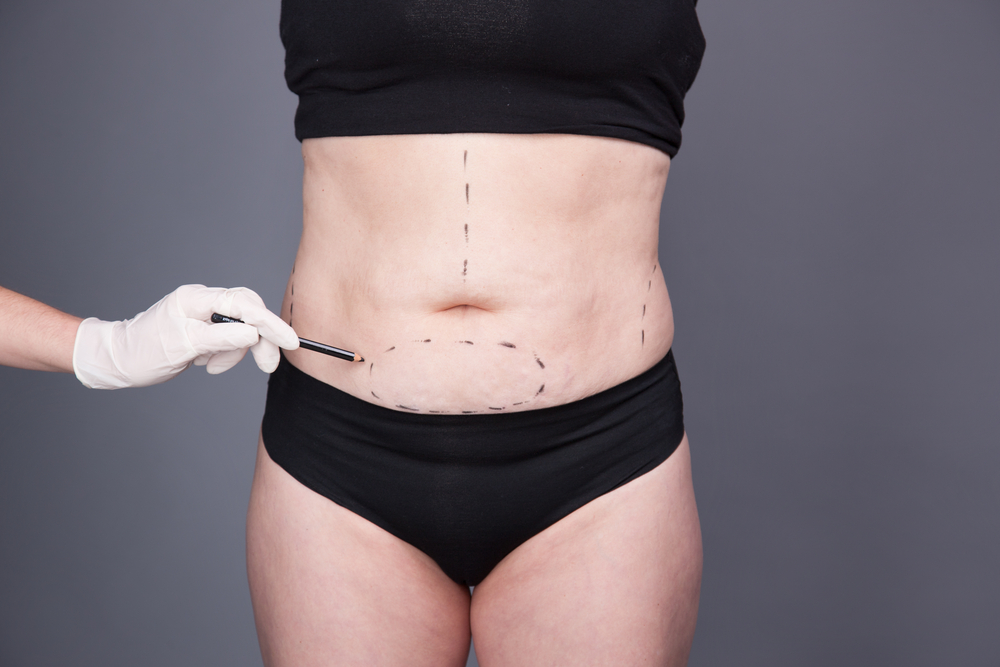
Recovery after an abdominoplasty
An abdominoplasty, also known as abdominoplasty or abdominal lipectomy, is especially popular with people looking to refine their body contour and achieve a flat stomach. This plastic surgery procedure can also be performed for reconstructive purposes, in particular following significant weight loss. As with most plastic surgery procedures, an abdominoplasty is not without consequences and involves a post-operative recovery that can sometimes be disabling. What is recovery like after an abdominoplasty? What steps should you take after the procedure to optimise your recovery? Here is everything you need to know about the routine to adopt after an abdominoplasty.
Contents
The protocol to follow after an abdominoplasty
To considerably reduce the risk of haematoma, a drainage system is regularly put in place, generally for an average of two days. Once it needs to be removed, the use of silicone Blake drains is recommended to minimise discomfort. The day after the procedure, the dressing is removed to check for any haematomas and assess their extent. The dressing is then replaced by a high compression garment, made from elastic fabric without an underwire. This garment must be worn day and night and kept on for six weeks. This principle of compression is common to most body-contouring surgery: it is found, for example, in liposuction recovery and the wearing of a compression garment.
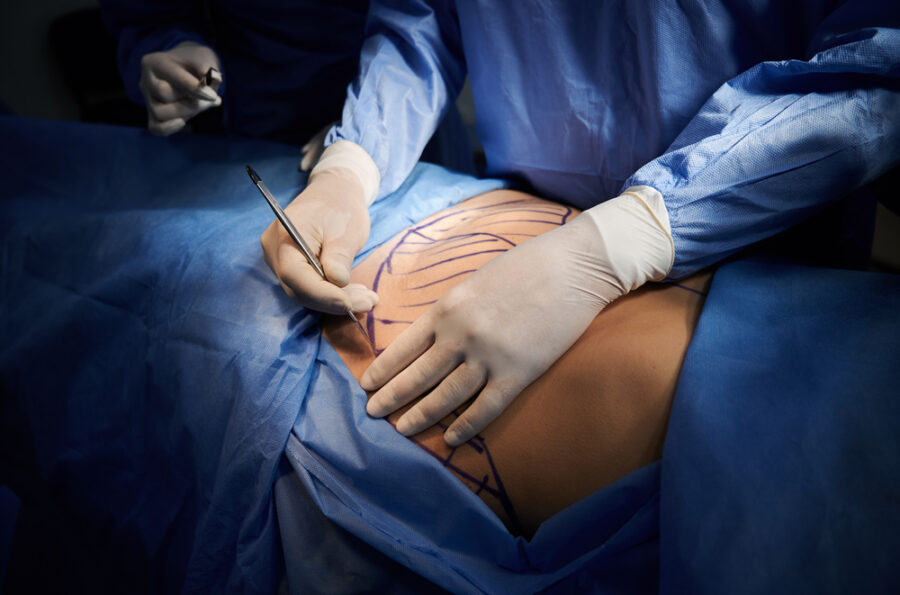
What to expect in the days after the procedure
Shortly after the procedure, and despite any discomfort that may be felt, the patient must get up and move around to minimise the risk of phlebitis. At the same time, an anticoagulant treatment is administered through subcutaneous injections. This is then prescribed for around ten days. The sutures used during this procedure are absorbable and will therefore disappear on their own, with the exception of those around the navel. Ten days after the abdominoplasty, the latter must be removed. The day after the drains are removed, you will be able to take your first shower.
During the first few weeks following the procedure, you may experience swelling and bruising as well as some abdominal pain, which can be relieved by taking painkillers. The area around which the procedure was performed may also remain relatively sensitive for several days.
When the abdominoplasty is combined with a re-tightening of the muscles, that is, the correction of diastasis recti (the separation of the abdominal muscles that is common after pregnancy), the sensations of tension and the pain when getting up are generally a little more pronounced in the first few days. It is then advisable to get up by rolling onto your side rather than sitting straight up, and to stay slightly bent over at first so as not to pull on the muscle suture. Diastasis itself is the subject of specific management, detailed in our article on the surgical treatment of abdominal diastasis recti in Paris.
After an abdominoplasty: the recovery
As with any procedure, an abdominoplasty also requires a recovery period to allow the tissues and the whole body to recover better. A period of around two weeks off work is therefore recommended. For sporting activities, a complete break of around two months should be observed. Any muscular effort should also be avoided during this period, particularly anything involving lifting heavy loads.
For this type of procedure, however, it should be noted that recovery is relatively variable. Some people will need more rest than others. Some patients will be able to resume physical activity quickly, while others will need to allow more time. To help the body rebuild itself and maintain its suppleness, a compression garment must be worn permanently for 4 to 6 weeks.
In any case, it is essential to know how to listen to your body and remain patient. You should not rush the return to normal life by resuming certain activities too prematurely. Also be sure to scrupulously follow the recommendations of the surgeon who performed the procedure in order to optimise your recovery.
How to sleep after an abdominoplasty
With the sutures the abdominal muscles have undergone, it is perfectly normal to feel abdominal pain in the days following the procedure. As a result, it can even be relatively difficult to find a comfortable position to sleep and rest well. To find the most suitable position, you should therefore position yourself in a way that does not irritate the sutures.
After an abdominoplasty, it is therefore generally recommended to sleep on your back with your legs bent. You can also consider placing pillows under your knees. If you do not have an adjustable bed available, you can simply use cushions or pillows to position yourself properly.
Sleeping on your stomach will therefore be very difficult and is not advised during the first few weeks. In the case of a minor procedure with a relatively small amount of fat cells removed, it is recommended to wait 1 to 3 weeks. If it is a full abdominoplasty, you will need to wait up to 4 to 6 weeks before being able to consider a night on your stomach. Sleeping on your side, with a pillow between your knees, can generally be adopted earlier, as soon as the position no longer puts tension on the scar.
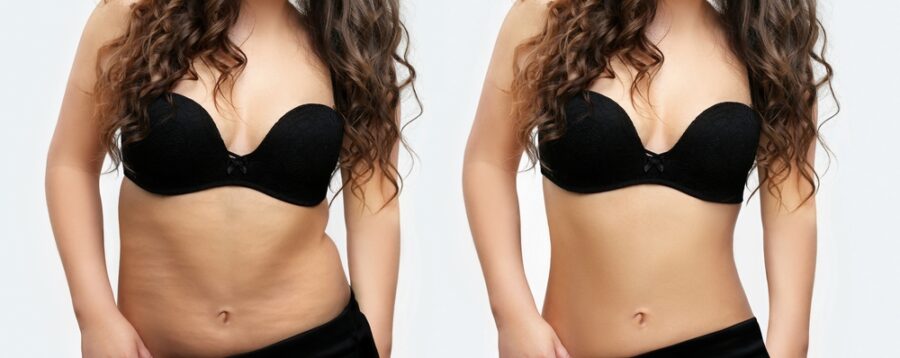
How to massage the scar after an abdominoplasty
Regular massage can help promote scar healing. It allows scar tissue to soften and become more relaxed. Starting around three weeks after the procedure, the massage can be done twice a day. It can be carried out for 5 to 10 minutes to optimise the healing time.
Massaging the scar after an abdominoplasty must nevertheless follow certain rules in order to be effective and, above all, not to prove counterproductive by disrupting the healing process. There are therefore certain steps to follow when performing this type of massage:
- First and foremost, you must wash your hands.
- Then press your index and middle fingers on the scar in order to make small circles without rubbing. Make up-and-down movements, then left-to-right movements.
- Roll the skin around the scar between your fingers.
- Apply a moisturising cream regularly.
How does an abdominoplasty scar evolve?
The scar is an unavoidable consequence of an abdominoplasty, but it is designed to remain as discreet as possible. There are generally two scars: the suprapubic scar, horizontal, located at the very bottom of the abdomen above the pubis (like a caesarean scar), whose length depends on the amount of skin removed and which is hidden under underwear or a swimsuit bottom; and, when the navel is repositioned, a fine peri-umbilical scar, hidden around the navel.
The scar from an abdominoplasty then follows a slow and entirely normal evolution, which takes place over several months:
- The first few weeks: the scar is still fine and the skin closure consolidates.
- From a few weeks to around 6 months: this is the inflammatory phase. The scar may turn red, thicken and become more visible. This is perfectly normal and it is precisely the period when aftercare is most important.
- From 6 months to 18 months (sometimes up to 2 years): the remodelling phase. The scar gradually whitens, softens and fades to take on its final appearance.
You must therefore remain patient: a scar that is still pinkish or firm during the first year does not predict the final result. The scar tissue may also feel hard or raised to the touch for several months, until the deep swelling has resolved.
To best support this healing, a few simple measures are agreed upon among international recommendations on scar management:
- Silicone gel or dressings are the reference treatment for softening and reducing a recent scar; they are applied once the wound is completely closed, generally for several weeks.
- Sun protection is essential: a young scar exposed to the sun risks becoming permanently pigmented. It should be covered and a total sunblock applied for at least one year.
- Quitting smoking clearly improves healing, as smoking reduces the oxygenation of tissues and promotes delayed healing.
- Regular massage (described above) and good skin hydration complete this aftercare.
More rarely, a scar can thicken excessively and become hypertrophic or keloid. This type of scar is managed specifically; we cover it in our dedicated article on the treatment of keloid scars.
How long does the swelling last?
Swelling resulting from an abdominoplasty can take some time to disappear completely. This also applies to abdominal bruising. The extent and size of the bruising and swelling is relatively variable from one patient to another. The swelling can also appear asymmetrically. The swelling and bruising can persist for around 15 to 21 days after the procedure. Here again, it all depends on the metabolism and recovery capacity of each individual.
The swelling may even be accompanied by slight discomfort or minor pain, which is nevertheless completely normal and should not necessarily worry the patient. The practice of lymphatic drainage, also used to reduce swelling after a liposuction, is then one of the best solutions for reducing the swelling. You can also wear a compression garment to apply a compressive effect.
It is not uncommon for the abdomen to appear swollen or « hard » for several weeks, or even a few months after the procedure: this is the result of this deep swelling and the re-tightening of the tissues, and it gradually fades. Similarly, some patients worry about « putting the belly back on » in the following weeks: this transient swelling corresponds to the swelling, not to a regain of fat. The result of a flat stomach is confirmed over the months, provided you stabilise your weight and adopt a healthy lifestyle.
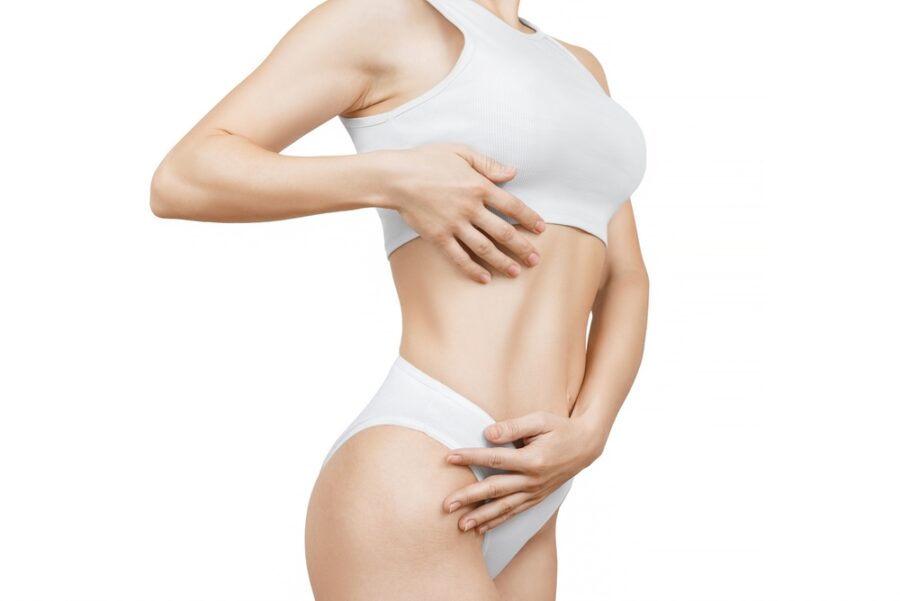
Medical monitoring will be necessary even weeks after an abdominoplasty. The results will only be definitively visible after several months. You have to wait for the bruising to disappear and the swelling to subside. Despite these minor inconveniences, an abdominoplasty remains a plastic surgery procedure that delivers quickly noticeable and relatively impressive results for people wishing to be rid of abdominal fat. To maximise the effect of the abdominoplasty, the patient must nevertheless follow all the instructions of the plastic surgeon and adopt a healthy lifestyle to preserve the benefits. You will find more details on the abdominoplasty procedure in Paris and how it is performed.
Frequently asked questions
How long does recovery last after an abdominoplasty?+
A period of around two weeks off work is generally advised for a sedentary job, and longer for physical work. The compression garment is worn day and night for 4 to 6 weeks, and the return to sport is delayed by around two months. Recovery nevertheless remains highly variable from one person to another: the key is to listen to your body and follow the surgeon’s instructions.
How to sleep after an abdominoplasty?+
It is recommended to sleep on your back, with your legs bent, with pillows under your knees so as not to pull on the suture of the abdominal muscles. Sleeping on your side, with a cushion between your knees, can often be adopted earlier. Sleeping on your stomach, however, is not advised during the first few weeks: allow 1 to 3 weeks after a minor procedure, and up to 4 to 6 weeks after a full abdominoplasty.
How long does swelling last after an abdominoplasty?+
Swelling and bruising most often subside within 15 to 21 days, but a more diffuse swelling can persist for several weeks, or even a few months. Lymphatic drainage and wearing the compression garment help to resolve it. As long as the deep swelling has not disappeared, the abdomen may appear « hard » or slightly rounded: this is normal and temporary.
When does an abdominoplasty scar become permanent?+
The scar evolves slowly: after an inflammatory phase that can make it red and thick for up to around six months, it enters a remodelling phase during which it whitens and softens. It generally takes on its final appearance between 18 months and two years. A scar that is still pinkish during the first year therefore does not predict the final result.
How to heal well after an abdominoplasty?+
Several simple steps promote good scar healing: applying silicone gel or dressings once the wound is closed, strict sun protection of the scar for at least one year, quitting smoking (which slows healing), regular massage from around the third week onwards and good skin hydration. Following the surgeon’s instructions remains decisive.
Is the pain greater when a diastasis is corrected?+
When the abdominoplasty is combined with a re-tightening of the muscles, that is, the correction of diastasis recti, the sensations of tension and the pain when getting up are often a little more pronounced in the first few days. They are controlled with painkillers. It is then advisable to get up by rolling onto your side and to stay slightly bent over at first so as not to strain the muscle suture.
Can the belly come back after an abdominoplasty?+
The re-swelling seen in the weeks that follow corresponds to swelling, not to a regain of fat: it gradually fades. The result of a flat stomach is confirmed over the months. To preserve it in the long term, it is essential to stabilise your weight and adopt a healthy lifestyle, as an abdominoplasty does not protect against further weight gain.
Book an appointment
If you are considering a procedure, book an appointment in just a few clicks: our surgeons will answer all your questions and guide you toward a tailored, personalised solution.
Book on Doctolib