Liposuction recovery: the benefits of a compression garment
After liposuction, plastic surgeons recommend wearing a compression garment. This item helps optimise the results of the liposuction and reduces the unwanted side effects of the procedure. What does liposuction involve, and in which cases is it recommended? What is the compression garment actually for after the operation? Which compression garment should you choose, and how long should you wear it for the best results? Discover the full benefits of a compression garment for liposuction recovery.
Contents
The key things to remember about liposuction
Liposuction is a plastic surgery procedure whose goal is to remove excess fat from specific, carefully targeted areas of the body. To do this, the plastic surgeon uses fine cannulas to suction out the fat cells in a non-invasive way. After the procedure, the patient enjoys a more harmonious body contour and firmer skin, provided the skin has a good capacity to retract. Once the excess fat has been removed, the skin retracts and the imperfections disappear. This procedure gives better results on skin with good elasticity. Otherwise, a lift can be used to remove the excess skin tissue, getting rid of stretched or sagging skin and restoring a smoother appearance.
When is liposuction recommended?
A liposuction procedure is recommended when someone struggles to get rid of certain fat deposits in a specific part of the body (often around the abdomen) despite a good diet and regular physical activity. This procedure does not really help with losing weight, but it does effectively remove persistent localised bulges and fat deposits.
This treatment can be applied to various areas of the body, including the hips, thighs, buttocks, belly, back and even the arms. The patient may be placed under general or local anaesthesia depending on how extensive the procedure is. This all depends on the number of areas to treat as well as the amount of fat to remove. It is a procedure that has no contraindication related to age or sex. The procedure lasts from 30 minutes to more than two hours. Some operations require a 24-hour hospital stay.
The benefits of a compression garment after liposuction
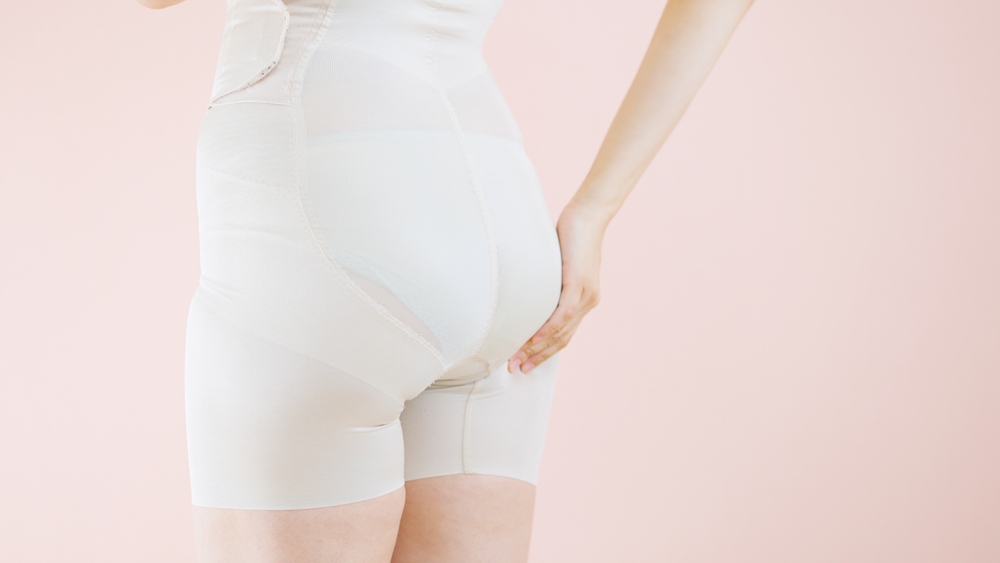
The compression garment is an elastic, compressive garment that helps reduce swelling following the bodily trauma caused by the introduction of the liposuction cannulas. After liposuction, the treated areas where the fat was extracted fill with fluid. The purpose of the compression garment is therefore to limit this swelling and prevent it from spreading to other parts of the body.
Thanks to its elastic properties, the garment has a compressive effect. It thus refines the result achieved with the liposuction. It is also a way of reducing uncomfortable post-operative effects. Through its compression, the compression garment reduces post-operative swelling and the risk of bruising, and protects the treated areas. This item also promotes lymphatic drainage and reduces the risk of irregularities forming on the surface of the skin. Finally, the garment limits the feeling of post-operative pain, particularly after an abdominoplasty.
Which type of compression garment should you choose?
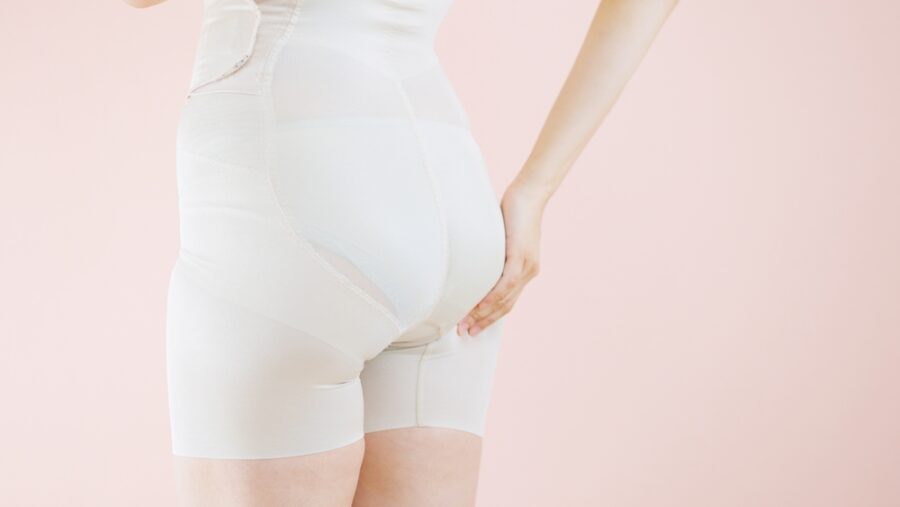
The choice of garment depends on the procedure performed. The patient may need to wear a compression panty or a bodysuit depending on the extent of the treated area, a compression sleeve for arm liposuction, or an abdominal binder after an abdominoplasty. It is mainly recommended to wear a compression panty after body-contouring surgery. Wearing this item is advised in the case of liposuction of the abdomen, buttocks, thighs, hips, knees or even the calves, or for a combined procedure on several areas of the body. With a compression garment, the movement of the tissues affected by the surgery is more limited, allowing the patient to feel less pain. They can therefore go about their daily activities relatively comfortably despite the trauma of the procedure.
The garment by treated area: belly, thighs, arms
The compression garment is not a one-size-fits-all garment: its shape adapts to the operated area. After belly liposuction, a high-waisted panty or an abdominal binder that wraps around the whole abdomen and lower back is preferred. For leg liposuction, a long panty reaching above or below the knees provides even compression and limits fluid retention in the lower body. After arm liposuction, a compression sleeve takes over. In every case, the goal is the same: to apply gentle, continuous pressure to the treated area to support skin retraction and the resolution of swelling.
How long should you wear a compression garment?
The compression garment must be worn at all times during the month following the procedure. The patient must keep it on day and night. On the first day, this item must be worn even in the shower. It may be removed on the following days when showering. You must, however, be careful to put the garment back on as soon as the shower is over. The length of time this item is worn varies from three weeks to a month and a half (wearing the garment for longer generally helps achieve better results). The compression panty, for its part, should be kept on for about a month after the procedure.
Most international protocols use a reference period of at least six weeks, with some surgeons extending the wear to six to eight weeks depending on how healing progresses and how extensive the treated areas are. This continuous compression during the first weeks is precisely when it is most useful: it is the moment when it controls swelling, supports circulation and limits the build-up of fluid under the skin. Several factors make this duration vary: the type of liposuction performed, the size of the treated area and the amount of fat removed, as well as each patient’s individual healing response. In every case, it is the surgeon who sets the precise schedule during the follow-up consultations.
What to do if the compression garment is too tight?
A feeling of compression is normal and even intended: the garment must hug the body to be effective. However, a garment that is genuinely too tight should never be tolerated. If the item leaves very pronounced marks on the skin, causes persistent pain, tingling, difficulty breathing or a feeling of heavy legs, these are warning signs. Excessive compression, particularly around the knees, can indeed impede blood circulation and, in the most serious cases, encourage a blood clot (phlebitis).
The right size is the one that firmly holds the treated area while still letting you breathe normally and carry out everyday tasks. Keep in mind that your body contour changes during the first weeks, as the swelling subsides: a garment that fits the day after the procedure may become too loose later, which is why models with adjustable straps or hooks are useful. If you are unsure about the fit, the right reflex is not to tighten it further yourself but to mention it to the surgeon or their team at the follow-up: a change of size, or even a change of model, is sometimes necessary.
Which type of compression garment after an abdominoplasty?
After an abdominoplasty, the role of the garment — often called an abdominal binder here — is even more structural than after a simple liposuction. It supports the abdominal wall weakened by the procedure, limits swelling, and reduces the sudden movements that could strain the sutures during the first weeks. This is also why it clearly helps reduce post-operative pain. For this procedure, the wear time is generally between four and six weeks, sometimes longer when the abdominoplasty has been combined with liposuction. Here again, it is the surgeon who decides when to stop wearing it, once they judge that the tissues have healed enough and the residual swelling has resolved. You will find the details of this recovery in our article on recovery after an abdominoplasty.
What criteria should you consider when choosing a compression garment?
Several factors come into play when choosing a compression garment, depending on the procedure and the comfort the patient is looking for.
Choosing the right size
A patient undergoing liposuction must be aware that the procedure does not give immediate results, because of the swelling that persists during the first weeks. This is why it is advisable to choose your usual underwear size. The compression garment should not squeeze the patient’s body excessively. The patient must indeed be able to breathe normally. Despite the feeling of compression, they should still be able to perform everyday movements without too much discomfort. If you are unsure about the right size, it is recommended to take your measurements before the procedure and to seek advice from specialist shops offering different sizes and many models of compression garment.
Selecting the right type of fabric
The garment will need to be worn at all times in the weeks following the operation. It is therefore best to favour fabrics you feel comfortable in. Ideally opt for elastane or lycra. These fabrics have good elasticity and provide a feeling of lightness. People generally refer to medical compression garments, designed to apply even pressure, unlike an ordinary shapewear garment from the shops.
Favouring garments with adjustable straps
Garments with adjustable straps can be adjusted to suit the patient’s needs. The patient can adapt it to their body as the swelling changes. It is worth noting that the post-surgical compression garment is fairly delicate to care for. It is therefore recommended to wash it by hand using a mild detergent. To avoid damaging the fabric, you should also avoid using the tumble dryer. Regular care also limits the risk of skin irritation under the garment.
How to choose a compression panty?
Like the compression garment, the panty must be worn at all times by the patient after the procedure. Favour an undergarment that lets you perform everyday movements without discomfort. The panty should not restrict breathing. Avoid choosing a size that is too small or too large. If you do not know your size, take your measurements before the surgery. It is perfectly normal to feel a little tight in the first moments after the procedure as the panty exerts its compressive effect; the key is being able to stay relatively mobile. This garment is generally made from specially adapted fabric designed to provide comfort and breathability. The panty should not, however, create a feeling of excessive tightness around the knees, which could prevent blood from circulating normally and, in the worst case, cause a blood clot (phlebitis).
Here again, it is preferable to buy a compression panty made from lycra or elastane, as these models are generally the most comfortable. As far as possible, also choose pantys with side openings for better ventilation and so you can adjust the garment when needed. Buying the compression panty, like the compression garment, is generally not reimbursed by the French national health insurance and should therefore also be budgeted for before the operation. Only an abdominoplasty considered to be reconstructive surgery can give entitlement to insurance coverage.
Frequently asked questions
Why wear a compression garment after liposuction?+
The compression garment applies gentle, continuous pressure to the treated areas. It limits post-operative swelling and bruising, promotes lymphatic drainage, supports skin retraction and reduces the risk of irregularities on the surface of the body. By holding the tissues in place, it also lessens pain and makes recovery more comfortable.
How long should you wear the garment after liposuction?+
In practice, the garment is worn at all times, day and night, during the month following the procedure. International protocols use a reference period of at least six weeks, sometimes extended to six to eight weeks depending on how extensive the treated areas are and how healing progresses. It is the surgeon who sets the precise schedule during the follow-up consultations.
What should you do if the compression garment is too tight?+
A feeling of compression is normal, but very pronounced marks, persistent pain, tingling or difficulty breathing are not: excessive compression can impede circulation and, in serious cases, encourage a blood clot (phlebitis). You should not tighten it further yourself: it is better to adjust the adjustable straps and report the discomfort to the surgeon, who can review the size or the model.
When can the garment be removed for good?+
The garment is removed for good when the surgeon judges, at a follow-up consultation, that the tissues have healed enough and the residual swelling has resolved. This decision depends on each patient and on how extensive the procedure was; it should not be made alone.
Can you sleep and shower with the compression garment on?+
Yes, the garment is worn day and night during the first weeks. On the first day, it is kept on even in the shower; on the following days, it can be removed while washing, then put back on straight away. The area must stay clean and dry under the garment to avoid skin irritation.
How long should you wear the garment after an abdominoplasty?+
After an abdominoplasty, the abdominal binder supports the wall and protects the sutures. The wear time is generally between four and six weeks, sometimes longer when the procedure has been combined with liposuction. Removal is decided by the surgeon according to how healing progresses.
Is the compression garment reimbursed by the French national health insurance?+
After cosmetic liposuction, buying the compression garment or panty is generally not covered by the French national health insurance and must be budgeted for before the operation. Only an abdominoplasty recognised as reconstructive surgery can give entitlement to insurance coverage.
Book an appointment
If you are considering a procedure, book an appointment in just a few clicks: our surgeons will answer all your questions and guide you toward a tailored, personalised solution.
Book on Doctolib