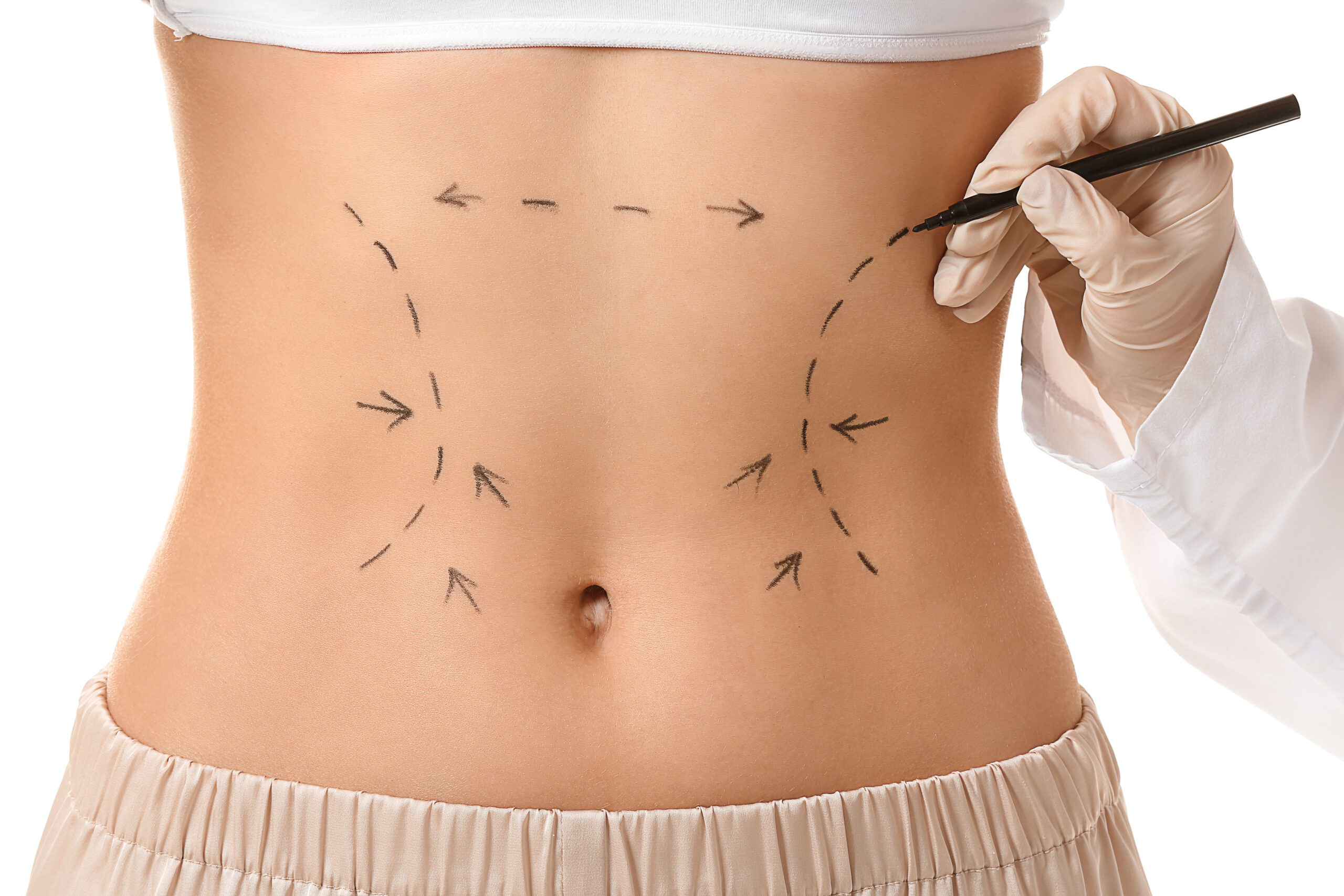
Loose belly skin: how to get rid of sagging, crepey skin
Time, lifestyle and genetics very often lead to a build-up of fat cells around the belly, fat that can then look particularly unflattering. While we are not all genetically equal when it comes to skin ageing and fat accumulation around the abdomen, other external factors further accentuate the crepey skin appearance on the abdomen. From a certain age, it then becomes very difficult to counteract loose skin on the lower belly.
And yet solutions now exist to firm this abdominal area lastingly, whether by tightening belly skin without surgery through aesthetic medicine and a healthy lifestyle, or by turning to surgery when the excess skin is significant. How can you get rid of unsightly rolls on the abdomen and prevent them from coming back? What are the options for re-tensioning the different layers of the skin? Everything you need to know about counteracting loose belly skin and tightening the skin lastingly.
Contents
What causes loose belly skin?
Loose belly skin is primarily explained by natural predispositions. External events can nevertheless aggravate or trigger sagging of the abdominal skin.
Endogenous causes
Loose belly skin is partly due to morphological factors specific to each individual. Genetic make-up as well as the skin’s tendency to stretch more or less naturally are largely responsible. Some women in particular have a genetic predisposition to accumulating fatty deposits (adipocytes) around the navel area, along with natural slackening of the elastin fibres on the abdomen. These signs can appear early, as soon as puberty ends.
For this type of profile, skin laxity and crepey skin will always be more or less visible despite considerable efforts with diet or physical activity.
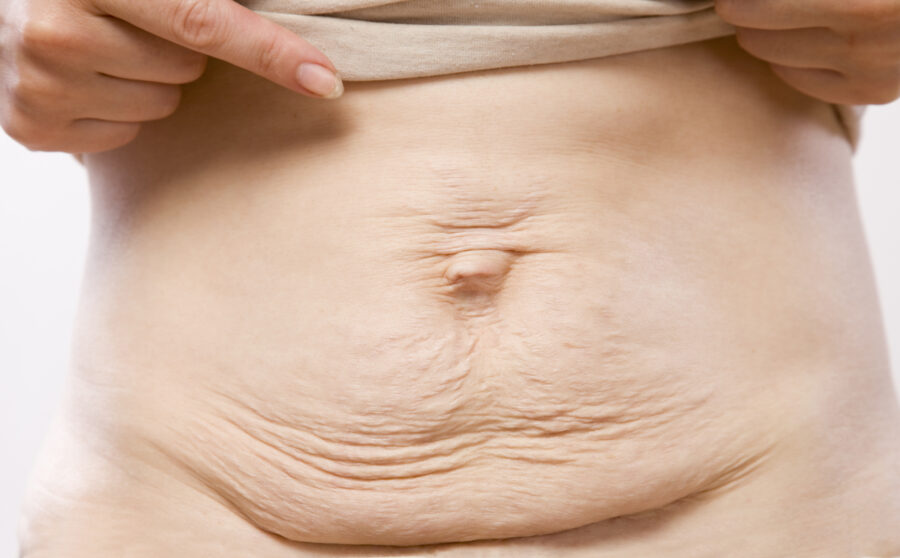
In women, hormonal phenomena also explain the accumulation of fat cells around the stomach (visceral fat). One example is menopause, which, around the age of 50, sharply reduces female hormones (oestrogen and progesterone), resulting in greater fat accumulation in the abdominal area. The thinning of the various skin layers and its drying out then accentuate this rounded-belly phenomenon.
In men, andropause produces more or less the same effects, with a drop in testosterone leading to skin ageing and the appearance of folds, though generally without fat (a crepey appearance rather than fatty rolls).
Exogenous causes
While for some people loose belly skin is more or less unavoidable, external factors can aggravate it significantly, or even cause it in people who were not predisposed in the first place. These include in particular:
- The accumulation of fat from your thirties onwards due to a poor lifestyle (a diet too high in fat and sugar, alcohol consumption, etc.). This kind of diet gives the appearance of a soft belly.
- Major weight loss and weight fluctuations that slacken the tissues and cause folds to appear. The skin then becomes loose after repeated stretching. This is a frequent reason for consultation in plastic surgery after weight loss.
- Repeated pregnancies reduce the skin’s elasticity and cause a transfer of fat cells (due to hormonal variations) that then build up in the abdomen. The mommy makeover, a set of aesthetic procedures after pregnancy, addresses precisely this post-partum crepey belly.
- The use of tobacco, and nicotine in particular, which reduces the production of hyaluronic acid, whose concentration ensures the skin’s hydration and firmness.
When the loosening is accompanied by a separation of the rectus abdominis muscles, this is called abdominal diastasis recti, whose treatment is sometimes surgical: it is what gives that belly pointing forward despite a stable weight.
Tightening belly skin without surgery: what can you realistically expect?
Before considering the scalpel, many patients wonder whether it is possible to tighten belly skin without surgery. The answer is nuanced: when the loosening is mild to moderate, a healthy lifestyle, cosmetic treatments and aesthetic medicine can visibly firm the skin and restore a more toned belly. However, when the excess skin is significant — a genuine abdominal apron after pregnancy or major weight loss — no non-surgical method can remove the surplus skin: only surgery can.
This reality is a consensus in dermatology: the American Academy of Dermatology notes that non-invasive treatments (radiofrequency, focused ultrasound) produce a gradual and moderate firming, as the skin builds new collagen over two to six months, and that only a surgical procedure can remove a significant amount of stretched skin. The results of gentle techniques are therefore subtle and require patience, but they remain an excellent first step, with no social downtime.
The right everyday habits
The first lever, and a free one, remains a healthy lifestyle: a stable weight (repeated weight fluctuations exhaust the skin’s elasticity), good hydration, sufficient sleep and avoiding tobacco and excess alcohol all preserve the skin’s firmness over the long term. A diet rich in protein, vitamin C and zinc also supports the natural synthesis of collagen.
Firming creams and treatments
Firming creams do not work miracles on very stretched skin, but they genuinely improve texture and hydration when the loosening is in its early stages. It is best to choose proven active ingredients: retinol (which stimulates cell renewal), hyaluronic acid and peptides (hydration and support for the dermis), caffeine (a toning effect) and vitamin C (collagen synthesis). Applying them with a firm massage, morning and evening, optimises their effects.
Exercise and strengthening the core
No exercise directly « tightens » the skin, but strengthening the core muscles restores shape and makes the belly noticeably more toned beneath loosening skin. Planks, deep abdominal work (the transverse), hypopressive exercises and swimming are the most effective ways to abdominal etching and achieve defined abs and a flat belly, alongside the other measures.
Treating loose belly skin with aesthetic medicine
Abdominal plastic surgery procedures are relatively heavy both in terms of the operation and the post-operative recovery. For those more reluctant, aesthetic medicine has also made great progress in treating crepey belly skin effectively and without a scalpel.
Cryolipolysis
Also called lipocryolysis or gentle liposuction, cryolipolysis involves treating unsightly rolls with cold. Although it is not used to treat loose belly skin as such, it allows body reshaping in the areas most resistant to slimming, and therefore the abdomen in particular. It is thus a targeted technique acting on localised fatty deposits. These adipocytes, found notably on the sides of the belly (love handles), then undergo a cold treatment at an intense temperature (around -8°).
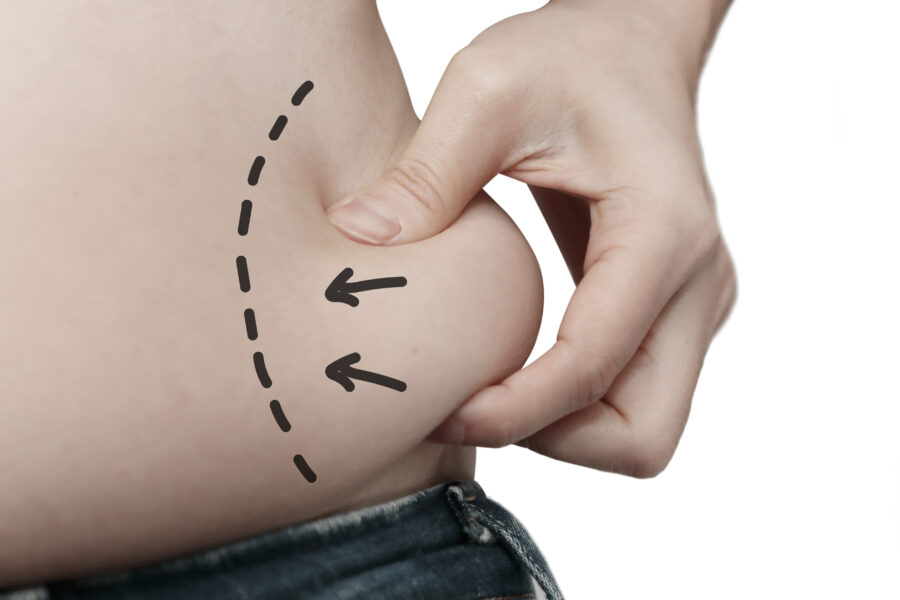
After exposure lasting several tens of minutes, a phenomenon of fat-cell suicide then occurs (apoptosis), leading to their breakdown. This shock to the body results in what is known as cell lysis, i.e. the self-destruction of the membrane of a large proportion of the fat cells. This cell-death process unfolds over several weeks (6 to 12 weeks depending on the area treated). Cryolipolysis will generally require several sessions at repeated intervals for an optimal outcome, along with possible lymphatic drainage to facilitate the breakdown of the adipocytes. The belly is the area of the body where the fat-cell elimination process is fastest.
Radiofrequency
Unlike cryolipolysis, radiofrequency (or body contouring) is a technique that eliminates fat cells using heat. It involves emitting very-high-frequency electromagnetic waves to heat the subcutaneous tissues through the movement of electrons. The heat produced triggers a twofold process. On one hand, the elimination of fat cells at temperatures close to 60°. On the other, the stimulation of fibroblasts, which enables renewal of the dermis and regeneration of collagen. The result is a mechanical re-tensioning of the skin.
The cellular activity produced by radiofrequency also helps to slow the natural ageing of the skin. This non-invasive technique for treating loose belly skin needs to be repeated over several sessions to obtain an optimal result and a visible redefinition of the body contour. Infrared sessions and « palper-rouler » deep massage help to speed up the process and, here too, drain the lymphatic system.
Fractional radiofrequency and plasma
For firmer results than conventional radiofrequency, two technologies go further while remaining minimally invasive. Microneedling fractional radiofrequency, such as Morpheus 8, delivers heat into the dermis to strongly restart collagen production. When the loosening is more pronounced but does not yet warrant an abdominoplasty, Renuvion J-Plasma, a skin-tightening treatment without major surgery, combines radiofrequency and helium plasma beneath the skin for an immediate and progressive tightening effect. These approaches fall within the logic of non-surgical facelift techniques now offered at the practice.
Treating loose belly skin with plastic surgery
Plastic surgery is a radical solution that re-drapes the belly skin lastingly. It is the only option capable of removing a significant excess of skin, when gentle techniques are no longer enough. Several procedures address this problem of skin laxity.
Abdominoplasty
The abdominoplasty, also known as a tummy tuck or belly lift, is the most common operation for tackling significant loose skin on the abdomen. It permanently removes fatty deposits and excess skin and corrects the various skin alterations. It is particularly suited to people who have undergone major weight loss following bariatric surgery (with an abdominal apron overhanging the pubis).
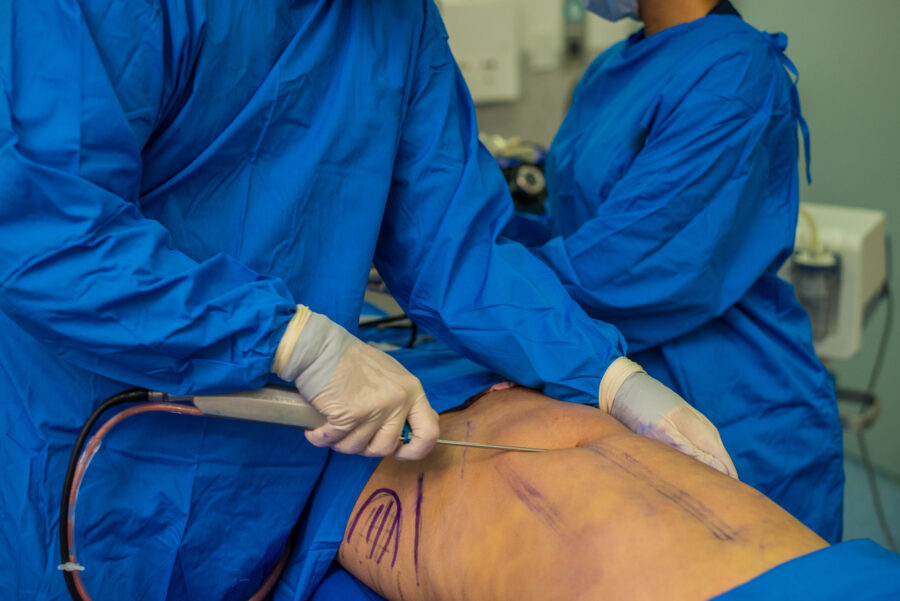
The abdominoplasty is carried out in 2 or 3 main stages depending on the profile:
- Removal of the fat cells (adipocytes) from the abdominal wall by liposuction using fine cannulas. When fat alone is the issue, belly liposuction alone can sometimes be enough.
- An abdominal lift to re-tension the skin by removing the excess skin tissue.
- Firming of the muscle tissue when the muscles are too slack. This step is not always performed and mainly concerns patients with diastasis (a separation on either side of the rectus abdominis muscles).
The abdominoplasty is sometimes limited to a simple liposuction when the fat to be removed is minor and the loose skin is relatively moderate or even non-existent.
The bodylift
The bodylift, also known as a circumferential dermolipectomy, is recommended for people with a localised excess of weight, especially around the abdominal waistline. It involves removing the fatty deposits from the middle third of the body. It thus goes further than the abdominoplasty since, in addition to treating the lower belly, it fully re-harmonises the body contour by eliminating fat cells around the buttocks and hips. The bodylift therefore acts on the entire lateral aspect of the lower trunk (hence the name circumferential dermolipectomy). Here again it is specifically intended for people who have undergone major weight loss, in particular following surgery.
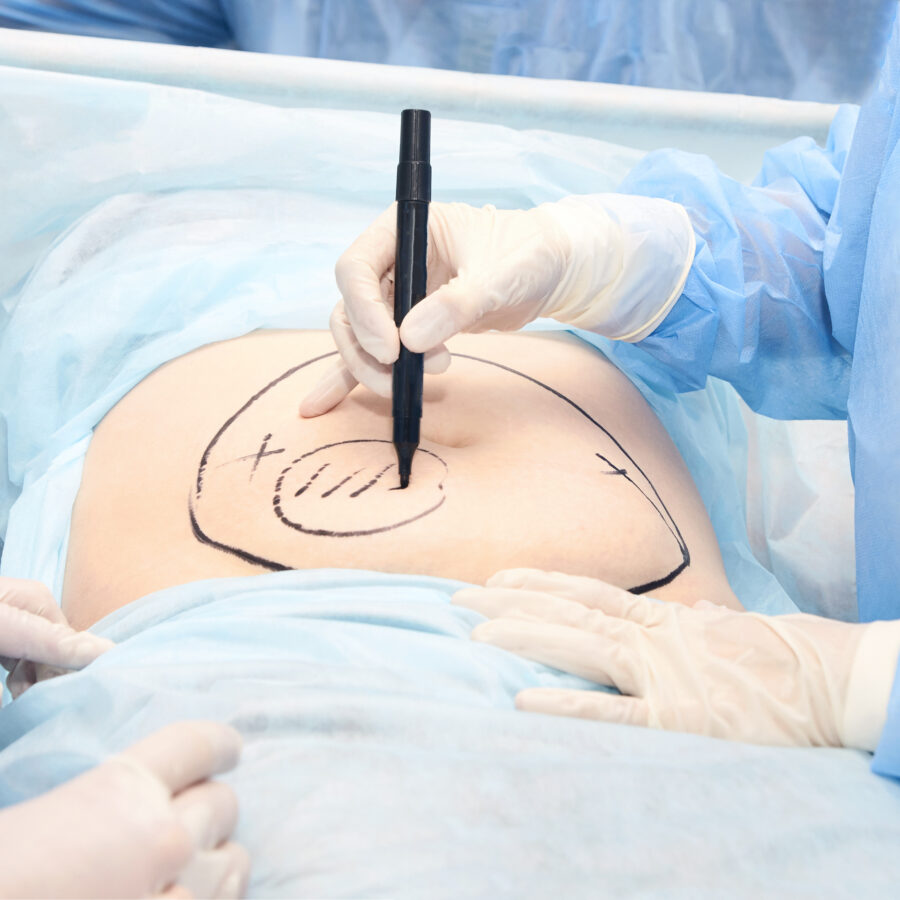
In practice, the lower bodylift begins with detaching a band of skin all around the abdominal waistline, the buttocks and the belly, in order to then carry out a liposuction of the excess fatty and skin tissue across all of these areas.
As with the abdominoplasty, a diastasis repair may be performed, though it is not always necessary. A repositioning of the navel may also occasionally be carried out. The final step, the re-tensioning of the skin, takes place from the upper abdomen down to the pubis as well as around the buttocks and thighs. The bodylift thus treats the excess skin of the abdominal apron but also sagging buttocks and saddlebags. It is a comprehensive but relatively long and demanding procedure.
The routine to adopt to get rid of crepey skin
In addition to the more or less invasive methods discussed above, the patient must follow certain guidelines to maintain the results obtained over time and preserve the firmness of the newly restored skin. First of all, they will need to adopt a healthy, balanced diet to avoid weight fluctuations.
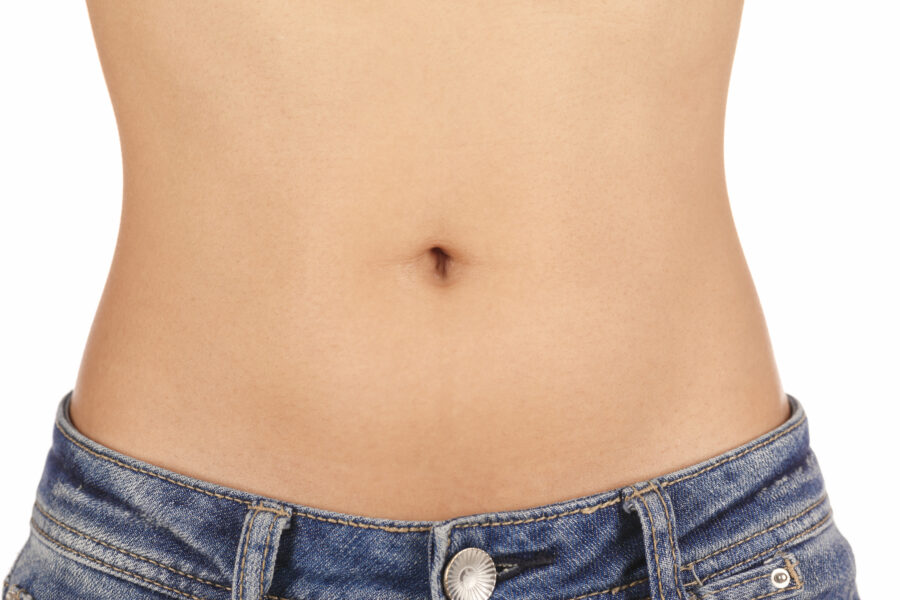
A programme of physical exercise will also help to firm the tissues and keep them under tension. Sessions of planks, abdominal work and muscle strengthening will reduce the look of crepey, loose skin and make the subcutaneous fat less visible. Swimming is also a complete sport that develops the abdominal musculature.
Sessions of massage of the abdominal area will also be beneficial in preventing skin ageing, thanks to a stimulation of blood circulation that triggers an anti-ageing self-defence mechanism. These massages can also be combined with the application of firming and hydrating cosmetic creams that act on the elasticity and firmness of the skin.
Finally, alcohol and tobacco should be avoided as far as possible to preserve the skin and stop the accumulation of fat cells.
Frequently asked questions
Is it possible to tighten belly skin without surgery?+
Yes, when the loosening is mild to moderate. A healthy lifestyle, firming creams (retinol, hyaluronic acid, peptides), radiofrequency or re-tensioning techniques such as Renuvion or Morpheus 8 allow gradual firming. However, a significant excess of skin (an abdominal apron) can only be removed by surgery: the American Academy of Dermatology notes that only a surgical procedure removes a significant amount of stretched skin.
How do you tighten belly skin after weight loss?+
After major weight loss, stretched skin rarely retracts on its own. If the excess is moderate, radiofrequency and strengthening the core help. If the skin forms a genuine apron, an abdominoplasty or bodylift are the reference solutions. It is a frequent reason for consultation in plastic surgery after weight loss.
What treatment is there for a crepey belly after pregnancy?+
A crepey post-pregnancy belly often combines skin laxity, stretch marks and sometimes diastasis (a separation of the rectus abdominis muscles). After the breastfeeding period and once the weight has stabilised, each case is assessed individually: aesthetic medicine for mild loosening, or an abdominoplasty as part of a mommy makeover when the skin and muscles are stretched.
Are firming creams effective on the belly?+
They genuinely improve the hydration, texture and firmness of skin that is only slightly loose, without however removing established excess skin. It is best to choose evidence-backed active ingredients: retinol, hyaluronic acid, caffeine, peptides and vitamin C, applied with a massage morning and evening, alongside a stable weight and good hydration.
Can exercise firm a soft belly?+
Exercise does not directly tighten the skin, but strengthening the core (planks, the transverse, hypopressive exercises, swimming) restores shape and makes the belly noticeably more toned beneath loosening skin. It is a valuable complement, never a sole solution when skin laxity is marked.
When should you consider an operation rather than a non-surgical treatment?+
As soon as the excess skin is significant and no longer retracts — hanging skin, an abdominal apron, associated diastasis. Gentle techniques then reach their limits. A consultation with Dr Vincent Hunsinger allows a precise assessment of the share of fat, skin and muscle involved, and guides you towards liposuction, an abdominoplasty or a bodylift depending on your profile.
Book an appointment
If you are considering a procedure, book an appointment in just a few clicks: our surgeons will answer all your questions and guide you toward a tailored, personalised solution.
Book on Doctolib