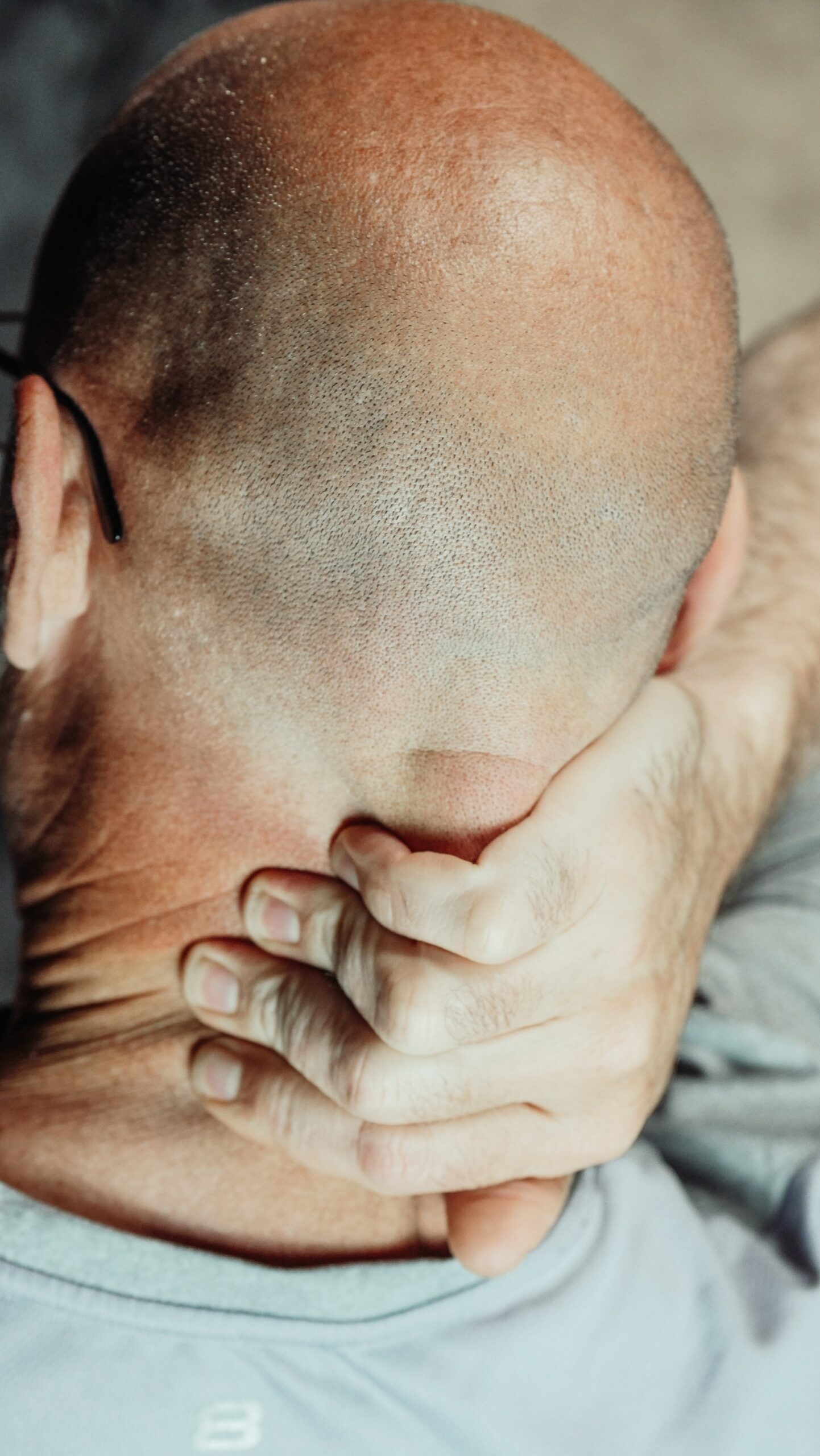
Permanent buffalo hump removal with plastic surgery
A buffalo hump is one of the most troubling body imperfections, both functionally and aesthetically. Affecting men and women alike, it appears as a bulge at the back of the neck that recalls the shape of a bison’s back. Buffalo hump plastic surgery consists of treating and removing the fat that has accumulated at the back of the neck. Causes, indications, physical and psychological consequences, how the procedure is performed, prices and reimbursement… here is everything you need to know about permanent buffalo hump removal with plastic surgery.
Contents
What exactly is a buffalo hump?
A buffalo hump (also called « buffalo neck ») is characterised by a large, mobile mass of subcutaneous fatty tissue (a skin lipoma) located between the seventh cervical vertebra and the back of the base of the neck, at the level of the upper spine. Skin lipomas are masses of fat formed by adipose cells found under the skin in the hypodermis. In the case of a buffalo hump, they find favourable conditions to develop at the nape of the neck, because the back of the neck has relatively thin skin with a strong tendency to slacken. The fat cells can then grow slowly with gradual proliferation, but may eventually become bulky and bothersome, or in the worst cases (which are very rare) turn into a tumour.
To the touch, a buffalo hump is generally soft, mobile and painless, sometimes spongy in texture. Its size varies greatly from one patient to another: some formations measure just a few centimetres across, while others can reach around ten centimetres. This localised lipoma can grow slowly over time, but this is by no means systematic.
What are the indications for this fatty excess on the upper back?
A buffalo hump generally appears in adults regardless of ethnic origin or sex (with a slight female predominance nonetheless) and can cause aesthetic disturbances and, in some cases, neck and back pain. Once formed, and despite every attempt at dieting to make it disappear, it can only be removed through a surgical procedure, by excision of the excess tissue and liposuction of the fatty mass.
Although it is harmless in all but a few rare cases, it can nonetheless cause physical discomfort with posture and mobility problems, psychological discomfort with reduced self-esteem, and sometimes difficulty getting dressed. A buffalo hump should be distinguished from kyphosis, which is an excessive curvature of the spine resulting in particular from repeated poor posture.
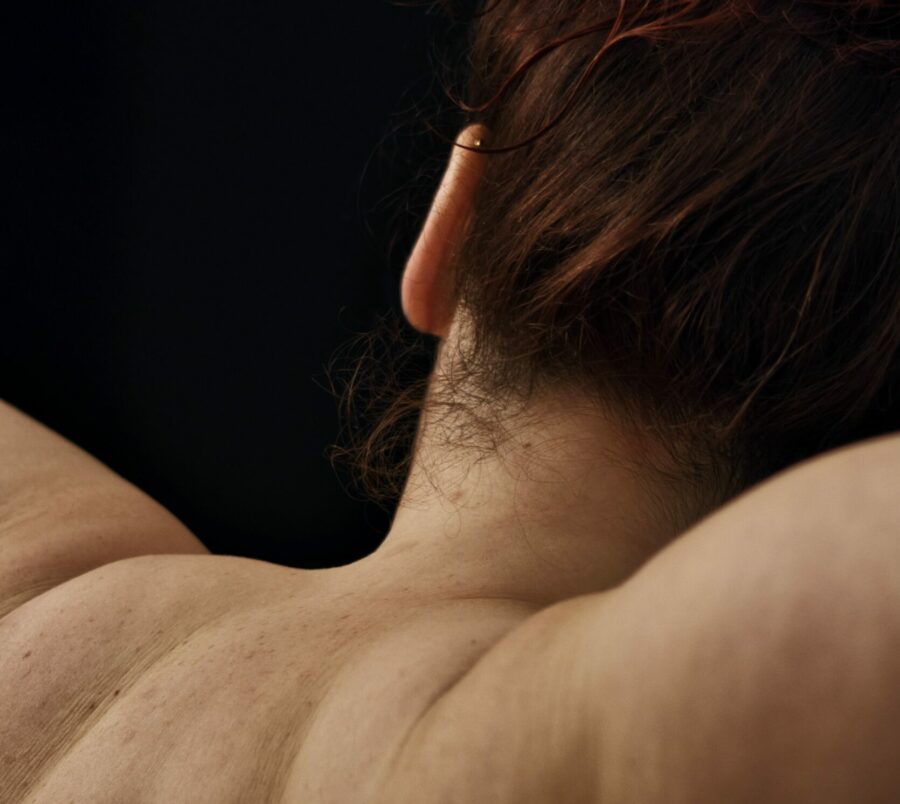
What causes it to form at the back of the neck?
A buffalo hump is a relatively common anomaly that can be caused by a hormonal imbalance such as thyroid disorders or diabetes, leading to lipodystrophy. Obesity is also one of the main causes of excessive fat accumulation at the nape of the neck.
The excessive secretion of hormones such as cortisol and the glucocorticoids produced by the adrenal glands (Cushing’s syndrome) are other frequently observed factors, as is the regular use of medication (steroids for inflammatory diseases or anti-HIV treatments such as antiretrovirals, for example).
Certain hereditary diseases, such as osteoporosis or the weakening of bones and vertebrae, can also, in rarer cases, cause this malformation. It should also be noted that a significant proportion of buffalo humps remain idiopathic: no specific cause is identified. Finally, this bulge can appear in women after the menopause because of the hormonal changes occurring at that stage, which explains why it is slightly more common in women.
What consequences for the back and neck?
As well as being unsightly, a buffalo hump can also reduce the affected patient’s ability to extend the head and hold the neck straight, forcing them to keep a bent posture.
It can thus permanently alter the way the head is held and accustom the patient to chronically adopting poor postures, with all the resulting consequences (neck pain, back pain, ligament disorders, pinched nerves, osteoarthritis, flattened discs, etc.).
The result is very often mobility problems in the neck and nape, an ungraceful posture, and sometimes even difficulty straightening up, or even walking upright or sleeping on the back.
A buffalo hump can also cause lipid or bone disorders requiring medical monitoring.
Finally, it can regularly trigger headaches that are sometimes painful.
Which doctor should you consult for a buffalo hump?
When a lump appears at the base of the neck, the first instinct is to consult your general practitioner, who will carry out a clinical examination and refer you, according to the suspected cause, to the right specialist. An ultrasound scan, possibly supplemented by an MRI in case of doubt, confirms the diagnosis of a lipoma and rules out any other formation. When a hormonal disorder is suspected (thyroid, Cushing’s syndrome), an endocrinologist can carry out blood and hormone tests to determine its origin. Finally, when the hump is mainly bothersome from an aesthetic and functional point of view, it is the plastic surgeon who will assess the most appropriate solution to correct it.
Liposuction to treat a buffalo hump
The most commonly used method to get rid of a buffalo hump is liposuction of the localised fat, also called liposculpture. This surgery aims to perform an excision of the excess fatty tissue by suction between the shoulder blades, allowing the back of the neck to be permanently reshaped.
Before the procedure
Before the operation, the patient must undergo a series of blood and hormone tests to ensure there are no contraindications. They must also book a prior appointment with the anaesthetist at least 48 hours before the procedure in order to prevent any potential complications before, during and after the liposuction.
The procedure in practice
The surgical procedure usually takes place in a clinic, most often on an outpatient basis (going home the same evening), under local anaesthetic with sedation or, in some cases, under general anaesthetic. To make the procedure easier to perform and improve the patient’s comfort, surgeons sometimes recommend a short general anaesthetic so that the patient can be placed face down.
In practice, the surgeon makes very fine incisions in the skin fold of the nape, and sometimes the shoulders, to insert micro-cannulas connected to a suction system that extracts the fat cells. Lasting roughly 30 minutes, the procedure ends with the application of a compression dressing over the treated areas, in order to reduce the immediate appearance of bruising as well as post-operative swelling and bruising. The compression dressing also helps the process of tissue healing.
Liposuction can, in some cases and when the diagnosis allows it, be combined with a laser (lipolytic laser), which then avoids incisions. It can also sometimes be paired with ultrasound to break up the fat before it is suctioned.
Liposuction or lipoma removal?
Depending on the volume and consistency of the hump, the surgeon may suggest, rather than liposuction, complete surgical removal of the lipoma by excision. Liposuction has the advantage of leaving only a very discreet scar, but does not always remove the entire fatty mass, hence a slightly higher risk of recurrence. Excision, performed through an incision over the hump, prevents any risk of recurrence in the same place, at the cost of a scar proportional to the diameter of the lipoma. The choice between the two techniques is discussed during the preliminary consultation, depending on the size of the hump and the condition of the skin.
After the procedure
The side effects following buffalo hump liposuction are relatively minimal, with moderate bruising and swelling that disappear within a few days. For a large hump, the surgeon may place drains at the incisions for a few days. An ice pack can also reduce the swelling that follows liposuction. Painkillers may also be prescribed in case of pain. Buffalo hump liposuction may also require wearing a chin strap or a compression garment during recovery, which helps optimise the result of the procedure.
Recovery from buffalo hump liposuction is generally complete after one to two weeks. Physical effort should, however, be limited for around four weeks to optimise recovery and healing. The expected effect of the liposuction can generally be seen from 15 days after the procedure, with a slimmer neck, improved posture and a lastingly reshaped nape with virtually no risk of recurrence. It will, however, be fairly gradual, as the swelling subsides and the pores of the skin, long obstructed by the fat, tighten back up. As the skin’s elasticity is generally fairly good in this area, the procedure will leave very few visible signs of the hump’s previous presence. The results are reviewed at a follow-up visit with the surgeon a few weeks after the procedure.
Price and reimbursement of buffalo hump surgery
As correcting a buffalo hump with targeted liposuction of the nape is considered a plastic surgery procedure, it is in principle not covered by the French national health insurance. The cost varies according to the volume to be treated, the type of anaesthetic (local or general) and the chosen facility; a personalised, detailed quote is always provided at the end of the consultation, in accordance with the regulations on aesthetic procedures. Partial coverage can only be considered in the rare situations where the hump causes a documented functional impact (documented pain or restricted mobility), on medical decision.
Is it possible to treat a buffalo hump without surgery?
In some cases, a buffalo hump can be removed, or at least reduced, without necessarily resorting to liposuction. To do this, you first need to identify the cause of this accumulation of fatty tissue at the nape by carrying out various blood tests, X-rays or scans to establish the cause of the bulge. It very often stems from hormonal disorders (in particular thyroid or diabetic ones). Based on the diagnosis made by a doctor, you may then be prescribed, depending on the situation, insulin-regulating medication or treatments aimed at lowering cholesterol or triglyceride levels. When the hump is linked to obesity, weight loss can reduce it; when it results from corticosteroid treatment, stopping it can allow it to regress.
Adopting a more balanced diet combined with regular physical activity can also help reduce fat accumulation at the nape, in particular by building up the muscles in the area.
Finally, diligent work on correcting posture with the help of a physiotherapist can also pay off in terms of mobility, thanks to repeated manual exercises. It will not, however, make the fatty tissue that the affected patient feels is unsightly disappear entirely. Only liposuction offers the possibility of achieving complete, lasting removal of a buffalo hump with virtually no risk of recurrence.
Frequently asked questions
How can you get rid of a buffalo hump for good?+
Once formed, a buffalo hump does not disappear with dieting or exercise: it is localised, dense and fibrous fat. The only lasting solution is surgical, most often a targeted liposuction of the nape, sometimes a complete removal of the lipoma depending on its volume. The result is permanent, with a very low risk of recurrence when the possible underlying cause (hormonal in particular) is also treated.
Which doctor should you consult for a buffalo hump?+
The first point of contact is the general practitioner, who carries out a clinical examination and prescribes an ultrasound scan to confirm the diagnosis of a lipoma. Depending on the suspected cause, they then refer you either to an endocrinologist (in case of a hormonal disorder) or, when the discomfort is mainly aesthetic and functional, to a plastic surgeon who will assess the most appropriate technique.
Is buffalo hump surgery reimbursed?+
As correcting a buffalo hump is considered a plastic surgery procedure, it is not covered by the French national health insurance. A personalised, detailed quote is provided at the end of the consultation. Partial coverage can only be considered in the rare cases where the hump causes a proven functional impact, on medical decision.
Can a buffalo hump be removed without surgery?+
When the hump is linked to an identified cause, acting on that cause can reduce it: weight loss in case of obesity, stopping corticosteroid treatment, hormonal rebalancing. Regular physical activity and postural work with a physiotherapist improve mobility. These approaches do not, however, make the fat that is already established disappear completely, unlike liposuction.
Is a buffalo hump painful?+
A buffalo hump is generally not painful in itself. It is mainly the postural compensations it causes (head tilted forward, rounded shoulders) that can lead, over the long term, to neck and back pain, muscle tension and sometimes headaches.
How should you sleep with a buffalo hump?+
The most comfortable position is generally to sleep on your back, with your head resting on a fairly thin pillow so as to respect the natural curve of the cervical spine. Sleeping on your side remains possible by keeping the head aligned with the spine. An ergonomic memory-foam pillow can help to distribute pressure more evenly and limit tension in the nape.
Book an appointment
If you are considering a procedure, book an appointment in just a few clicks: our surgeons will answer all your questions and guide you toward a tailored, personalised solution.
Book on Doctolib