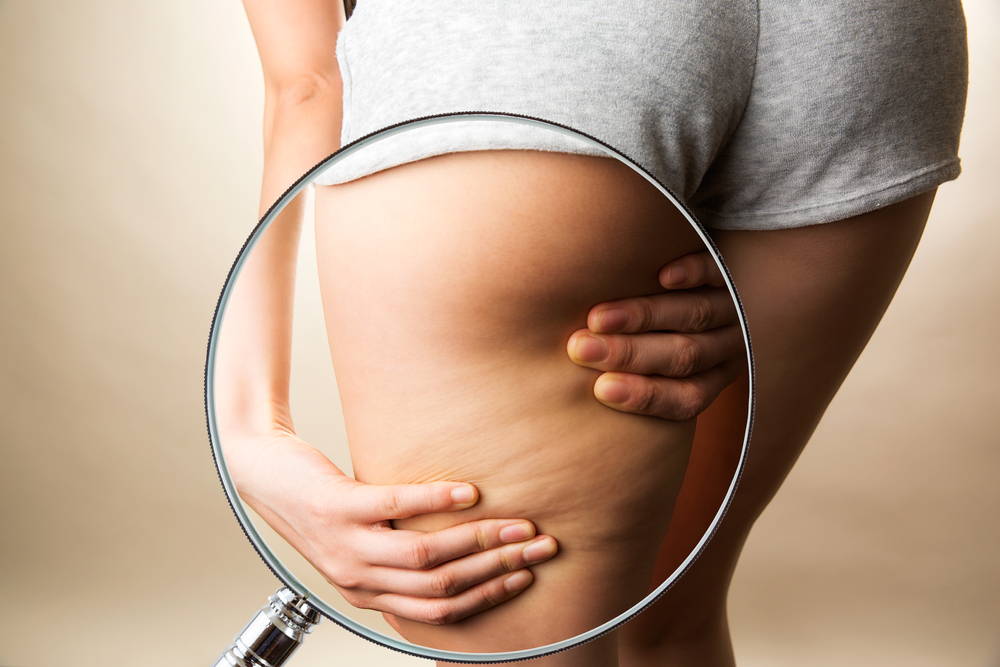
How to get rid of cellulite on the thighs
Cellulite, also known as dimpling or orange-peel skin, results from a change in the structure of the fatty tissue lodged beneath the epidermis. Often found on the back of the thighs, on the buttocks and the rear, it gives the skin a lumpy and relatively unattractive appearance. Fortunately, there are ways to get rid of cellulite on the thighs and to restore smooth, even skin. What causes cellulite on the thighs? What are the different types of cellulite, and which methods can remove this dimpling? Find out how to get rid of cellulite on the thighs effectively and over the long term.
Contents
What causes cellulite on the thighs?
Cellulite is largely explained by a problem of skin laxity. This phenomenon actually corresponds to a loss of skin elasticity: the skin becomes slacker and looser, allowing irregular, compartmentalised fat cells to show through. The skin on the inner thighs is, in fact, very thin, and its elasticity is therefore put under considerable strain. This natural process is the result of a laxity that is first muscular, then cutaneous, leading to excess skin and subsequent sagging. The areas of the body most affected are generally the belly, the lower abdomen and the upper arms, but above all the buttocks and the back of the thighs.
Among the causes of cellulite are hormonal upheavals. These can indeed affect skin elasticity, especially in women. This is most often the case during pregnancy or around the menopause.
In addition, a sedentary lifestyle and a lack of physical exercise create a particularly favourable environment for the development of adipose cellulite.
Furthermore, a diet low in essential fatty acids and antioxidants can also lead to skin laxity, and therefore to the appearance of cellulite. The same is true of a diet too rich in salt, sugar and saturated fats, which causes a build-up of toxins and fat deposits.
Finally, poor blood and lymphatic circulation combined with excessive water retention can lead to a dysfunction of the fatty tissue in the hypodermis and cause a congestion phenomenon in certain parts of the body. This is known as aqueous cellulite, which can likewise give the skin an uneven appearance.
It should be remembered, finally, that cellulite is not solely a matter of being overweight: you can be slim and still have dimpling on the thighs, because hormonal, circulatory and genetic factors play a major role, regardless of weight.
The different types of cellulite
Not all cellulite is the same, and correctly identifying your own type helps you choose the right approach. There are classically three types of cellulite, which may in fact coexist on the thighs and buttocks.
- Aqueous cellulite: soft and barely visible, it is linked to poor circulation and water retention. It is often accompanied by a sensation of heavy legs and mainly affects the thighs, calves and ankles.
- Adipose cellulite: painless and soft, it results mainly from an excess of localised fat, an unbalanced diet and a lack of physical activity. It is the most common type on the buttocks, hips and the back of the thighs.
- Fibrous cellulite: this is a more advanced stage. Hard to the touch and sometimes painful, it has been established in the tissues for a long time and requires more sustained care to fade. It is often found on the knees and thighs.
In practice, many women have « mixed » cellulite, both aqueous and adipose. This is why a personalised assessment remains the best way to determine the most suitable treatment for cellulite on the thighs.
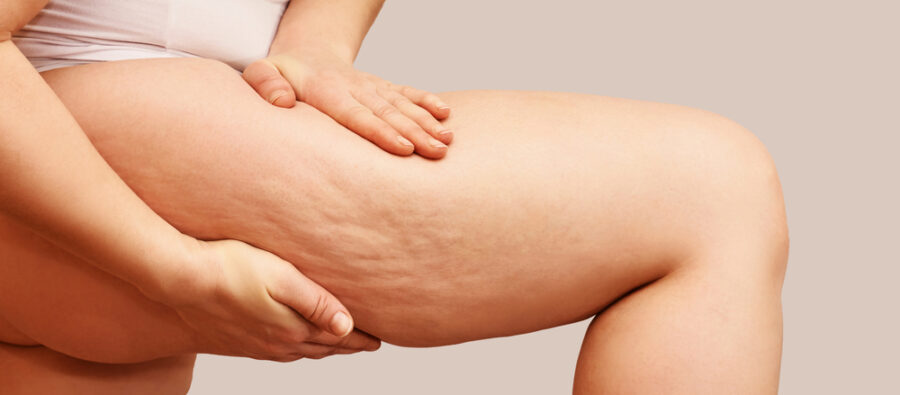
Natural methods against cellulite on the thighs
There are various solutions for getting rid of cellulite caused by more or less pronounced skin laxity, whether on the thighs, the belly, the buttocks or the arms. While some people turn to plastic surgery, others prefer to opt for natural, less costly solutions.
Among these natural methods, a healthy, balanced diet should sit right at the top of the list of priorities. It is indeed essential for combating the build-up of fat cells and thus reducing cellulite on the thighs. In particular, it is best to favour foods rich in lean protein and antioxidants. As well as being very low in fat and calories, these foods promote collagen production, help maintain skin elasticity and fight free radicals.
In addition, physical activity and sport (and endurance sports in particular) form the other indispensable pillar for toning the thigh muscles, firming the skin and preventing fat deposits from spreading and creating unsightly folds. Certain targeted exercises help to build up the back of the thighs and smooth the area affected by cellulite: skipping rope, cycling, running, squats and lunges, or brisk walking. Electrostimulation can also be an effective technique for working the hamstring muscles.
Furthermore, other common-sense habits can also help women reduce the appearance of cellulite on the thighs. It is recommended, in particular, to take the stairs rather than the lift, to walk rather than drive, or to avoid staying in the same position for too long. You can also tone the skin of your thighs by taking a contrast shower every day (alternating hot and cold water to stimulate blood circulation).
Good hydration is also very important for women dealing with water retention and aqueous cellulite. Massages such as the roll-and-pinch technique, as well as an anti-cellulite cup, can likewise help improve blood circulation in the thighs and buttocks. These habits are equally valid for reducing cellulite on the buttocks, which is often associated with cellulite on the back of the thighs.
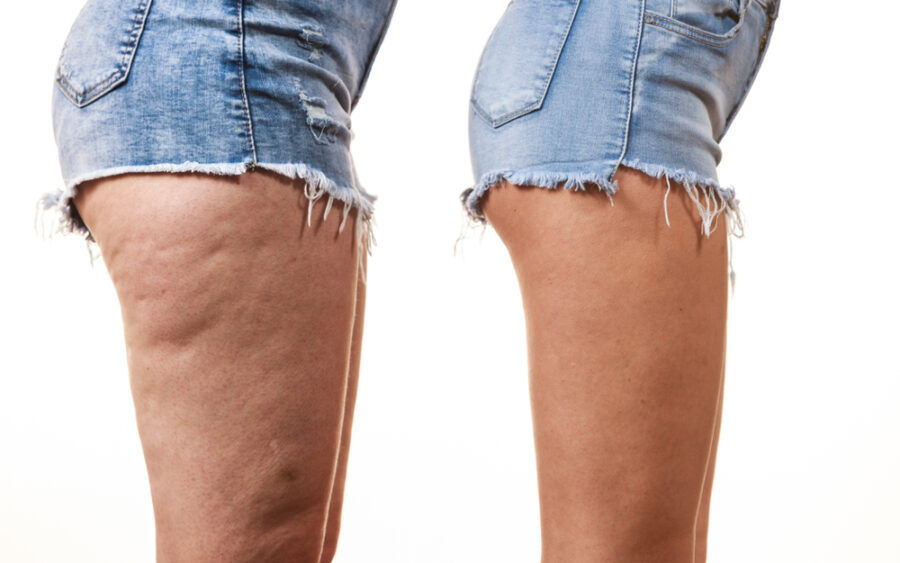
Non-invasive techniques for treating cellulite
For many years now, various non-invasive techniques have made it possible to combat cellulite on the thighs. This is the case, for example, with radiofrequency or ultrasound, which have a lifting action. Combining these two methods produces a relatively effective non-surgical treatment for cellulite on the thighs.
Radiofrequency uses the heat produced by high-frequency electromagnetic waves. It treats the tissues both at the level of the skin’s collagen and at the level of the fat, by melting and eliminating fat cells. At the same time, ultrasound increases the effectiveness of radiofrequency by attacking the fibrous membranes responsible for cellulite, thereby helping to eliminate it. The most recent firming protocols actually combine radiofrequency with micro-needles, such as the Morpheus 8 treatment to tighten loose skin.
Radiofrequency and ultrasound are delivered simultaneously by a single device which, combined with a sophisticated tissue-cooling method, can heat the superficial fat deep down to a depth of 2.5 cm without any risk of burning the surface of the skin. This non-invasive treatment takes place in the office over 4 to 5 sessions of around twenty minutes each, one week apart.
It is also recommended to over-hydrate the skin between the various treatment sessions. This technique is completely painless and is limited to a sensation of warmth over the treated area along with some redness that disappears after a few hours. These technologies produce an immediate tightening effect on the skin together with a uniform, harmonious reduction in the amount of fat cells on the thighs.
It is important, however, to stay realistic about the results: according to the American Academy of Dermatology (AAD), radiofrequency techniques provide only a moderate and temporary improvement in the orange-peel appearance, and several sessions are needed to maintain it. Conversely, certain methods aimed at fat, such as cryolipolysis to break down fat deposits, are very effective on localised fat but do not correct cellulite itself — hence the importance of targeting the right technique according to the type of dimpling.
Surgical solutions for cellulite on the thighs
The surgical solutions for getting rid of cellulite fall mainly into 2 types of procedure, more or less invasive but each particularly effective: the thigh lift and the J-Plasma Renuvion method.
Note that liposuction of the thighs alone is not indicated for treating cellulite: it removes excess fat but can even accentuate the dimpled appearance if the skin becomes lax. This is why it is most often combined with a skin-redraping step.
The thigh lift
The thigh lift, also known as cruroplasty, is a common procedure consisting of liposuction of the inner thigh followed by redraping of the skin, which may require removal of the excess skin tissue. The aim is then to eliminate the surplus skin and fat, to reduce the circumference of the thighs and to tighten the tissues to achieve a slimmer, more streamlined body contour, but above all skin that looks smoother and more even.
The thigh lift is performed under reinforced local anaesthesia, with a hospital stay of 1 to 3 days. After a possible leg liposuction to reshape the inner thigh, the surgeon removes the excess skin and re-drapes it either upwards, or across the width, or both upwards and across the width. This pulling then leaves 3 types of scar depending on the case:
- A horizontal scar when the skin is pulled upwards;
- A vertical scar when the skin is tightened across the width;
- A mixed scar (known as an inverted T or L) when the skin is redraped both upwards and across the width. The scar is then both vertical and horizontal.
A compression garment must then be worn to consolidate the results of the procedure. The final results can be seen around 6 months after the procedure and will give you a slimmer body contour and skin that is lastingly smoothed and far more even.
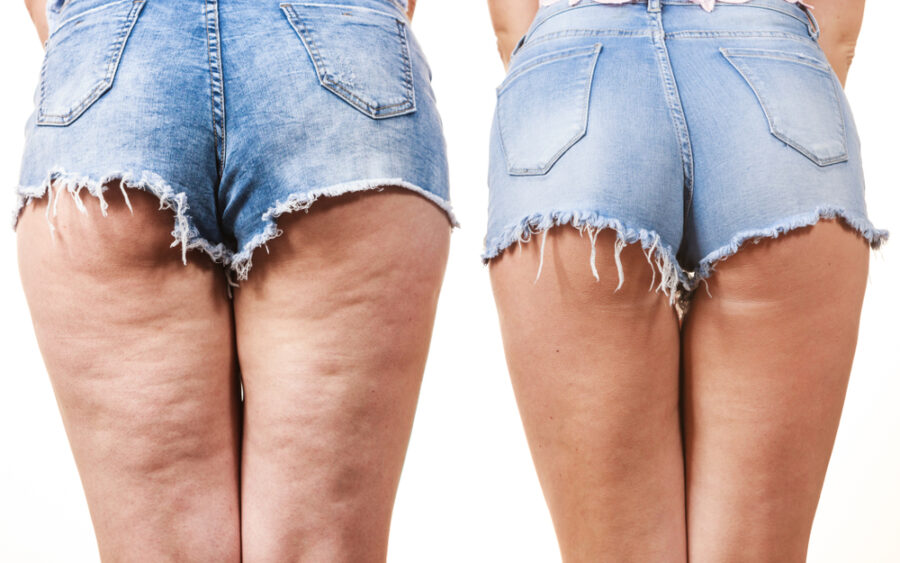
The surgical J-Plasma Renuvion method
This is a genuine breakthrough in the surgical treatment of skin laxity on the thighs. This technique combines radiofrequency and helium gas to achieve a dual thermal effect. Micro-incisions made in the thighs serve as entry points for the insertion of cannulas which, once in place, release the helium gas and the radiofrequency to create a plasma effect. This flow of energy allows immediate retraction of the skin without leaving any scar, unlike conventional lifts.
The J-Plasma Renuvion technique to tighten the skin of the thighs can treat various areas of the body, including the thighs. This solution can be combined with liposuction when there is too much fat in addition to the skin laxity.
In addition, this technology generates a higher degree of heat and an almost instantaneous cooling speed, thereby preventing any risk of burns. This heat, applied beneath the skin in a targeted way, produces a stronger retraction and faster skin firming than with ultrasound. The results are noticeable quickly, even though they must be assessed definitively several months after the procedure. You need to be patient so that the new collagen induced in the deep layers of the dermis significantly improves the appearance of the skin. Finally, it should be noted that skin laxity of the thighs related to age or following significant weight loss very often requires surgery to get rid of cellulite.
For the most stubborn dimpling, aesthetic medicine also offers what are known as « subcision » techniques, in which a fine needle severs the fibrous bands that pull the skin downwards. The data published by the AAD report a high satisfaction rate and results that can last two to three years, making it an interesting option when cellulite presents as well-defined dimples.
Frequently asked questions
Can cellulite on the thighs really disappear?+
Cellulite is a very common natural phenomenon, including in slim, athletic women. You cannot « cure » it permanently, but you can clearly reduce its appearance and keep it under control over time. Natural methods (diet, exercise, hydration, massage) ease mild dimpling; medical and surgical techniques are reserved for more marked cases or those associated with skin laxity.
How can you remove cellulite on the back of the thighs naturally?+
You act on three levers: a diet rich in lean protein and antioxidants and low in salt and fast sugars; regular physical activity that builds the back of the thighs and improves circulation (squats, lunges, cycling, brisk walking, skipping rope); and daily drainage habits (the roll-and-pinch massage, a contrast shower, good hydration). These habits are most effective on aqueous cellulite and early-stage adipose cellulite.
What are the different types of cellulite?+
A distinction is made between aqueous cellulite (soft, linked to water retention and circulation), adipose cellulite (soft, linked to an excess of localised fat) and fibrous cellulite (hard, sometimes painful, established over a long period). Many women have a mixed form. Identifying your type helps you choose the most suitable method.
Which medical treatment should you choose for cellulite on the thighs?+
The choice depends on the type of cellulite and on any skin laxity. Radiofrequency and ultrasound offer a moderate, gradual improvement in orange-peel skin. When there is excess skin, a thigh lift (cruroplasty) or the J-Plasma Renuvion technique tightens the tissues lastingly. A personalised assessment with Dr Vincent Hunsinger helps guide you towards the most relevant solution.
Does liposuction make cellulite disappear?+
No. Liposuction removes localised fat but is not a treatment for cellulite: used on its own, it can even accentuate the dimpled appearance if the skin becomes lax. It is therefore most often combined with a skin-tightening step. According to the American Academy of Dermatology, it is the techniques that sever the fibrous bands (subcision) that act most directly on the dimples of cellulite.
Can you have cellulite on the thighs while being slim?+
Yes, it is common. Cellulite is not synonymous with being overweight: it also depends on your hormonal profile, the quality of your circulation and genetics. A slim woman can therefore have dimpling on the back of the thighs or on the buttocks. Weight loss, when there are extra kilos to lose, can nonetheless make cellulite less visible.
Book an appointment
If you are considering a procedure, book an appointment in just a few clicks: our surgeons will answer all your questions and guide you toward a tailored, personalised solution.
Book on Doctolib