How to prepare for plastic surgery: the complete pre-operative guide
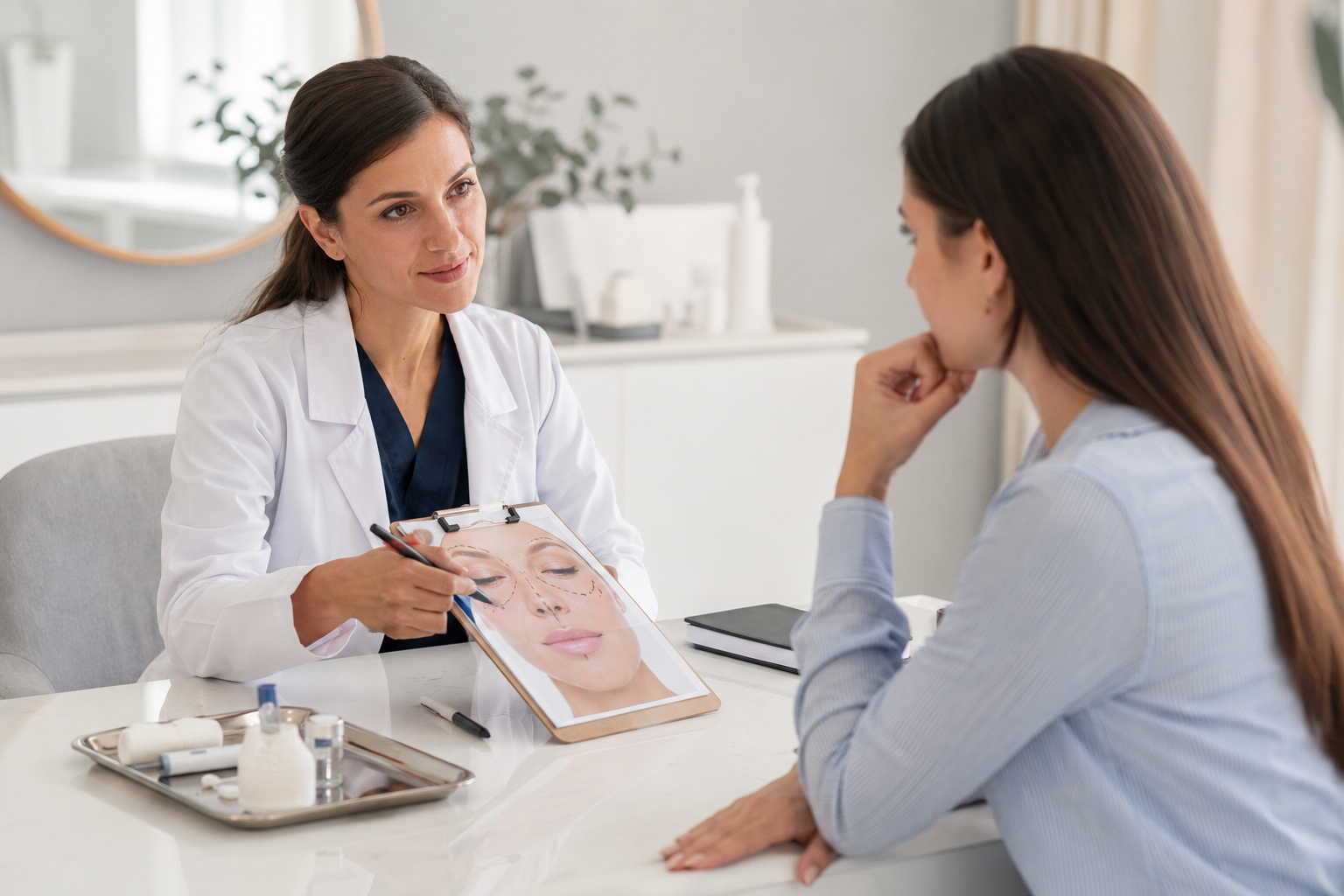
While the success of a plastic surgery procedure depends on the skill and professionalism of the surgeon and their team, careful preparation in the weeks leading up to the operation is equally essential to achieve optimal results. This preparation rests in particular on both physical and psychological recommendations given by the surgeon to the patient. At the Rive Droite Paris Étoile plastic surgery clinic, located in the 17th arrondissement near the Arc de Triomphe, the pre-operative protocol is explained in detail during the preliminary consultations held at the practice by Dr Hunsinger, Dr Derhy and Dr Privé.
Contents
The pre-anaesthetic consultation: a mandatory and essential step
The pre-operative consultation is fully part of a plastic surgery procedure, in the same way as recovery and post-operative follow-up. It is even unavoidable as soon as the operation requires anaesthesia or sedation. In addition to the consultations carried out by the surgeon to gather the patient’s expectations and set the framework for the operation, French decree 94-1050 requires a mandatory pre-anaesthetic consultation for any procedure performed under anaesthesia (whether local, locoregional or general).
This must be carried out by a qualified anaesthetist, at the latest 48 hours before the procedure. This interval makes it possible to detect any contraindications and to carry out additional tests in the event of doubt. During the interview with the anaesthetist, they assess the patient’s state of health, their medical and surgical history and record any known allergies. All the information gathered should make it possible to determine the ASA score, a classification introduced by the American Society of Anesthesiologists to assess anaesthetic risk and adapt the protocol accordingly.
At the CERDPE in Paris 17, our surgeons work in close collaboration with renowned anaesthetists who comply with all the recommendations of the French Society of Anaesthesia and Intensive Care (SFAR) to guarantee you a safe procedure and harmonious results.
Pre-operative work-up: which tests are necessary?
During the pre-operative consultations, the surgeon gathers the patient’s expectations and, together with them, defines the outlines of the upcoming procedure. Once the details have been validated, they provide an operative work-up and various tests to guarantee the highest level of safety during the procedure, which is carried out in a certified operating theatre.
The nature of these tests may vary according to the patient’s age and profile, but also according to the type of procedure performed (liposuction, rhinoplasty, bodylift, breast augmentation, etc.). In most cases, the pre-operative work-up must include the following tests, based on the protocol validated by the French National Authority for Health (HAS):
- a complete blood count (CBC), in particular to detect deficiencies, anaemia or any potential sign of infection;
- a coagulation panel (haemostasis), essential to ensure good healing and to limit the extent of bruising;
- an electrocardiogram (ECG) to make sure the patient is able to tolerate the anaesthesia. It is particularly recommended for people aged 45 and over or those with risk factors (genetic, cardiovascular history, etc.);
- a liver and kidney work-up where applicable, again mainly in the presence of specific history, to check that the organs will be able to eliminate the anaesthetic agents;
- a possible dental check-up to detect any oral infections (mainly for a rhinoplasty or the placement of breast implants or buttock implants).
Other additional tests may be prescribed for certain specific procedures, in particular:
- a mammogram for the placement of breast implants;
- an ultrasound scan of the abdominal wall for liposuction or an abdominoplasty;
- a CT scan of the nasal cavities in the case of a rhinoplasty involving a deviated nasal septum;
- etc.
At our Rive Droite Paris Étoile practice, our surgeons Dr Hunsinger, Dr Derhy and Dr Privé will guide you precisely through the tests to be carried out to guarantee maximum safety during the procedure.
Medication to stop before the operation: the complete list
To avoid complications (in particular the risk of haemorrhage and bleeding) as well as certain drug interactions, the surgeon will also give you a list of treatments to interrupt for a few weeks in anticipation of the operation, namely:
- painkillers and non-steroidal anti-inflammatory drugs (NSAIDs) containing aspirin (Kardégic), ibuprofen (Nurofen, Advil) or ketoprofen. By thinning the blood, these molecules can cause bleeding and delay healing. They can be replaced with paracetamol-based painkillers (Doliprane, Dafalgan, Efferalgan), which have no impact on blood clotting;
- anticoagulants and antiplatelet drugs (Plavix or Xarelto in particular), which must be replaced during these few weeks in consultation with your doctor, especially if they are intended to regulate cardiovascular or circulatory problems;
- hormonal treatments (the contraceptive pill in particular) to avoid the risk of phlebitis caused by the formation of blood clots;
- certain antihypertensive medications, in line with the anaesthetist’s recommendations;
- certain dietary supplements, in particular those based on omega-3, ginger or turmeric: these too can thin the blood and slow the elimination of anaesthetic agents;
- certain antidiabetic medications, whose action may conflict with the pre-operative fasting period. The anaesthetist will then give you the exact protocol to follow on the day of the procedure, in coordination with your specialist.
The length of time that medication must be stopped varies from one treatment to another. Our surgeons will explain the timeframes to observe in consultation with your GP or your specialist.
Smoking: why and for how long should you stop?
Smoking is one of the worst enemies of the recovery process following a plastic surgery procedure. Smoking produces a phenomenon of vasoconstriction (notably due to nicotine and carbon monoxide) that restricts the supply of nutrients needed for skin repair.
The contraction of the small blood vessels reduces the oxygenation of the tissues, thereby delaying and complicating the healing process. It can even cause the scar to widen, leaving it visible for many years and thus harming the aesthetic result of the operation.
Smoking can also be the cause of skin necrosis and increase the risk of infection at the operated site. It also increases the risk of pulmonary complications and thrombosis.
To optimise healing and reduce the risks mentioned above, the SFAR recommends stopping smoking completely at least 4 weeks before the procedure and for at least 4 to 6 weeks after the operation. To cope with this potentially difficult period for smokers, the surgeon may prescribe a nicotine patch and other forms of tobacco substitute. Stopping smoking is indeed one of the most important factors in achieving harmonious results, which necessarily depend on optimal healing.
The 5 practical instructions to follow the day before and the morning of the procedure
Beyond the therapeutic instructions to observe in the weeks before the procedure, it is also important to follow a rigorous protocol in the final moments before the operation. Here are 5 practical instructions to follow in order to approach the big day in the best possible conditions of hygiene, comfort and safety:
- Remove hair from the treated area if requested by the surgeon: this must be done using hair-removal cream and never a razor, as shaving can cause micro-cuts that are prone to harbouring bacteria;
- Take a full antiseptic shower (body and hair) the evening before and the morning of the procedure, using an antiseptic soap (Bétadine Scrub or Hibiscrub as prescribed). Pay particular attention to skin folds, which can again act as a refuge for bacteria. When you get out of the shower, use perfectly clean towels to dry yourself;
- Wear clean, loose-fitting clothing to avoid friction, favouring front fastenings for greater convenience;
- Do not use any cosmetic product (make-up, moisturiser, perfume, etc.) after showering, as the skin must be free of any contact with an external substance;
- Remove any accessories that may be on your body (piercings, jewellery, nail polish) and that could hinder the smooth running of the operation (for example, nail polish preventing the proper functioning of the oxygen sensor placed on a finger).
The pre-operative fasting rule: everything you need to know
On the morning of the procedure, you must strictly observe pre-operative fasting to avoid the risk of inhaling food. As the swallowing and coughing reflexes are slowed during the operation, the risk of food aspiration is real, and food can travel back up the oesophagus to the point of impairing the proper functioning of the lungs (aspiration pneumonia, potentially very dangerous for the patient). Failure to observe fasting therefore results in the procedure being postponed outright.
Pre-operative fasting must follow the NPO protocol (from the Latin Nil Per Os, or « nothing by mouth »), the terms of which have been detailed in particular by the HAS and the SFAR. A so-called fasting surgical procedure involves a distinction in duration between the different types of food, with:
- the intake of solid food and the consumption of chewing gum and tobacco completely prohibited for at least 6 hours before anaesthesia;
- the consumption of clear liquids (water, tea, unsweetened coffee) potentially permitted in moderate quantities up to 2 hours before anaesthesia;
- a ban on any solid or liquid food in the 2 hours preceding anaesthesia.
More precise instructions perfectly tailored to your procedure will be given to you by the anaesthetist.
Preparing your home and your personal organisation before the operation
Depending on the type of procedure undergone, you may find yourself significantly restricted in your most basic movements when you return home. It is therefore advisable to organise your return home well before the operation by taking the following precautions:
- prepare your bedroom before you leave: if necessary, set up a bedroom on the ground floor to limit trips back and forth and repeated movements that could hinder healing. Provide enough pillows to keep yourself comfortably in a sitting or semi-sitting position;
- place all your essential everyday equipment and objects (lamps, keys, medication, chargers, dishes, water bottles, etc.) close to your bed or at chest height. The important thing is to avoid having to raise your arms or bend down;
- stock up on enough food and hygiene products in advance. If possible, prepare as many reheatable meals as you can before the operation in order to limit your movements in the first few days;
- provide painkillers and all the necessary medical and sanitary equipment for a recovery in the best possible conditions (disinfectants such as Biseptine, dressings, strips, compresses, cold packs, etc.);
- arrange for help if needed in the first few days: ask your partner or one of your parents or friends to assist you with the main everyday tasks in the first few days. If you are discharged from the clinic the same day (outpatient surgery), you must be accompanied home by an adult;
- make the necessary arrangements with your employer: certain procedures may require prolonged immobilisation and a relatively long period of social withdrawal (bodylift, rhinoplasty, otoplasty, etc.). So notify your employer well in advance and take 1 to 2 weeks of leave if necessary.
Diet and physical condition: preparing yourself from the inside
For a rapid recovery and optimal healing, be sure to adopt a healthy diet containing enough lean protein (meat, fish, eggs), vitamin C, zinc and antioxidants (notably through green vegetables and citrus fruits). These foods will help to accelerate the renewal of skin collagen.
To prepare your body perfectly for the procedure, you can start adopting this type of diet at least 2 weeks before the operation. An adequate intake of iron (through red meat, spinach or lentils in particular) is also recommended to promote the transport of oxygen to the tissues undergoing repair. Probiotics (yoghurt, kefir) can also help you to reduce overall inflammation.
Hydration also plays a leading role in recovery. In particular, it helps to facilitate the elimination of anaesthetic agents and to maintain a high blood volume.
Finally, avoid alcohol (before and after the operation), as it causes dehydration and disrupts blood clotting, thereby increasing the extent of bruising.
As for physical activity, this should be kept to a minimum in the first few days to facilitate healing. As soon as you are able, however, plan for stretching, yoga exercises or even walking to maintain good circulation. Cardio sessions and breathing exercises before the procedure can help you best prepare your heart and lungs, which will be heavily called upon during the anaesthesia and the surgery.
Preparing for and recovering from your procedure with hyperbaric oxygen therapy
For optimal preparation and recovery, you may want to consider a few sessions of hyperbaric oxygen therapy before the procedure using VY4life chambers, followed by a few sessions after the procedure to promote cell regeneration, reduce inflammation and optimise scar healing. This will greatly limit the risk of complications.
Checklist: everything you need to have done before the operation
To help you prepare as well as possible for your plastic or reconstructive surgery procedure, here is a list of everything to check beforehand:
- be sure to arrange a pre-anaesthetic consultation at the latest 48 hours before the procedure;
- carry out your various blood tests and examinations (CBC, ECG) within the required timeframes;
- stop your various anti-inflammatory and anticoagulant treatments 2 to 4 weeks before the procedure (in consultation with your doctor and the anaesthetist);
- if you are a smoker, stop smoking at least 4 weeks before the procedure and do not start again until healing is already well under way;
- avoid alcohol for at least 3 days before the operation;
- buy all the pharmaceutical products needed for your future recovery well in advance (dressings, compresses, compression garment, painkillers, disinfectants, etc.);
- arrange all the products needed for showering before and after the operation (antiseptic soap, clean towels, loose, clean clothing for when you leave);
- if necessary, ask someone to accompany you when you leave hospital, several weeks before the procedure;
- remove all cosmetic products from your skin and take off all your accessories on the day of the operation;
- scrupulously observe the pre-operative fasting instructions (no food for at least 6 hours before the procedure and no liquids for at least 2 hours before);
- prepare your bedroom and keep all the equipment you need within reach to avoid any physical effort during recovery.
By following these various recommendations and the advice of the CERDPE teams, you give yourself every chance of achieving a harmonious, discreet and naturally French result in optimal safety conditions.
Frequently asked questions
How can I manage pre-operative stress?+
Anxiety before a plastic surgery procedure is entirely natural. You can contact Dr Hunsinger, Dr Derhy and Dr Privé at any time if you have the slightest question about the procedure. The entire medical team at the Rive Droite Paris Étoile clinic is here to listen and will take the time to explain things clearly, so as to reassure you precisely about how the procedure will unfold. They can also tell you about their measured, restrained approach to plastic surgery, aimed at achieving harmonious, natural results. Do not hesitate, either, to practise breathing exercises, meditation or relaxation therapy to approach your time in the operating theatre more calmly. Get in touch with our secretary, who can send you our mindfulness meditation protocols, designed to help you manage stress and the key moments of preparing for surgery.
Can I go home alone or by taxi after outpatient plastic surgery?+
No. The regulations require you to designate someone close to you to accompany you during the first few hours, from the moment you leave the clinic until you return home. The aim is to be able to respond to any potential loss of reflexes following the administration of the anaesthetic agents.
Can I take the train or plane after the operation if I live outside Paris?+
No. It is strongly recommended that you stay in Paris after the operation so that you can respond as effectively as possible in the event of bleeding, feeling unwell or thrombosis. If you live outside the Île-de-France region, plan to stay at a hotel or with friends or family locally for at least the first night after the operation.
How can I tell whether the clinic meets safety standards for my plastic surgery procedure in Paris?+
The surgeons at the Rive Droite Paris Étoile plastic surgery clinic hold a specialised postgraduate diploma (DES) in plastic, reconstructive and aesthetic surgery accredited by the French National Medical Council (CNOM). They have an identification number in the RPPS register and observe all the hygiene and safety precautions required by the French National Authority for Health (HAS). They work with a trained medical team, including qualified anaesthetists who are present throughout the procedure with state-of-the-art monitoring equipment capable of detecting the slightest anomaly.
Book an appointment
If you are considering a procedure, book an appointment in just a few clicks: our surgeons will answer all your questions and guide you toward a tailored, personalised solution.
Book on Doctolib