
Facial skin laxity: why skin loses its elasticity
Facial skin tends to lose its elasticity over time. From your thirties onward, the first signs of facial skin laxity become noticeable and affect the face in particular, often before other parts of the body. As the seat of our expressions, the face is especially sensitive to loss of firmness and to the appearance of the signs of ageing, ultimately leading to sagging. While it is inevitable, various solutions exist to delay its onset, preserve the skin and treat its effects. Discover the mechanism and causes that lead to facial skin laxity, how to prevent it day to day, as well as the surgical and non-surgical solutions that treat this slackening, tighten the skin and rejuvenate the face.
Contents
What is facial skin laxity?
Facial skin laxity refers to the gradual loss of firmness and elasticity of the skin, which slackens and no longer hugs the underlying structures as closely. It is often confused with another phenomenon of ageing, volume loss: in the first case it is the quality of the skin itself (collagen, elastin) that weakens; in the second, it is the fat and bone that melt away and let the face hollow out. The two mechanisms most often coexist and explain both the sagging contours and the appearance of jowls. Telling them apart makes it possible to choose the right treatment: tightening and redraping the skin on the one hand, restoring volume on the other.
The causes of facial skin laxity
Facial skin laxity stems both from a natural, internal phenomenon, but it can also be aggravated by external factors. It concentrates mainly in certain clearly identified areas of the face.
Natural facial skin laxity
Normally, the dermis is composed mainly of hyaluronic acid which, combined with fibres (collagen and elastin), forms a solid mesh that supports the various layers of the skin. This highly vascularised zone provides constant support for the epidermis and acts as a shock absorber, ensuring that volume is maintained, that hydration is continuous and that the skin stays firm.
Facial skin laxity is mainly the result of a natural process in which the elastin fibres, which normally keep the skin firm and well held, gradually decline over time. At the same time, collagen production also slowly fades: dermatologists estimate that the body loses around 1% of its collagen per year from the late twenties onward, which leads to a thinning of the connective tissue. The skin then becomes less dense, forming hollows and shadows. The fat slackens under the pull of gravity and the muscle tissue tends to shift and shrink (muscle atrophy), eventually causing a generalised sagging of the face due to a loss of the volume that was once well filled (bone loss). While this process appears and tends to become generalised in most people around the age of 50, it is not uncommon for pronounced wrinkles and a loss of tone in the face to be seen as early as the forties.
The other causes of facial skin laxity
Beyond the signs of ageing and the mechanical phenomenon of skin slackening, other external causes also accelerate facial skin ageing. Our lifestyles and our environment can indeed have a major influence on tissue sagging, in addition to the genetics specific to each individual. Several factors can thus be seen to aggravate the loss of elasticity and firmness of the skin, in particular:
- The sun, through exposure to ultraviolet rays, which reduces the production of collagen and elastin and dehydrates the skin;
- The consumption of tobacco, which destroys the skin’s elastic fibres;
- The menopause, due to hormonal variations;
- Atmospheric pollution;
- Stress;
- Diet, and in particular weight fluctuations (the yo-yo effect), which slacken the skin overall, even as far as the face in the most extreme cases.
The combination of all these factors tends to hollow out thin faces further and to sag, or even compress, rounder faces, thereby stripping the individual of all facial expression.
The areas of the face affected by skin laxity
While the sagging of the skin’s tissues eventually tends to become generalised across the whole face, it nonetheless shows up more markedly in certain specific areas. Pronounced sagging can frequently be observed in the following areas:
- The jowls;
- The cheekbones;
- The neck (double chin and « turkey neck »);
- The eyelids (upper and lower);
- The tail of the eyebrows;
- The tear trough (under-eye hollows and bags).
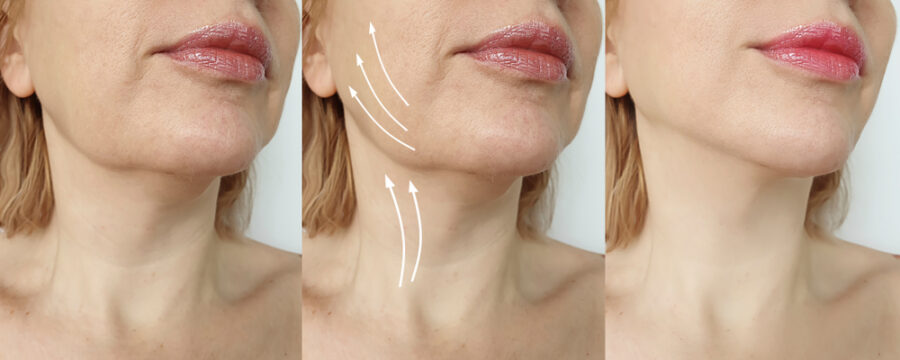
The more or less simultaneous sagging of these various areas eventually causes the oval of the face to disappear. Solutions nonetheless exist to limit this process and give the face back an inverted-triangle shape. When the sagging concentrates under the chin, our dedicated advice on the different solutions to treat a double chin usefully complements this read.
Preventing facial skin laxity day to day
Before considering a treatment, a few simple measures can help slow the sagging of the face and preserve the firmness of the skin for as long as possible. No single action freezes time, but their cumulative effect over the years is real.
- Protect yourself from the sun all year round. Photoageing is the leading avoidable factor in skin laxity: in a landmark randomised trial (Hughes et al., Annals of Internal Medicine, 2013), the daily application of sun protection reduced the signs of skin ageing by 24% over four and a half years, with the protected group showing no detectable worsening. An SPF applied every morning remains the best-proven anti-ageing measure.
- Do not smoke and limit alcohol, which impoverish the oxygenation of the tissues and accelerate the breakdown of the elastic fibres.
- Hydrate and nourish the skin morning and evening, and favour a diet rich in protein, vitamin C and antioxidants, which provide the body with the building blocks needed to synthesise collagen.
- Keep your weight stable: repeated weight fluctuations slacken the skin lastingly.
- Maintain good-quality sleep and limit chronic stress, which raises cortisol and weakens the dermis.
These measures do not correct established skin laxity, but they delay its onset and prolong the results of aesthetic treatments.
What to do about facial skin laxity: the solutions to tighten the skin
To address this mechanism, which reduces the face’s expressions and gives it a sad look, solutions in both plastic surgery and aesthetic medicine have emerged and proven their effectiveness in countering the signs of ageing. The choice between tightening the skin surgically or firming it without surgery depends on the extent of the laxity, the quality of the skin and each patient’s expectations; it is decided in consultation with Dr Vincent Hunsinger.
Plastic surgery solutions
Several plastic surgery procedures aim to correct skin laxity as well as imperfections of the face. They are generally long-lasting and produce an immediate change.
The facelift
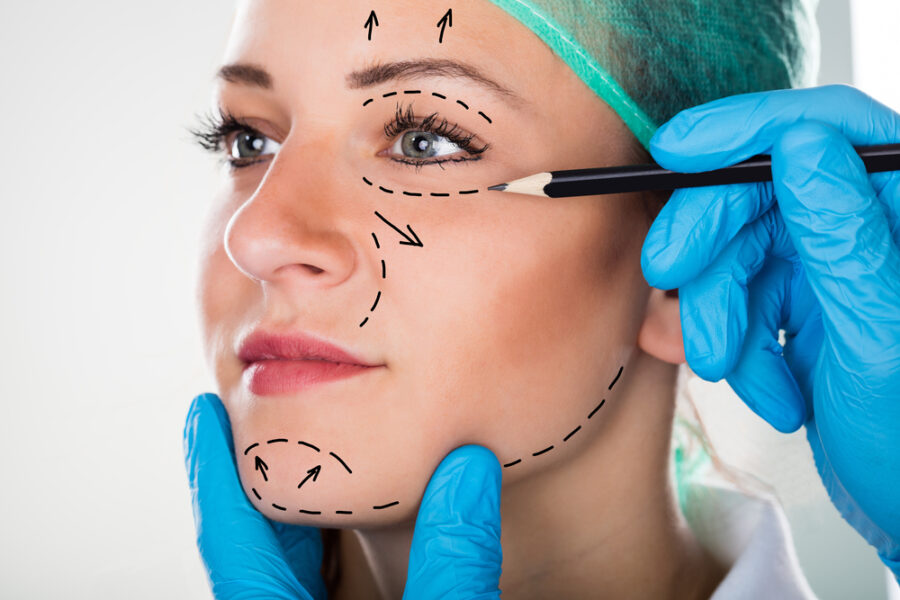
The facelift is the best-known solution for firming up the features and regaining a younger, more expressive face. Consisting of a repositioning of the muscle, skin and fat tissues to their original position, it can be combined with liposuction of the neck (submental liposuction) to slim it down if needed. The facelift thus gives definition back to areas that have hollowed out over time and notably removes the jowls responsible for the loss of the face’s inverted triangle. To prepare for the procedure, our article on the facelift results and scar healing details the recovery to expect.
Facial fat transfer
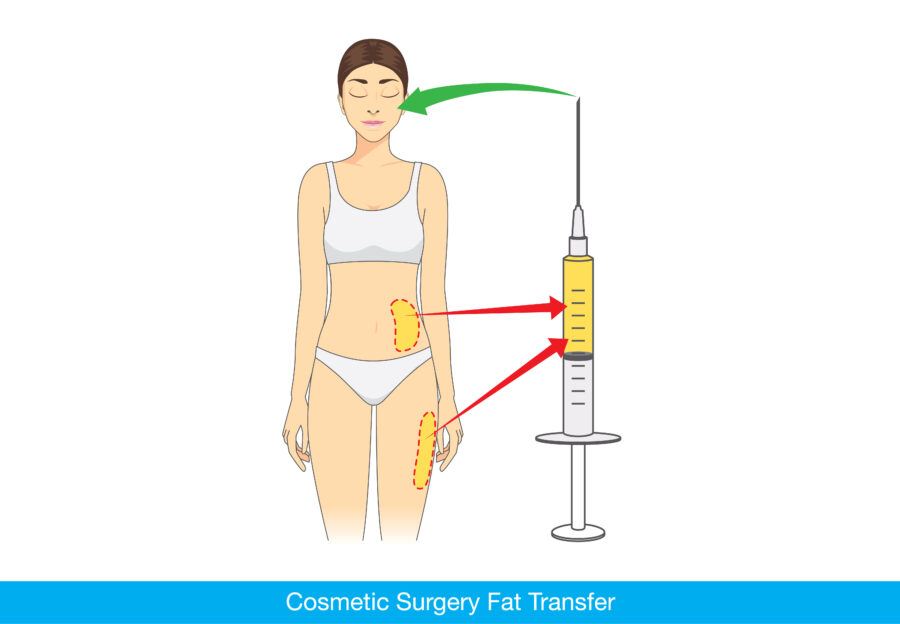
The facial fat transfer, also known as autograft, is a method of reshaping the volume of the face through a transfer of autologous fat taken from another part of the patient’s body, harvested by liposuction. The harvested fat is then processed and reinjected into the areas of the face that have lost their former volume. The fat transfer thus produces a volumising, filling effect to plump the face and give it back all its radiance. It addresses volume loss more than skin laxity proper, and pairs readily with a facelift.
Blepharoplasty
Indicated in the treatment of sagging eyelids, blepharoplasty aims to treat all the imperfections around the eyes (bags, under-eye hollows, fine lines) that dull the eyes and make them look expressionless. Through fine incisions, the surgeon removes the excess skin tissue and surplus fat (fat pockets) responsible for folds and puffiness. This redraping of the skin puts an end to drooping eyelids, evens out the volume and opens up the eyes. The subject is explored in more depth in our feature on eye rejuvenation and the treatment of drooping eyelids.

How to tighten facial skin without surgery: aesthetic medicine solutions
Other more temporary but nonetheless less invasive aesthetic medicine solutions also make it possible to tighten the facial skin without surgery, restore volume and firm and resurface the skin. They are suited to early to moderate laxity and can be combined within a tailor-made non-surgical facelift protocol.
Botulinum toxin
Now well known, Botox injections (botulinum toxin) are used to treat wrinkles, particularly as a preventive measure to anticipate their appearance. Botox works to neutralise the action of the muscles responsible for the appearance of wrinkles, fine lines and folds caused by the repeated movements of the face during expressions or emotions. Botulinum toxin injections have a temporary effect and must be renewed every 3 to 6 months for a lasting result.
Hyaluronic acid injections
The restoration of facial volume through hyaluronic acid injections makes it possible to give volume back to certain areas of the face that have sagged, in particular the cheekbones. This molecule, naturally present in the body, indeed has excellent volumising properties, filling in the hollows and restoring an even appearance to the face. The restoration of volume can form part of a medical rejuvenation protocol combined with ultrasound and thread lifts to redraw the oval of the face.
Sculptra filler injections
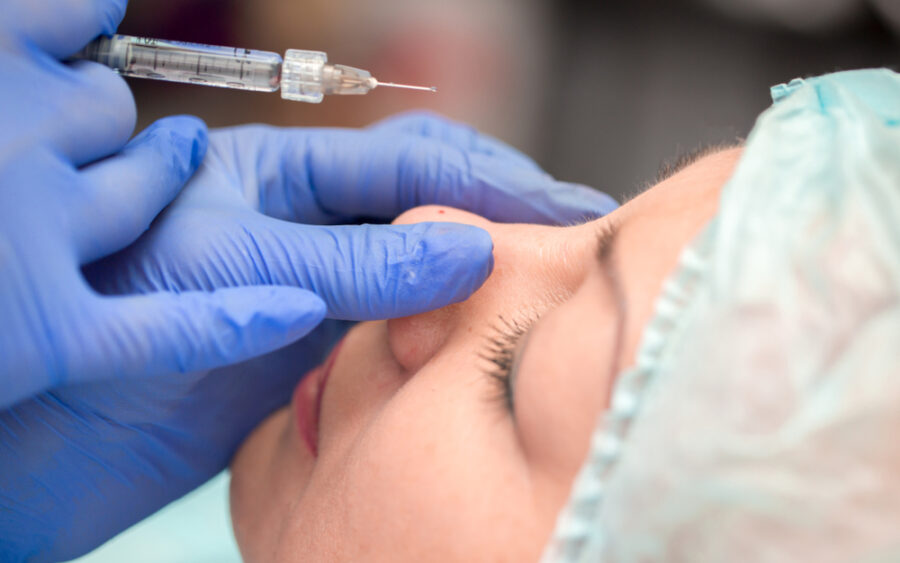
Sculptra is a non-invasive anti-ageing treatment that has been proving itself for more than twenty years as one of the benchmark treatments to soften the signs of ageing and redraw the contours of the face. Completely natural, biocompatible and biodegradable, the Sculptra implant uses microparticles derived from poly-L-lactic acid. Reinjected with precision into the areas of the face that have lost fatty mass (lipoatrophy), these microparticles stimulate collagen synthesis that redistributes volume in a natural, gradual way.
Mesotherapy
Mesotherapy (or mesolift) consists of fine, precise injections of hyaluronic acid combined with a cocktail of amino acids, vitamins, minerals, trace elements and antioxidants. This formula is therefore not intended to produce a volumising effect (non-cross-linked products) but to hydrate the skin deeply while triggering a process of cell regeneration. The mesolift thus helps plump and smooth damaged skin on the various areas of the face (forehead, cheeks, temples, corners of the mouth). The Skin Booster is another mesotherapy technique using more or less the same process, but with injections of cross-linked hyaluronic acid this time, for deeper, longer-lasting hydration.
The chemical peel for the face
The chemical peel for the face is a treatment aimed at regenerating the skin by removing the superficial layer of the dermis (the horny layer) made up of all the impurities that harm its smooth appearance. This technique uses an exfoliating treatment based on various chemical or plant-derived compounds (glycolic acid, fruit acid, kojic acid, lactic acid, etc.) to erase the skin’s imperfections and restore all of its smoothness.
Heat-based skin-tightening techniques
Other effective aesthetic medicine techniques make it possible to firm the facial skin by stimulating deep collagen production. Some are offered at the Rive Droite Paris Étoile clinic, others are not:
- Fractional radiofrequency (Morpheus 8): by combining microneedles and radiofrequency, the Morpheus 8 treatment heats the dermis to a controlled depth to restart collagen synthesis and tighten the skin, with a gradual, natural tightening effect.
- The Fraxel laser: it uses an extremely precise laser beam acting in the deep layers of the skin to trigger collagen synthesis and a regeneration of the skin cells. It thus makes it possible to treat pigment spots, acne scars, imperfections and skin laxity.
- High-intensity focused ultrasound (HIFU): this precision technology acts deep down (up to 2 centimetres beneath the skin) with micro-pulses that heat the deep layers and act on the fibroblasts. These repeated impacts stimulate collagen production, resulting in a tightening and softening of the skin, as well as a gradual retraction of the tissues.
- Radiofrequency (or thermage): it uses a process close to ultrasound, relying on heat but at lower temperatures and at a set depth. A gentler solution that does not damage the fibres, it does, however, most often require several sessions to achieve a visible, natural result. Our feature on the QUANTUM RF method, a scarless facelift powered by radiofrequency, explores this approach further.
Frequently asked questions
What is the difference between skin laxity and facial volume loss?+
Skin laxity corresponds to a loss of firmness and elasticity of the skin itself, which slackens for want of collagen and elastin. Volume loss, on the other hand, comes from the melting away of the underlying fat and bone, which hollows out the face. The two phenomena most often coexist with age: in the first case the skin is firmed and redraped (facelift, radiofrequency, thread lifts), in the second the volume is restored (hyaluronic acid, fat transfer). It is during a consultation that the share of each is determined in order to propose the right treatment.
How can facial skin be tightened without surgery?+
Several aesthetic medicine techniques make it possible to firm the skin without going through the operating theatre: thread lifts, hyaluronic acid injections, radiofrequency (including Morpheus 8), high-intensity focused ultrasound (HIFU) or the laser, which stimulate collagen production and bring about a gradual tightening. They are mainly suited to early to moderate laxity; pronounced laxity is more a matter for a surgical facelift. The choice is made according to the extent of the sagging and the quality of the skin.
At what age does facial skin laxity appear?+
The first signs are often visible as early as your thirties, the face being one of the first areas affected. Collagen production declines by around 1% per year from the late twenties onward, but laxity generally becomes widespread around the age of fifty. How quickly it appears depends greatly on genetics and on aggravating factors (sun, tobacco, weight fluctuations).
How can facial skin laxity be prevented day to day?+
The best-demonstrated measure is daily sun protection: a randomised trial published in the Annals of Internal Medicine in 2013 showed 24% fewer signs of skin ageing over four and a half years in people applying sunscreen every day. To this can be added quitting smoking, good hydration, a diet rich in protein and vitamin C, stable weight and good-quality sleep. These measures do not correct established laxity, but they delay its onset.
Which areas of the face are most affected by sagging?+
Laxity concentrates first on the jowls, the cheekbones, the neck (double chin and « turkey neck »), the eyelids, the tail of the eyebrows and the tear trough (under-eye hollows and bags). Their simultaneous sagging gradually erases the oval of the face, which treatments seek to redraw into an inverted triangle.
Which treatment should you choose for a sagging face?+
There is no single answer: the treatment depends on the degree of laxity. For mild to moderate sagging, aesthetic medicine (thread lifts, radiofrequency, HIFU, injections) is often enough to firm and tighten the skin. For pronounced laxity with excess skin, the facelift remains the most lasting solution, sometimes combined with a fat transfer to restore volume. A consultation with Dr Vincent Hunsinger makes it possible to draw up a personalised treatment plan.
Book an appointment
If you are considering a procedure, book an appointment in just a few clicks: our surgeons will answer all your questions and guide you toward a tailored, personalised solution.
Book on Doctolib