
Breast augmentation: prices, insurance coverage and total cost
Breast augmentation is one of the most commonly performed plastic surgery procedures today, second only to liposuction. While it often reflects a purely cosmetic wish, it can also be requested for therapeutic or reconstructive purposes, to correct various breast abnormalities or to rebuild the breast after a mastectomy. How much does breast augmentation cost? In which cases does it qualify for insurance coverage in France? What are the steps to obtain it? Here is what you need to know about the cost of increasing breast volume before deciding to undergo this plastic surgery procedure.
Contents
What is breast augmentation?
Breast augmentation is a plastic surgery procedure designed to increase breast volume when the patient feels her breasts are underdeveloped or undeveloped (breast hypoplasia, or even breast agenesis). It often puts an end to self-consciousness for women who want a fuller breast shape more in line with current aesthetic « standards ». It can also be performed to correct breast asymmetry and restore balanced proportions.
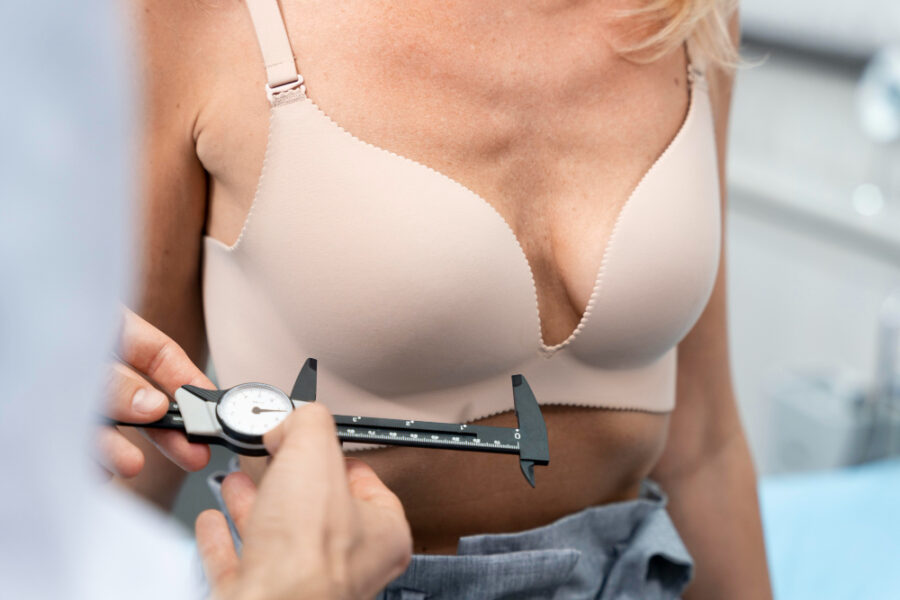
The goals of breast augmentation
Breast augmentation can be carried out for different purposes, namely:
- for cosmetic reasons, that is, to improve the shape and volume of the breasts. In some cases, it may also involve lifting « emptied » or sagging breasts (breast ptosis) following a loss of mammary gland tissue, particularly after pregnancy, breastfeeding or weight loss;
- for reconstructive purposes, following an accident or illness, most often after breast cancer that required a mastectomy, or to address a congenital abnormality such as Poland syndrome, which causes breast agenesis.
What techniques are used to increase breast volume?
Breast augmentation is most often performed using 2 different techniques, which can sometimes even be combined (this is then referred to as composite breast augmentation):
- breast augmentation with implants: silicone-gel implants (almost exclusively round in shape) are placed in front of the pectoral muscle (subglandular position) or behind the pectoral muscle (submuscular position) to enhance the breast shape and increase breast volume;
- breast augmentation with lipofilling, which consists of harvesting excess fat deposits from other parts of the body (belly, hips, buttocks, arms, knees, etc.) using precision micro-cannulas, then reinjecting it into the breasts after it has undergone a centrifugation process. This is known as autologous fat transfer, which can add one to 2 cup sizes. Breast lipofilling can be used in addition to implants, with a layer of fat surrounding the implants to achieve a more natural and uniform result, particularly to the touch.
It should be noted that some of the fat reinjected during a lipofilling is naturally reabsorbed by the body in the months following the procedure: international clinical studies put the survival rate of transferred fat at around 50 to 70%. This reabsorption explains why a second session is sometimes needed to stabilise the desired volume, which can affect the total cost of augmentation with lipofilling.
How much does breast augmentation cost?
The price of breast augmentation varies mainly depending on the technique used. As a guide, here are the prices generally observed at the practice of Dr Vincent Hunsinger for a cosmetic procedure:
| Technique | Indicative price (from) |
|---|---|
| Breast augmentation with implants | from €5,200 |
| Breast augmentation with lipofilling (no implant) | from €6,000 |
| Composite breast augmentation (implants + fat) | around €8,000 |
These prices include the cost of the implants and/or the autologous fat transfer, as well as hospitalisation costs and the fees of the surgeon and the medical team.
The factors that influence the price
The cost of increasing breast volume is never a single fixed price: it depends on several factors that the surgeon details during the first consultation. The main factors are:
- the surgical technique chosen (implants, lipofilling or composite) and the complexity of the procedure;
- the type and volume of the implants chosen;
- the type of incision made (inframammary or periareolar scar);
- any fee supplements and the reputation of the chosen facility;
- the possible need for an additional procedure, for example a breast lift to correct ptosis when the breasts are both small and sagging.
While surgeons are free to set their own fees, the prices charged generally remain consistent: abnormally attractive prices may legitimately raise concerns about the quality of the implants, the facility or the follow-up care. In every case, an itemised, detailed quote covering all parts of the procedure must be given to the patient at the end of her first consultation. After making her decision, the patient has a legal cooling-off period of 15 days before the procedure.

The additional costs to anticipate
On top of the cost of the procedure, there are also additional fees, smaller but always worth taking into account when deciding to undergo a procedure. These include:
- the cost of the pre-anaesthetic consultation;
- the costs of dressings, bandages and medication used in the days following the procedure;
- the purchase of a compression bra to be worn for several weeks after the procedure.
Finally, you should anticipate the post-operative time off work, estimated at around a week, which can therefore matter for the patient’s finances. You will find the details of this recovery period in our article dedicated to the recovery after breast augmentation.
It is worth keeping in mind that breast implants are not permanent devices: the American Food and Drug Administration (FDA) explicitly classes them as « non-lifetime devices« , meaning devices with a limited lifespan. Their average lifespan is generally estimated at 10 to 20 years, after which a possible implant replacement or removal may be considered: a future cost that is best factored into your thinking from the outset.
Breast augmentation in instalments: financing and staggered payment
A cosmetic breast augmentation represents a budget that cannot always be paid all at once. To make financing easier, interest-free payment in instalments is sometimes offered by certain surgeons or facilities, directly or through a partner organisation. The terms (number of instalments, conditions, any fees) vary from one practitioner to another: it is therefore advisable to openly discuss the question of staggered payment from the first consultation, at the same time as the quote. When the procedure qualifies for coverage (see below), part of the costs may also be reimbursed, which reduces the remaining out-of-pocket amount accordingly.
Can breast augmentation qualify for insurance coverage?
As a general rule, the baseline principle is no coverage by France’s national health insurance (Sécurité Sociale) when the procedure is purely cosmetic and is not justified strictly on health grounds.
Breast augmentation can, however, qualify for partial coverage as soon as it meets at least one of the following criteria:
- in the case of an absence of mammary gland development (breast atrophy or agenesis) or near-absence of development (breast hypotrophy), which can then have a psychological impact on a patient in her daily life, particularly with regard to how others see her. In this case, the breasts must not fill an A cup to qualify for coverage;
- in the case of a congenital breast malformation, such as treating Poland syndrome (agenesis of the pectoral muscle) or correcting tuberous breasts (with a tubular shape and a protruding areola);
- to correct major breast asymmetry that is a source of self-consciousness in everyday life;
- following the partial or total removal of a breast due to a breast tumour (reconstructive surgery). In this case, coverage is obtained under a long-term illness scheme (ALD).
To qualify for partial coverage, however, you must obtain, before the procedure, prior approval from the primary health insurance fund (Caisse primaire d’Assurance Maladie). In this context, the surgeon must submit to the CPAM a request for prior agreement supported by objective evidence justifying coverage (photographs, medical file) in order to obtain approval before carrying out the procedure. In most cases, the patient is summoned to see a medical adviser from the health insurance fund to assess the therapeutic nature of the procedure. The decision is generally issued within 2 weeks.
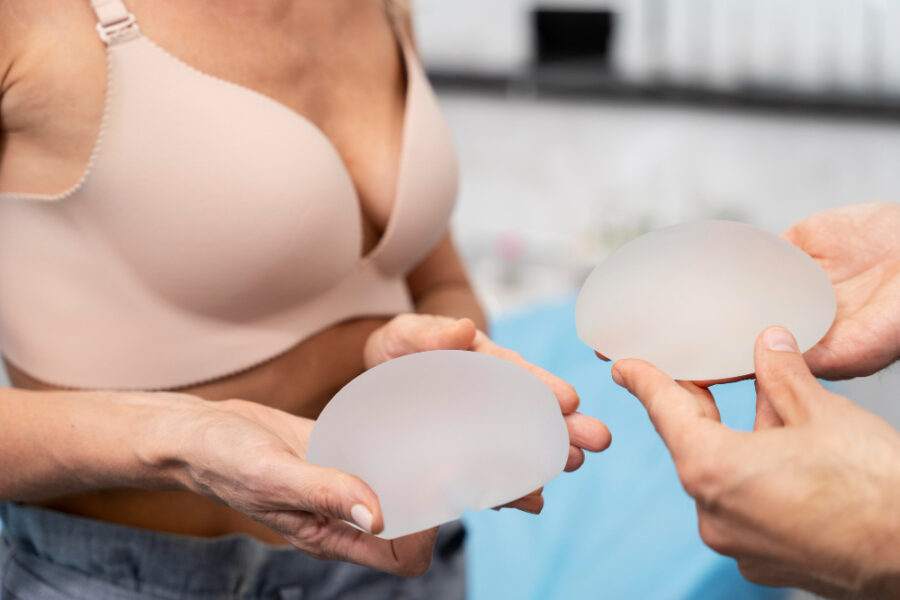
The amount reimbursed by the national health insurance and the role of top-up insurance
The national health insurance (Sécurité Sociale) can partially cover breast augmentation up to the regulated tariffs applied in public hospitals. The fee supplements charged by a surgeon practising in a private clinic, as well as the costs related to anaesthesia, do not, however, fall within this funding.
These uncovered costs can nevertheless be covered by your complementary health insurance (mutuelle), partially or in full depending on the policy taken out. It is therefore the combination of national health insurance + top-up insurance that determines your real out-of-pocket cost: it is strongly advised to ask your top-up insurer in advance, quote in hand, to find out exactly how much will be reimbursed. The health insurance most often uses code QEMA 004 of the nomenclature (CCAM) corresponding to the procedure « bilateral augmentation mammoplasty with placement of prosthetic implants ». When the procedure is recognised as therapeutic or reconstructive, a sick leave can finally also be prescribed to the patient.
Whatever your situation, the best way to obtain a reliable estimate and to find out whether your case may qualify for coverage remains a consultation with Dr Vincent Hunsinger, at the end of which a detailed, personalised quote will be given to you.
Frequently asked questions
How much does breast augmentation cost?+
As a guide, a cosmetic breast augmentation starts at around €5,200 for implant placement, generally reaches €6,000 for lipofilling and is around €8,000 for a composite technique combining implants and fat. These amounts include the implants or the fat transfer, hospitalisation and the fees of the medical team. Only a detailed quote, given at the end of the consultation, sets the exact price according to your situation.
Is breast augmentation reimbursed by the national health insurance?+
No when it is purely cosmetic. Partial coverage is, however, possible in specific cases: breast agenesis or hypotrophy (breasts that do not fill an A cup), a congenital malformation such as Poland syndrome or tuberous breasts, major breast asymmetry, or reconstruction after the removal of a breast (under a long-term illness scheme). Prior approval from the CPAM is then essential before the procedure.
How do you obtain coverage for a breast augmentation?+
The surgeon submits to your primary health insurance fund (Caisse primaire d’Assurance Maladie) a request for prior agreement accompanied by objective evidence (photographs, medical file) justifying the therapeutic nature of the procedure. In most cases the patient is summoned to see a medical adviser, and the decision is generally issued within two weeks. Approval must absolutely be obtained before the procedure.
Can you pay for a breast augmentation in instalments?+
Yes, staggered payment, sometimes interest-free, is offered by certain surgeons or facilities, directly or through a partner organisation. The terms vary from one practitioner to another: it is advisable to raise the question of financing from the first consultation, at the same time as the quote. If the procedure qualifies for coverage, part of the costs may also be reimbursed.
What can top-up insurance cover?+
When the procedure is recognised by the health insurance, the national health insurance reimburses up to the regulated tariffs. The fee supplements and anaesthesia costs, which are excluded, can be covered — partially or in full — by your complementary health insurance (mutuelle), depending on your policy. Asking your top-up insurer, quote in hand, lets you find out exactly your out-of-pocket cost.
How long do breast implants last?+
Implants are not permanent devices: the American Food and Drug Administration (FDA) classes them among « non-lifetime devices ». Their average lifespan is generally estimated at 10 to 20 years, after which a replacement or removal of the implants may be considered. This future cost is worth factoring into your budget planning from the outset.
Does breast lipofilling last over time?+
Some of the reinjected fat is naturally reabsorbed by the body in the months following the procedure. International studies put the survival rate of transferred fat at around 50 to 70%. This is why a second session is sometimes needed to stabilise the desired volume, which can affect the total cost of augmentation with lipofilling.
Book an appointment
If you are considering a procedure, book an appointment in just a few clicks: our surgeons will answer all your questions and guide you toward a tailored, personalised solution.
Book on Doctolib