
Breast implant removal: what you need to know
Now widespread, breast augmentation with implants is a solution successfully adopted by many women who turn to it to put an end to a complex about the size of their chest. However, some of them may, sooner or later, choose to reverse course and remove or replace these breast implants by undergoing an explantation. Let’s take a detailed look at the reasons that may lead patients to request the removal of their breast implants, and let’s focus on how this procedure is performed.
Contents
What does breast implant explantation involve?
The removal surgery used to take out breast implants is a fairly simple procedure that, most of the time, is fairly minimally invasive. It is in fact most often performed on an outpatient basis, meaning the patient leaves the hospital the same evening. It is then possible to simply remove the old implants or to replace them with new ones. Breast augmentation is therefore reversible, just as the explantation procedure can be, since should she change her mind, a woman can, if she wishes, undergo a new augmentation in the future.
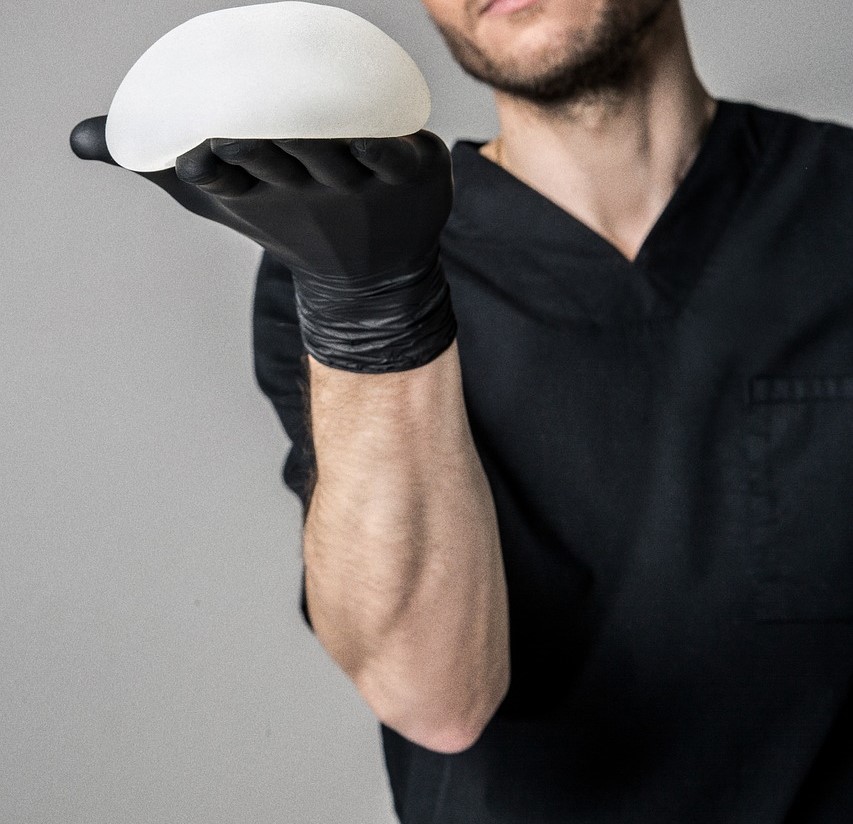
Breast implant removal is carried out by opening along the previous incision, then carefully extracting the implant before suturing the incision. Skin redraping can also be performed in the event of breast ptosis.
Things become more complicated, however, in the event of a silicone gel leak — often the cause of pain — or when the implant is ruptured and has led to the appearance of a capsular contracture or scar tissue. The surgeon must then perform a capsulectomy, which consists, in addition to the removal, in excising the fibrous scar shell that has formed around the implant. The procedure is then longer and recovery more difficult for the patient.
What reasons may motivate breast implant removal?
A few years after having their breast implants placed, some women choose to have their implants removed and thus undergo a breast explantation. The reasons for this removal can be many and varied. This request may notably be explained by:
- an inability to get used to their new chest;
- a health problem with complications following the breast augmentation, such as pain in the chest or back, tightness or hardening of the breasts resulting from a contraction or calcification of the fibrous capsule;
- discomfort in daily life, particularly when taking part in sports;
- fears among some patients of a higher risk of breast cancer following the placement of implants (notably old PIP implants, now withdrawn from the market);
- deterioration of the implant, which is not systematic but can occur from around ten years onwards. A replacement is then necessary, for example in the event of capsular contracture causing distension of the breast. The financial impact of these replacements should also not be overlooked in this decision to undergo an explantation;
- an implant rupture which, although now far less frequent, may nonetheless require prompt removal of the breast implant;
- breast cancer requiring removal of the breast and, a fortiori, of the implant as well;
- finally, the way a woman perceives her body contour can change over time. A patient’s idea of femininity may then shift towards a need for authenticity and a return to a more natural look, notably after a pregnancy or at menopause.
These many and varied (and sometimes overlapping) reasons will then call for tailored management depending on the patient’s profile.
How can you tell if a breast implant is ruptured?
Detecting a leak is not always straightforward. With saline implants, a rupture quickly results in a visible decrease in breast volume. For silicone gel implants, the situation is more delicate: most ruptures are « silent », meaning they cause no symptoms and no change in the appearance of the breast. The US health agency (FDA) points out that a clinical examination alone is not enough to detect them, and considers MRI to be the most reliable method for screening for a silent rupture, with ultrasound being an acceptable alternative. This is why regular monitoring of your implants remains recommended, even in the absence of discomfort, in order to decide on a possible removal at the right time.
The different breast explantation techniques
Depending on the patient’s situation and the configuration of the implant, different methods and types of incision can be used to remove the breast implants concerned.
Transaxillary approach
For patients who underwent breast augmentation through an incision in the armpit (transaxillary approach), removing the implant through the same approach is generally preferred, using endoscopy (insertion of a micro-camera for extremely precise work). This is then a relatively quick procedure performed under general anaesthesia. The recovery period is this time shorter than at the time of placement, since it serves to « relieve » the patient in the event of discomfort. This procedure is particularly suitable for implants containing saline.
Inframammary approach
In the same way, patients who were operated on through an incision under the breast will also undergo removal via the same inframammary approach, at the fold, to conceal the scar. The procedure is once again fairly minimally invasive, with surgery that can be performed under general anaesthesia or, in some cases, under local anaesthesia with sedation.
The case of capsulectomy
The procedure for removing a breast implant is more complex when, in addition, there is a need to also remove the capsule of scar tissue that has formed around the implant. This membrane, which the body naturally develops to isolate the implant from the rest of the body when the implant is damaged (in the event of a silicone gel leak), can, over time, become very firm and cause pain, raising the question of its possible additional removal.
Over time, inflammation and calcification can indeed set in within the fibrous capsule of the breast implants, through the wall of the implant, with more or less significant consequences (a change in the size or shape of the breast, pain due to hardening of the tissues, or even nerve damage). The surgeon must then decide, together with the patient, whether or not to remove this capsule. In the event of implant rupture, however, capsulectomy is essential.
Also referred to as a capsulotomy, the operation in this case consists in removing the capsule either completely or partially. We speak of a total capsulectomy when the entire fibrous shell is removed, and of a partial capsulectomy when only a portion is removed. This is then a technically far more complex operation, with a much longer procedure time (3 to 4 hours). It therefore requires general anaesthesia and may call for a long recovery period. Recovery is also far more delicate, with associated risks of haematoma, relatively long and painful healing, or even weakening of the pectoral muscle. Once the capsule has been excised, it will then be possible to replace the implant or not, depending on the patient’s prior wishes.
How the procedure unfolds
Just like breast augmentation, explantation is a surgical procedure that requires a prior assessment in order to make the most appropriate decision for the patient.
Before the operation
Breast implant removal involves a prior consultation to determine whether or not removal is feasible, and in particular whether it is appropriate to excise any capsule depending on its level of calcification. The surgeon will take the time to examine the situation with the patient and to determine the reasons leading her to have her implants removed or modified. They will give the patient all the necessary information about the recovery from the procedure (particularly for the capsulectomy), as well as the various surgical options available (for example, the types of implants available in the event of replacement). Note that the implant removal should be carried out only by the surgeon who performed the breast augmentation, so as to have all the information about the implanted prostheses.
During the breast implant removal operation
The removal of breast implants is a relatively simple and risk-free operation that generally takes no more than an hour when it does not involve removing the capsule. During the procedure, the surgeon makes incisions in the areas where the implants were inserted (either around the nipple, under the breast, or in the armpit). They then carefully extract the implant before closing the incisions.
In the event of pronounced breast ptosis (sagging of the breast) or if the implants were large in volume, it is often necessary to perform additional reshaping to correct the shape of the breasts. This is then done through skin redraping aimed at removing unsightly folds and excess skin in order to re-tighten it and restore the contour. This step will generally make it possible to avoid having to perform a breast lift afterwards.
When a fibrous capsule has to be removed beforehand, the procedure will be much longer, since it will then be necessary to be especially meticulous in order to separate the calcified tissue from the healthy tissue and extract any residue, all without risking damage to the implant.

Recovery and post-operative course of the explantation
After an implant explantation without capsulectomy, pain is generally mild to moderate (less than at the initial placement) and recovery is quick. Returning to work can generally be done as early as the next day or the day after, and it is possible to resume physical activity after about 3 weeks. When the removal is accompanied by a capsulectomy, recovery is longer and the break from sport more prolonged, until the deep tissues have fully healed.
As after any breast surgery, wearing a compression bra is usually recommended for several weeks to support the chest and limit swelling. Results vary depending on the type of implant removed, the patient’s anatomy, and above all her skin’s ability to retract. These results may take some time to return to normal, while the breasts regain their original shape. The return to normal can thus be assessed after 6 to 12 months.
Breast implant removal without replacement
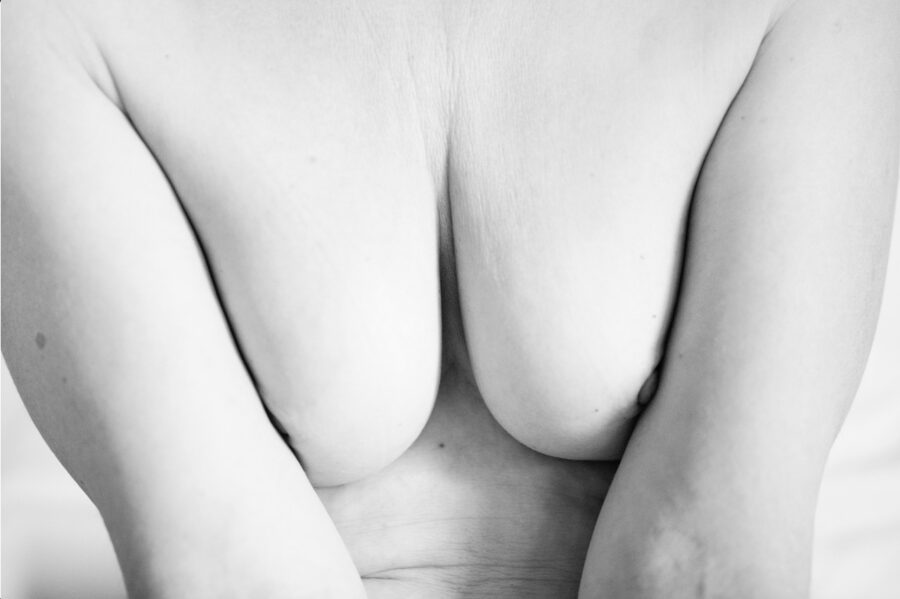
More and more patients are choosing to have their breast implants removed without replacing them, out of a desire to regain a fully natural chest or out of weariness with the monitoring that implants require. The most common question then concerns the appearance of the breasts after breast implant removal: since the mammary gland was simply moved aside and not removed during the augmentation, the natural tissues do not, in the majority of cases, lose volume solely as a result of the explantation. The skin gradually retracts to fit the new volume.
The result, however, depends on skin elasticity, the volume of the implants removed, and any pre-existing ptosis. When the skin does not tighten back sufficiently, an additional redraping step or a breast lift (mastopexy) can be combined with the removal in order to lift the chest and restore a beautifully toned contour without an implant.
Price and insurance coverage for breast implant removal
The cost of breast implant removal depends on the complexity of the procedure: a simple removal is less expensive than a removal combined with a capsulectomy or a reshaping step (redraping, lipofilling, lift). The length of the procedure, the type of anaesthesia, and whether or not an overnight hospital stay is required also come into play. A personalised, detailed quote is always provided during the prior consultation, as the final price can only be set after assessing each patient’s situation.
Regarding insurance coverage, the removal of implants placed for aesthetic purposes is in principle considered plastic surgery and is not reimbursed. On the other hand, when the explantation meets a proven medical indication — implant rupture, painful capsular contracture, confirmed complication — coverage by the French national health insurance can be considered, after approval from the medical adviser of the health insurance fund. The surgeon assesses this eligibility on a case-by-case basis during the consultation.
Options for correction after breast explantation
Before the procedure, some patients may feel anxious about the shape and appearance of the breasts after breast implant removal. As a general rule, it should be noted that the natural breast tissue is not prone to a loss of volume or to laxity due to the shrinking of the cavity where the implant was placed.
When this is nonetheless the case and skin redraping is insufficient to recover a satisfactory shape (emptied or overly flat breasts), it is then possible to perform a breast lipofilling using autologous fat transfer. This procedure will then make it possible to restore contour to the chest without resorting to a foreign body, with a moderate increase in volume and a very natural result. For patients still hesitating between the two approaches, our comparison between breast lipofilling and implants details the advantages of each option.
A breast lift (mastopexy) can also be considered in the event of an overly significant change in the mammary gland leading to sagging of the chest and significant skin laxity (marked breast ptosis).
Frequently asked questions
How is breast implant removal performed?+
The surgeon reopens the original incision (under the breast, around the areola or in the armpit), gently extracts the implant and then closes up. A simple removal usually takes less than an hour and is most often done on an outpatient basis. The procedure is longer when a capsulectomy (removal of the fibrous capsule) or breast reshaping has to be combined with it.
Can you have your breast implants removed without replacing them?+
Yes. Many patients choose explantation without replacement, out of a wish to regain a natural chest. Since the mammary gland was not removed during the augmentation, the breasts do not, in the majority of cases, lose volume from the removal alone. If the skin does not tighten back sufficiently, redraping or a breast lift can be combined to lift the chest.
What is a capsulectomy and when is it necessary?+
A capsulectomy involves removing the capsule of scar tissue that forms naturally around the implant. It is essential in the event of implant rupture and recommended when this capsule has hardened or calcified (capsular contracture) to the point of causing pain or deforming the breast. It can be total or partial; it lengthens both the procedure and the recovery.
How long does recovery take after a breast implant removal?+
After a simple removal, pain is mild to moderate and returning to work is often possible as early as the next day or the day after, with a return to sport after about 3 weeks. When a capsulectomy is combined, recovery is longer. Wearing a compression bra is usually recommended for several weeks.
How can you tell if a breast implant is ruptured?+
For saline implants, a leak shows up as a rapid, visible decrease in breast volume. For silicone gel, most ruptures are « silent », with no symptoms at all: the US health agency (FDA) considers MRI to be the most reliable test for detecting them, with ultrasound an acceptable alternative. Regular monitoring of your implants therefore remains recommended even in the absence of discomfort.
Is breast implant removal covered by French national health insurance?+
The removal of implants placed for purely aesthetic purposes is considered plastic surgery and is not reimbursed. However, when the explantation meets a proven medical indication (rupture, painful capsular contracture, confirmed complication), coverage by the French national health insurance can be considered after approval from the medical adviser of the health insurance fund. Eligibility is assessed on a case-by-case basis during the consultation.
What will the chest look like after the implants are removed?+
It usually takes 6 to 12 months for the tissues to settle back into place and for the final shape to stabilise. The result depends on skin elasticity, the volume of the implants removed and any pre-existing ptosis. If needed, a breast lipofilling (autologous fat transfer) or a breast lift can restore contour to the chest.
Book an appointment
If you are considering a procedure, book an appointment in just a few clicks: our surgeons will answer all your questions and guide you toward a tailored, personalised solution.
Book on Doctolib