
Understanding breast hypoplasia: diagnosis and treatments
For many women, the absence or insufficiency of breast volume is a source of self-consciousness. It can indeed lead to a lack of self-confidence and deep emotional distress. Depending on the situation, this is referred to as breast hypoplasia or breast hypotrophy. What causes the lack of breast development in women? What is the difference between breast hypotrophy and breast hypoplasia? How can you tell if you are affected, and which surgical treatments can be considered to restore self-confidence?
Contents
Hypoplasia, one expression of breast hypotrophy
A woman is affected by breast hypotrophy when her breasts are too small relative to her body shape. This is characterised by insufficient development, or a complete lack of development, of the mammary gland.
From an anatomical standpoint, breast hypotrophy causes no particular functional problem. From an emotional and psychological standpoint, however, it often prevents a woman from feeling fulfilled and can affect her state of mind day to day. There are two forms of breast hypotrophy:
- First, hypoplasia, also described as moderate to severe hypotrophy. In this case, the breasts have developed somewhat. The mammary gland is normal, but it is too small relative to the body shape in question.
- Second, agenesis or aplasia. In this type of situation, the mammary gland has not developed at all and the breasts are therefore absent, with very small nipples.
Breast hypotrophy is not necessarily a sign of an abnormal mammary gland, but only the expression of an underdeveloped breast. It cannot therefore be regarded as a disease and, for this reason, does not require any surgical procedure that is essential to the health of the person affected.
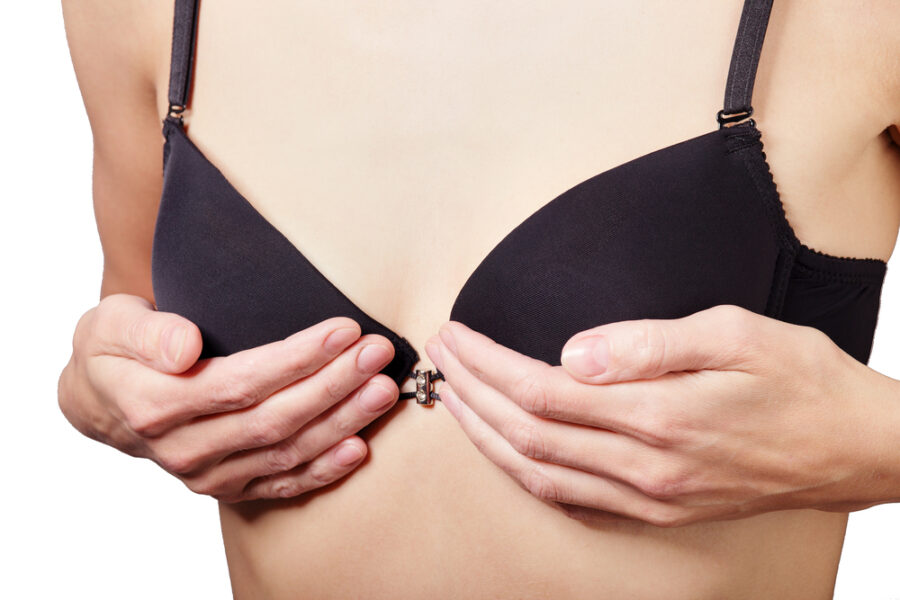
What is breast hypoplasia?
Having well-developed breasts is often perceived as a sign of femininity. Lacking them can, conversely, be experienced as a kind of deprivation and unfairness by the women concerned. When the breasts are very underdeveloped without being entirely absent, this is referred to as breast hypoplasia. It is a deficit in breast volume relative to a woman’s body shape, due to insufficient development of the mammary gland.
Breast hypoplasia should be distinguished from breast aplasia and breast agenesis. Aplasia refers to an almost complete absence of breast volume, while agenesis corresponds to a complete absence of mammary gland development from birth; hypoplasia, for its part, corresponds to a simple insufficiency of development. A woman has hypoplasia when she feels that her breasts are not suited to her body shape. The breasts nevertheless retain a certain volume, so this is not described as a flat chest. A diagnosis of hypoplasia is generally made based in particular on the width of the chest and the amount of palpable glandular tissue.
Causes and diagnosis of breast hypoplasia
Breast hypoplasia can be explained by moderate development of the mammary gland at puberty, but also by a hormonal imbalance (an imbalance between oestrogen and progesterone), following a pregnancy (sometimes called « emptied breasts »), prolonged breastfeeding, or after significant weight loss. In most cases, the developmental deficit appears at puberty and then remains stable: hypoplasia does not progress spontaneously with age, even though breast volume can vary with pregnancies, weight fluctuations and menopause.
Breast hypoplasia is generally felt to be aesthetically displeasing by the women affected. This concern can even become genuinely troublesome in certain situations, particularly for women who wish to breastfeed, who may then feel pain when the baby latches on. It is also especially difficult to live with when it is sometimes accompanied by breast ptosis, that is, sagging of the breasts.
How to recognise breast hypoplasia
Most women concerned come in thinking they simply have « small breasts ». A few signs, however, point to hypoplasia rather than an ordinary variation in body shape: a clearly insufficient breast volume relative to the frame and figure, a wide gap between the two breasts, an areola that is proportionally large relative to breast volume, or a marked asymmetry between the two sides. The diagnosis remains above all clinical: it is based on the examination and discussion carried out by the surgeon, who traces the history of breast development. Additional tests (hormonal work-up, ultrasound) are prescribed only when a hormonal cause is suspected or as part of the pre-operative work-up.
Severe hypoplasia, tuberous forms and asymmetry
We speak of severe breast hypoplasia when the deficit in glandular tissue is particularly marked and is often accompanied by a deformity of the breast. The breast may then have an elongated or tubular shape, with development concentrated behind the areola: this brings us to the issue of tuberous breasts, whose surgical correction follows a similar logic. Some women also experience unilateral hypotrophy: only one breast is affected by this underdevelopment, causing a breast asymmetry that can be corrected through augmentation. This phenomenon is sometimes associated with Poland syndrome, which corresponds to a malformation of the pectoral muscle; we devote a dedicated article to the diagnosis and treatment of hypoplasia linked to Poland syndrome. When delayed development is suspected in a young woman, a hormonal treatment may be proposed by a specialist before any surgical procedure is considered.
Breast hypoplasia and breastfeeding
Breast hypoplasia does not systematically prevent breastfeeding. However, when glandular tissue is insufficient, milk production may be reduced: some women manage to breastfeed exclusively, while others have to resort to supplementation. The situation is more delicate in cases of severe aplasia or agenesis, where the near-absence of the gland strongly limits, or even prevents, lactation. A surgical correction with breast implants or by lipofilling, when performed via approaches that preserve the areola and the gland, does not further compromise future breastfeeding; this point can be discussed in consultation with Dr Vincent Hunsinger.

How is breast hypoplasia treated?
To treat breast hypotrophy, and especially breast hypoplasia, various surgical procedures are now available to correct this volume deficit, which can be psychologically hard to live with. There is, however, no medical treatment capable of lastingly increasing the volume of the gland: non-surgical options (support underwear, push-up bras) only improve the appearance of the contour, without correcting the hypoplasia itself.
Using breast implants
To give the breasts more volume, the most common procedure is the placement of silicone breast implants. Patients can choose between different types of implant. Each one differs in its size, shape, material or texture. The appearance of the implant is matched to the patient’s body shape and needs. There are two main types of implant: anatomical implants and round implants. The latter are by far the most widely used today and are of much better quality than in the past, with the development of ergonomic implants that now deliver a very natural result.
During the procedure, the surgeon makes an incision in order to position the implants. Depending on the technique chosen, it can be made in the armpit (axillary approach), in the breast crease (inframammary approach), or around the nipple (periareolar approach). The implants themselves are placed either in front of the pectoral muscle (subglandular position), behind the pectoral muscle (submuscular position), or both in front of and behind the pectoral muscle (dual plane position) for an even more refined result. It all depends on the patient’s needs. For a more natural outcome, the implant placement can be finished with a lipofilling.
Choosing breast lipofilling
Breast lipofilling is an alternative to the placement of implants. By choosing this procedure, the patient opts for a natural treatment that is less invasive and free of any foreign body. The lipofilling procedure, also called autografting, consists of extracting excess fat cells from one part of the body (hips, abdomen, thighs, etc.). These are then re-injected into the breast or breasts after undergoing a process of settling and centrifugation designed to remove the most fibrous residues. This process, known as autologous fat transfer (using the patient’s own fat), restores a more pronounced breast contour.
This alternative delivers an even more natural result than the placement of breast implants and provides a lasting result, unlike implants, which must be monitored and replaced over time. It also improves skin firmness through a lifting effect. On the other hand, part of the transferred fat is naturally reabsorbed by the body in the months that follow: the volume gain per session therefore remains limited — on the order of one cup size — which makes lipofilling on its own mainly suited to mild hypoplasia. To compare the two approaches, we set out the advantages and limitations of lipofilling versus implants. In cases of severe aplasia or agenesis, where the gland and the skin envelope are insufficient, the placement of implants remains the reference indication, possibly supplemented by a fat transfer.
Treating breast ptosis
A breast ptosis correction, or breast lift, has as its main objective to correct the sagging of the breasts. The aim is then to restore contour while removing the excess skin caused by this sagging. The breast is re-firmed, allowing better projection. This procedure also helps to raise the position of the nipple. To harmonise the figure and achieve a more natural result, the surgeon can, in addition to a breast ptosis correction, perform a lipofilling or place breast implants if the patient wishes.

Frequently asked questions
How can you tell if you have breast hypoplasia?+
The diagnosis is above all clinical: it is based on the examination and discussion carried out by the surgeon, who assesses the volume of the gland, the width of the chest, the gap between the breasts and any asymmetry. Hypoplasia is suspected when volume is clearly insufficient relative to body shape, rather than a simple « small breast ». A hormonal work-up or an ultrasound is requested only if a hormonal cause is suspected or with a view to a procedure.
What is the difference between breast hypoplasia, aplasia and agenesis?+
Hypoplasia corresponds to a mammary gland that is present but insufficiently developed. Aplasia refers to an almost complete absence of breast volume, and agenesis to a complete absence of gland development from birth. Severe aplasia and agenesis most often warrant a correction with breast implants, sometimes combined with a lipofilling.
Can breast hypoplasia change with age?+
No, hypoplasia is linked to the development of the gland at puberty and does not worsen spontaneously over time. However, the volume and firmness of the breasts can vary over the course of pregnancies, breastfeeding, weight fluctuations and menopause, which may accentuate the sense of underdeveloped breasts or be accompanied by ptosis.
Can breast hypoplasia be corrected without surgery?+
There is currently no medical treatment or natural method that can lastingly increase the volume of the mammary gland. Support or push-up underwear only improves the appearance of the contour. Only surgery — augmentation with implants or breast lipofilling — genuinely corrects the volume deficit.
Does breast hypoplasia prevent breastfeeding?+
Not systematically. When the gland is insufficient, milk production may be reduced: some women breastfeed exclusively, others need supplementation. Breastfeeding is, however, strongly limited or even impossible in cases of severe aplasia or agenesis. An augmentation performed via an approach that preserves the areola and the gland does not compromise future breastfeeding.
Is breast hypoplasia covered by French health insurance?+
A breast augmentation performed for purely aesthetic reasons does not qualify for insurance coverage. On the other hand, agenesis, a congenital malformation or a significant volume asymmetry (breasts smaller than an A cup with a proven impact) may qualify for reimbursement, after prior approval from the French health insurance authority. The same applies to breast reconstruction after breast cancer.
Is the procedure to correct hypoplasia painful?+
The procedure, whether it involves implants or lipofilling, is performed under general anaesthesia and is therefore not painful. Recovery is generally moderate: any residual aches or discomfort, particularly when raising the arms in the first few days, are relieved by simple painkillers. The scars themselves are not painful.
Do breast implants need to be replaced after a few years?+
Breast implants have no fixed lifespan: in the absence of any complication, there is no need to replace them at a set deadline. Regular monitoring (clinical examination and, if needed, imaging) makes it possible to check their integrity. We nevertheless recommend ongoing follow-up and replacement when an abnormality is found, rather than a systematic change imposed by a simple time limit.
Book an appointment
If you are considering a procedure, book an appointment in just a few clicks: our surgeons will answer all your questions and guide you toward a tailored, personalised solution.
Book on Doctolib